Ukraine Intensifies Deep Strikes, Targeting Russian Weapons Production and Fuel Supply Chains
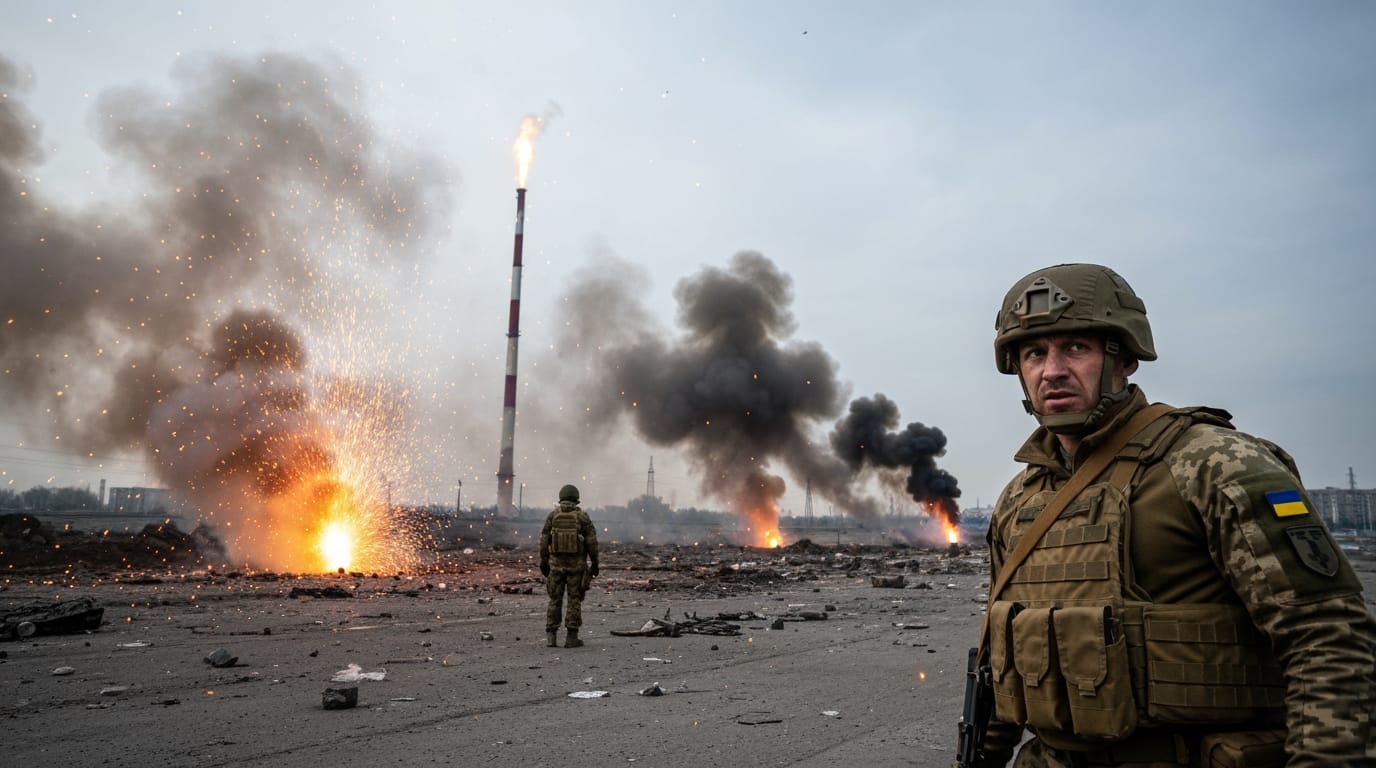
Kyiv has significantly escalated its long-range strike campaign against Russia, successfully hitting a critical military-industrial facility in Volgograd and a vital fuel pumping station supplying the Moscow region. These recent attacks, part of an increasingly aggressive strategy to disrupt Russia's war machine and energy infrastructure, underscore Ukraine's expanding capabilities and a deliberate effort to exert pressure on Moscow as the full-scale invasion enters its fifth year. The strikes signal a new phase in the conflict, directly challenging Russia's industrial and logistical resilience far from the front lines.
Strategic Blows to Russia's Military-Industrial Complex
In a notable development, Ukrainian-made long-range Flamingo FP-5 missiles "successfully struck" Russia's Federal Research and Production Center Titan-Barrikady in Volgograd overnight on June 27, according to Ukrainian President Volodymyr Zelenskyy. This facility is a key defense enterprise responsible for manufacturing launchers for strategic missile systems such as the Yars, Topol-M, and Iskander-M, alongside heavy artillery. Zelenskyy confirmed a fire on the plant's premises following the strike, which he characterized as targeting a major industrial complex that produces equipment used in attacks against Ukrainians. Volgograd Oblast Governor Andrey Bocharov acknowledged that "high-speed aerial targets" damaged production facilities in the Krasnooktyabrsky District, where Titan-Barrikady is located, and reported 10 injuries, though he did not name the enterprise directly. Russia's Defense Ministry, while claiming to shoot down numerous Ukrainian drones, made no mention of the missile strike on the Volgograd plant.
This strike follows earlier assaults this month on other critical Russian defense assets. On June 22, Ukraine's military reportedly used "high-precision" cruise missiles to target the VZPP-S semiconductor devices plant in Voronezh, a major producer of components for Russian ballistic missiles. Russian officials confirmed significant damage and reported at least five fatalities and dozens wounded. Additionally, a chemical plant in Tula, identified as crucial for producing Russian ammunition, was hit by drones, with explosions and fires reported in Novomoskovsk. Ukrainian officials have highlighted the plant's role in Russia's explosives production. These actions collectively demonstrate Ukraine's deliberate strategy to degrade Russia's capacity to produce and deploy advanced weaponry.
Crippling Moscow's Fuel Lifeline
Simultaneously, Ukrainian drones continue to target Russia's energy infrastructure, with a particular focus on facilities vital to Moscow's supply. On June 27, Ukraine's Security Service (SBU) struck the Vtorovo oil pumping station in Russia's Vladimir region for the second time this month. This station, located approximately 230 kilometers (140 miles) east of Moscow, is a strategic logistics hub that supplies diesel fuel to the Moscow Ring Petroleum Products Pipeline, feeding major oil depots around the capital and facilitating exports via Baltic Sea ports. The SBU reported that drones from its "Alpha" special forces unit hit technical buildings at the facility, causing detonations. This attack, which also occurred on June 10 and potentially May 24, is part of a 40-day strategic influence operation approved by President Zelenskyy, aimed at compelling Russia to end the war.
These strikes on fuel infrastructure extend to directly impacting Moscow's immediate supply. The Gazprom Neft-operated Moscow oil refinery in Kapotnya was struck twice by Ukrainian drones earlier in June, specifically on June 16 and 18. This refinery is a major supplier, providing about a third of Moscow's gasoline and fuel and is a critical part of the capital's fuel infrastructure, supplying substantial portions of the Moscow region's petrol and diesel needs, as well as aviation fuel for military purposes. Industry sources indicate that the damage inflicted may keep the refinery offline for at least six months, leading to concerns about fuel shortages and rising prices in the region.
Broader Campaign and Economic Impact
The recent strikes are not isolated incidents but rather part of a broader, intensified aerial campaign by Ukraine that has been gaining momentum throughout spring and summer. Beyond military production and Moscow's fuel supply, Ukrainian forces also struck a major natural gas processing plant and two satellite communications centers in Russia on June 24. The targeted Orenburg Gas Processing Plant, situated more than 1,200 kilometers (750 miles) behind the front line in the southern Urals, is one of the world's largest gas complexes. It is critical for producing helium, used in liquid-fuel rocket engines and guidance systems, and ethane, a key component in solid rocket fuel and gunpowder. The attack reportedly set the complex on fire.
The cumulative effect of these long-range attacks is creating tangible economic and logistical challenges for Russia. The strikes on oil refineries have led to a significant reduction in Russia's gasoline output, with reports of production plummeting by 25 percent in one week in mid-June. This has prompted emergency government meetings, fuel shortages, and rising prices across various regions, with some privately owned filling stations experiencing price hikes. The intensified campaign has also forced Russia to redeploy air defense systems, including some from strategic locations like the Kerch Bridge, to protect targets deeper within its territory, further stretching its military resources. The Kremlin is reportedly "scrambling to respond" to this escalating campaign, which is reaching ever deeper into Russian territory.
Ukraine's Evolving Capabilities and Rationale
The success of these deep strikes underscores Ukraine's evolving long-range strike capabilities, increasingly relying on domestically produced weapons and drones. President Zelenskyy has explicitly linked these operations to a strategic effort "to influence Russia to end the war," signaling Kyiv's intent to disrupt Moscow's ability to wage conflict by targeting its industrial and energy backbone. These actions are portrayed by Ukrainian officials as a "just response" to Russia's ongoing attacks and prolonged invasion, aiming to demonstrate that Russia's rear is not immune from the consequences of the war.
The long-range campaign represents a shift in military dynamics, allowing Ukraine to inflict significant damage on Russian infrastructure that directly supports the war effort and impacts the Russian economy. By hitting targets thousands of kilometers from the front lines, Kyiv aims to create internal pressure, disrupt supply lines, and force Russia to divert resources to defense, ultimately weakening its offensive capabilities.
Conclusion
Ukraine's sustained and intensifying campaign of deep strikes against Russian weapons plants and vital fuel hubs marks a significant development in the ongoing conflict. The successful targeting of key military-industrial facilities and critical energy infrastructure near Moscow and in other distant regions highlights Ukraine's growing long-range strike capabilities and a strategic shift to exert greater pressure on Russia. As these attacks continue to cause tangible damage, including production halts and fuel shortages, they serve as a stark reminder that the conflict's repercussions are increasingly felt within Russia's borders. This evolving strategy, aimed at disrupting Russia's war machine and influencing its decision-making, signals an enduring and impactful phase of the war, with potentially far-reaching implications for its trajectory.


