Ukraine Intensifies Energy Assaults with Strikes on St. Petersburg Oil Terminals
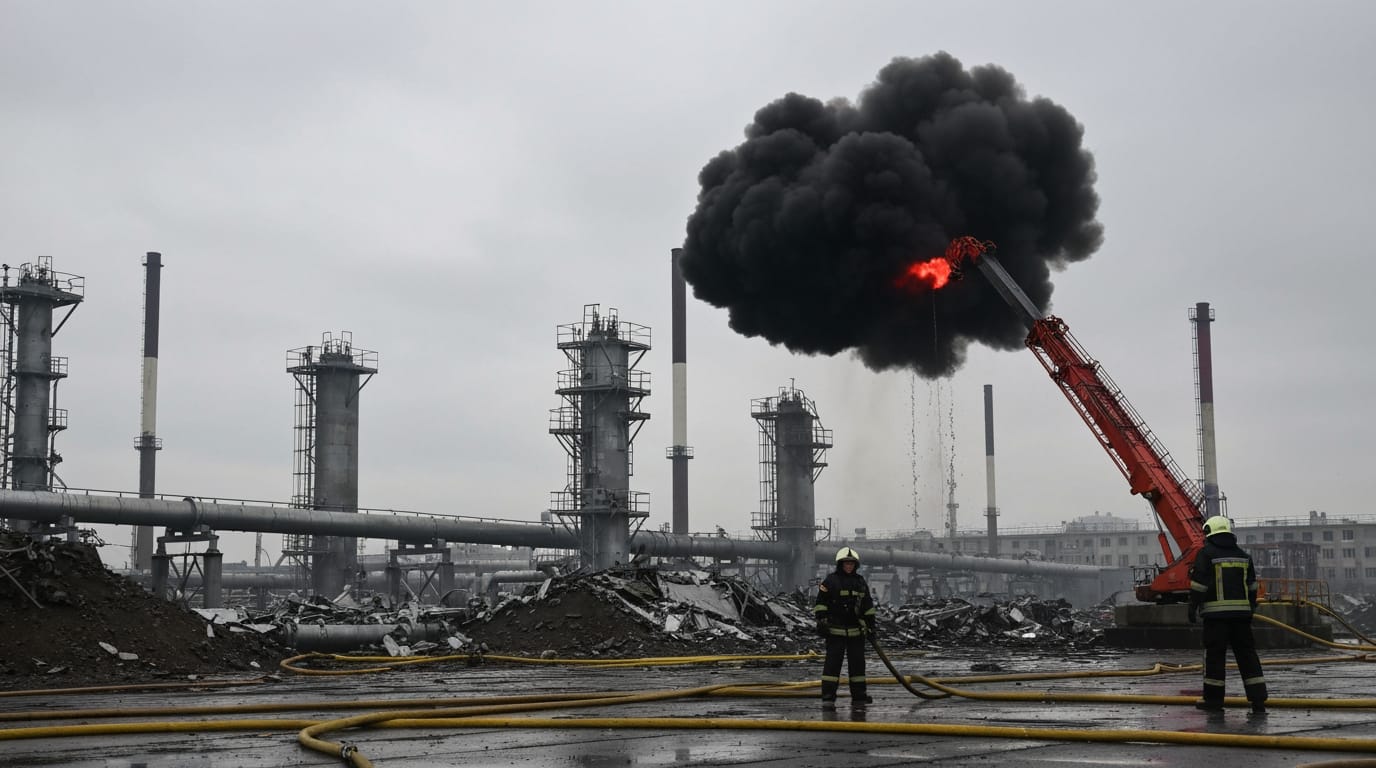
St. Petersburg, Russia – July 4, 2026 – Ukrainian drones struck critical oil infrastructure in and around St. Petersburg overnight Saturday, marking the latest escalation in Kyiv's strategic campaign to cripple Russia's war economy. The attacks targeted an oil terminal within St. Petersburg's Kirovsky district and the port of Vysotsk, located approximately 170 kilometers northwest of the city. Ukrainian President Volodymyr Zelenskyy confirmed the strikes, stating that port oil infrastructure, a vital source of revenue for the Russian war effort, was hit, along with military targets at the Kronstadt naval base. These long-range assaults underscore Ukraine's expanding drone capabilities and its commitment to disrupting Moscow's energy sector, even in regions far from the front lines.
The Latest Offensive: July 2026 Strikes
The early morning hours of July 4 brought explosions and fires to Russia's second-largest city and the surrounding Leningrad region. Russian officials, including St. Petersburg Governor Alexander Beglov, reported a "large-scale" drone attack, with the city's oil terminal experiencing a direct hit. Governor Beglov later stated there were no casualties and that the aftermath of the attack had been addressed. Meanwhile, Leningrad region Governor Alexander Drozdenko confirmed that drones also struck the port of Vysotsk, a significant hub for oil, grain, coal, and liquefied natural gas shipments. Russian authorities claimed to have shot down a substantial number of unmanned aerial vehicles, with Drozdenko reporting 72 drones intercepted over the Leningrad region alone.
Ukrainian President Zelenskyy, in a Telegram post, explicitly linked the attacks to Ukraine's "long-range sanctions" against Russia, confirming that "Ukraine's defense forces struck port oil infrastructure that generates revenue for Russia's war, and also hit Kronstadt — an important military target." This multi-target operation, coming just days after a massive Russian missile and drone attack on Kyiv, signals a retaliatory and strategically motivated escalation by Ukraine. Social media videos from the St. Petersburg area depicted plumes of black smoke and flames rising from the port, with local media identifying the impacted site as a maritime petroleum products transshipment terminal, one of Russia's largest Baltic export facilities.
A Pattern of Persistent Pressure on Key Energy Hubs
The July 4th incident is not an isolated event but rather the continuation of an aggressive, months-long Ukrainian campaign targeting Russian energy infrastructure, particularly around the crucial Baltic Sea ports. Just a month prior, on June 3, 2026, Ukrainian long-range drones successfully struck the St. Petersburg Oil Terminal, causing a large-scale fire that was visible across the city's skyline. This strike occurred mere hours before the opening of the St. Petersburg International Economic Forum, an annual event typically used by President Vladimir Putin to project an image of Russian economic stability. On that occasion, Zelenskyy also confirmed hits on the Kronstadt Naval Base and a weapons manufacturing enterprise in the Tambov region.
Further west, the Ust-Luga oil terminal in Leningrad Oblast has been a repeated target. In early April 2026, Ukraine's General Staff reported damaging key export infrastructure at Ust-Luga, with preliminary information indicating three storage tanks were hit. This specific attack was part of a broader series of strikes, with the Ust-Luga port having been hit at least five separate times between March 22 and March 31, 2026. The Security Service of Ukraine (SSU) and the Armed Forces confirmed their involvement in the March 25th strike on Ust-Luga, noting damage to oil and fuel dispensers and storage tanks, and highlighting the terminal's role as one of Russia's key Baltic ports for crude oil and petroleum product exports. These repeated assaults on Ust-Luga, a critical node in Russia's energy export network, prompted concerns among traders that major refineries in European Russia might be forced to reduce crude runs due to shipping constraints.
Strategic Imperatives and Economic Fallout
Ukraine's sustained drone campaign against Russian energy facilities serves a clear strategic objective: to choke off the revenue streams that finance Moscow's ongoing war and to inflict economic pain on the aggressor state. The cumulative effect of these strikes has begun to manifest in tangible ways across Russia. Reports indicate that Ukrainian drone attacks have slashed Russia's oil refining capacity by approximately 25%, leading to an estimated 15% shortfall in domestic fuel supply. By April 2026, calculations based on market data suggested that at least 40% of Russia's oil shipping capacity had been halted due to the repeated attacks.
The direct consequence for Russian citizens has been mounting fuel shortages in numerous regions, including the capital, Moscow, with at least 56 regions experiencing rationing. Videos shared on social media have shown lengthy queues at service stations across the country. In late June 2026, President Putin publicly acknowledged the "problems" caused by Ukrainian attacks on energy infrastructure, admitting they were affecting domestic fuel supplies, though he downplayed the situation as "not critical." Ukraine asserts that Russia has incurred billions of dollars in losses since the beginning of the year as a direct result of these strikes. Beyond the immediate economic impact, these attacks also create significant logistical bottlenecks, making it challenging for Russia to reroute crude from damaged refineries to operational export terminals. Moscow has been compelled to reallocate resources to bolster air defenses around critical infrastructure, further straining its military capabilities.
The Expanding Reach of Ukrainian Drones
The ability of Ukrainian forces to strike targets deep within Russian territory, more than 1,000 kilometers from their borders, highlights a significant advancement in their drone technology and operational planning. The deployment of long-range drones, such as the Lyutiy, capable of delivering explosives over vast distances, has fundamentally altered the geography of the conflict. The repeated success of these missions against well-defended sites like those near St. Petersburg, a region far from the front lines, demonstrates an expanding operational range and sophisticated navigation capabilities, capable of penetrating Russian airspace.
This technological evolution has enabled Kyiv to maintain consistent pressure on Russia's vital energy sector, forcing Moscow to contend with the consequences of the war on its own soil. While Russian officials, through Kremlin spokesperson Dmitry Peskov, have stated that their responses to Ukrainian strikes are "systemic in nature," implying a continuation of existing attacks on Ukraine, the drone campaign has undeniably created a new layer of challenges for the Kremlin.
Conclusion
The series of Ukrainian drone strikes on oil terminals near St. Petersburg and other critical energy infrastructure points across Russia signifies a deliberate and impactful shift in Ukraine's defensive strategy. By targeting the economic arteries that fuel Russia's war machine, Kyiv aims to degrade Moscow's financial capacity and disrupt its logistical networks. The persistent nature of these attacks, their increasing range, and the documented economic fallout, including domestic fuel shortages and reduced refining capacity, indicate that Ukraine's drone campaign is achieving tangible results. As the conflict continues, these long-range strikes are likely to remain a pivotal element of Ukraine's effort to exert pressure on Russia, bringing the economic realities of the war closer to the Russian populace and challenging Moscow's ability to sustain its offensive.


