Ukrainian Olympian Disqualified Over War Tribute Helmet, Igniting Debate on Sport's Political Neutrality
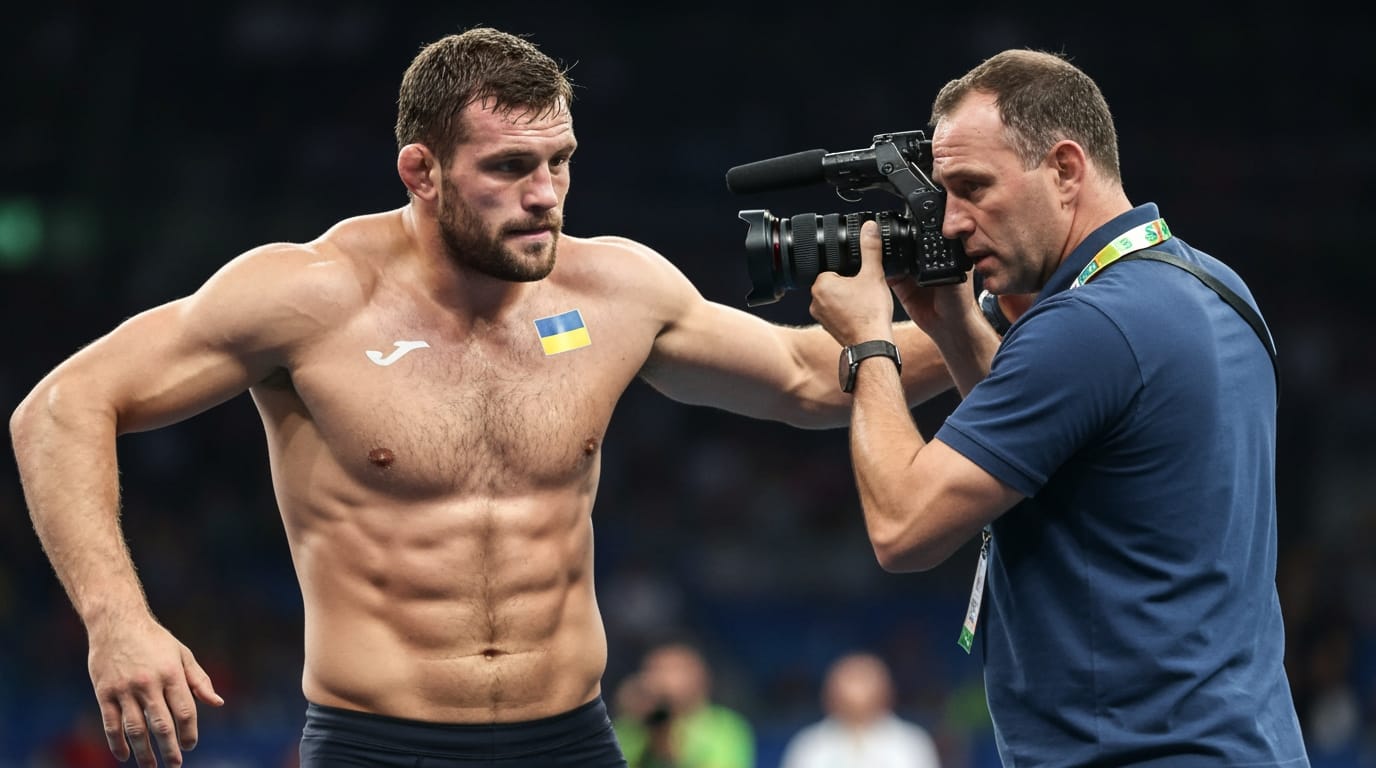
Milan, Italy – Ukrainian skeleton racer Vladyslav Heraskevych, a figure known for his prior anti-war stance, was disqualified from the 2026 Winter Olympics in Milano Cortina after refusing to remove a helmet bearing the images of fallen Ukrainian athletes. The International Olympic Committee (IOC) cited its long-standing Rule 50.2, which prohibits political demonstrations on the field of play, sparking a fierce international debate about the role of sport amidst global conflict and an athlete's right to expression. Heraskevych's defiant act transformed his Olympic pursuit into a powerful, albeit controversial, statement of remembrance, elevating the personal cost of war to the world stage.
The "Helmet of Memory" and the Unyielding Olympic Charter
The focal point of the controversy was Heraskevych's specially designed "helmet of memory," emblazoned with more than 20 portraits of Ukrainian athletes and coaches who have lost their lives since Russia's full-scale invasion of Ukraine began in February 2022. These included figures such as figure skater Dmytro Sharpar, biathlete Yevhen Malyshev, and boxer Maksym Halynychev, among others, each a stark reminder of the human toll of the ongoing conflict. Heraskevych, Ukraine's first skeleton racer, maintained that the helmet was a solemn tribute, stating, "It is an honor for me to wear their images and show the world the price Ukraine pays daily in this bloody war. We remember those whose lives Russia has taken."
This was not Heraskevych's first encounter with Olympic regulations concerning political expression. At the 2022 Beijing Winter Olympics, just days before the full-scale invasion, he held up a small sign that read "No War in Ukraine" after completing his run. On that occasion, the IOC chose not to sanction him, interpreting the message as a "general call for peace" and not explicitly political. However, the committee's stance hardened in Milano Cortina, asserting that the "helmet of memory" crossed the line into a prohibited political demonstration under Rule 50.2 of the Olympic Charter, which dictates that "no kind of demonstration or political, religious or racial propaganda is permitted in any Olympic sites, venues or other areas." The rule aims to preserve the neutrality and focus of the Games on athletic performance.
A Battle of Principles: Compromises Rejected, Dignity Upheld
Leading up to his scheduled event, Heraskevych engaged in multiple discussions with IOC officials, including a final, emotional meeting with IOC President Kirsty Coventry just hours before his competition. The IOC reportedly offered compromises, suggesting he wear a black armband or display the helmet in the mixed zone after his race, away from the field of play. However, Heraskevych steadfastly refused these alternatives. He publicly stated that not wearing the helmet would be a "betrayal" of the fallen athletes and that the issue was a matter of national dignity.
Speaking after the disqualification, Heraskevych expressed profound emptiness, lamenting that he believed the IOC was "betraying those athletes who were part of the Olympic movement, not allowing them to be honored on the sports arena where these athletes will never be able to step again." He further criticized the IOC for what he perceived as a double standard, noting that his peace message in 2022 was permitted, and questioned the IOC's comparison of the war in Ukraine to other global conflicts. IOC President Coventry, visibly emotional after her meeting with Heraskevych, confirmed that no agreement could be reached, expressing regret that he would not be able to compete. Despite his disqualification, the IOC initially decided not to withdraw his accreditation, meaning he could remain at the Games. However, later statements indicated his accreditation was indeed withdrawn.
National Outcry and International Repercussions
The IOC's decision to disqualify Heraskevych and withdraw his accreditation drew swift and strong condemnation from Ukrainian officials and public figures. Ukrainian President Volodymyr Zelenskyy publicly supported Heraskevych, awarding him the Order of Freedom "for selfless service to the Ukrainian people, civic courage, and patriotism in defending the ideals of freedom and democratic values." Zelenskyy sharply criticized the IOC, asserting that its decision proved the Olympics sided with the aggressor, and emphasizing that "sport shouldn't mean amnesia." Ukrainian Foreign Minister Andriy Sybiha echoed these sentiments, calling the disqualification "a moment of shame" for the IOC and suggesting that "future generations will remember this as a moment of shame."
The National Olympic Committee of Ukraine also expressed solidarity, stating, "When an athlete stands up for truth, honor, and memory — that is already a victory." Prominent Ukrainian sports figures, including world boxing champion Oleksandr Usyk, joined the chorus of support, with Usyk writing, "I am proud of you and fully support you, this is the position of a true Ukrainian." This widespread national backing highlighted the deep emotional resonance of Heraskevych's protest within a nation enduring a protracted conflict, casting the IOC's pursuit of neutrality as insensitive or even complicit in the eyes of many.
The Unfinished Fight: Appeal and Enduring Symbolism
In the wake of his disqualification, Vladyslav Heraskevych has vowed to continue his fight, albeit off the ice. He lodged an appeal with the Court of Arbitration for Sport (CAS), arguing that his exclusion was disproportionate and caused irreparable sporting harm. This appeal underscores his conviction that remembrance is not a political statement but a fundamental human act, particularly in the context of national tragedy. While his Olympic medal aspirations in Milano Cortina were abruptly ended, his actions have undeniably amplified the visibility of Ukraine's plight and the sacrifices made by its athletes.
Heraskevych's story transcends a mere sporting infraction; it encapsulates the enduring tension between the idealized notion of politically neutral international competitions and the stark realities of a world embroiled in conflict. His refusal to compromise on his tribute transformed him into a powerful symbol of resistance and unwavering commitment to his country's narrative, ensuring that the memory of his fallen compatriots resonated far beyond the icy tracks of the skeleton event. His fight, now taken to the legal arena, continues to serve as a poignant reminder that for some, the pursuit of justice and remembrance is a race more vital than any medal.