Ukrainian Skeleton Racer Disqualified from Winter Olympics Over Helmet Honoring War Victims
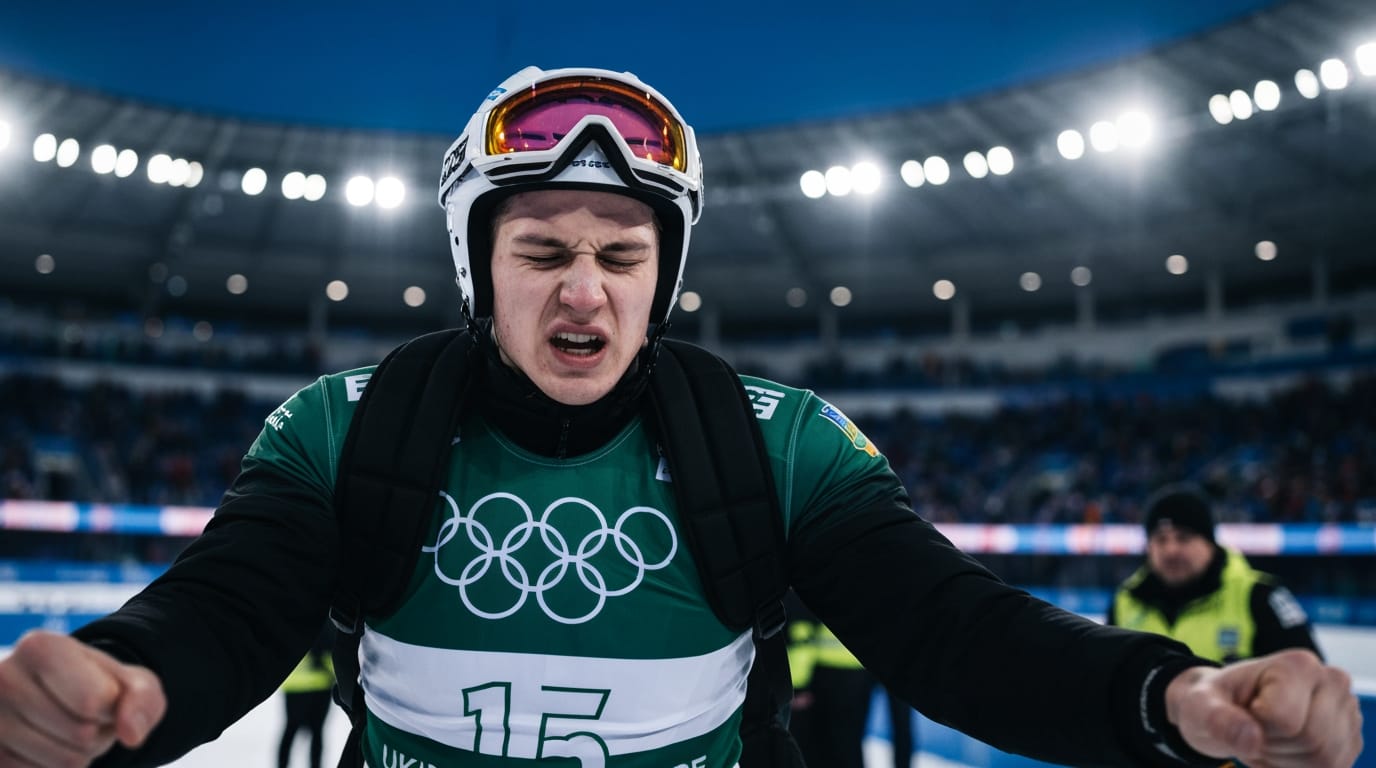
MILANO CORTINA, Italy – Ukrainian skeleton athlete Vladyslav Heraskevych was disqualified from the Milano Cortina 2026 Winter Olympics on Thursday after refusing to remove a custom helmet featuring images of Ukrainian athletes and coaches killed in the war with Russia. The decision by the International Olympic Committee (IOC) has ignited a debate over athlete expression, the Olympic Charter's rules on neutrality, and the profound personal tolls of ongoing global conflicts.
Heraskevych, who had served as Ukraine's flag-bearer during the Games' opening ceremony, had intended for his helmet to serve as a poignant tribute to his fallen compatriots, but the IOC deemed it a violation of Rule 50.2 of the Olympic Charter, which prohibits political demonstrations or propaganda within Olympic sites. The disqualification has drawn sharp criticism from Ukrainian officials and supporters, who argue that remembrance is not a political act, while the IOC maintains its commitment to keeping the field of play free from any form of political statement.
The Helmet of Remembrance and the Athlete's Conviction
Vladyslav Heraskevych arrived at the Winter Olympics with a helmet that stood apart from the typical designs focused on national symbols or personal flair. His helmet bore the faces of more than 20 Ukrainian athletes and coaches who have lost their lives since Russia's full-scale invasion of Ukraine began in 2022. For Heraskevych, the custom design was not a political protest but a deeply personal act of remembrance and respect. He stated that the sacrifice of the individuals depicted on his helmet meant more to him than any medal he could ever win, emphasizing his desire to honor their memory.
Despite repeated warnings and discussions with the IOC, Heraskevych remained steadfast in his conviction. He wore the helmet during training sessions, signaling his intent to compete with it. His defiance stemmed from a belief that the helmet did not contravene any Olympic regulations, as it contained no political slogans and served purely as a memorial. The athlete's stance highlighted the profound emotional weight carried by many Ukrainian competitors amidst the ongoing conflict in their homeland.
The IOC's Stance on Neutrality and Rule 50
The International Olympic Committee's decision to disqualify Heraskevych was rooted in Rule 50.2 of the Olympic Charter, which aims to preserve the neutrality of the Olympic Games. This rule explicitly states that "no kind of demonstration or political, religious or racial propaganda is permitted in any Olympic sites, venues or other areas." The IOC maintained that while it empathized with the message of remembrance, the field of play was not the appropriate venue for such expressions.
IOC President Kirsty Coventry personally met with Heraskevych prior to his scheduled race on Thursday morning, making a final plea for him to use an alternative helmet. During their discussion, the IOC had offered a compromise, suggesting that Heraskevych could wear a black armband as a gesture of remembrance instead. However, Heraskevych declined the offer, leading to the withdrawal of his accreditation for the Games. The IOC issued a statement expressing its decision was made "with regret," underscoring the difficult balance between upholding rules and acknowledging humanitarian concerns. An IOC spokesperson reiterated that the challenge was "not the message, but where he wanted to express it," indicating a strict interpretation of maintaining the non-political nature of Olympic competition areas.
A Standoff Over Expression and Olympic Ideals
Heraskevych's disqualification has sparked a broader conversation about athlete expression at the Olympics, especially during times of international conflict. The athlete announced his intention to appeal the decision to the Court of Arbitration for Sport, signaling a potential legal challenge to the IOC's interpretation of Rule 50.2. The Ukrainian Olympic committee had previously argued that the helmet was fully compliant with IOC rules, as it lacked overt political slogans.
Support for Heraskevych quickly emerged from his home country, with Ukrainian President Volodymyr Zelensky publicly thanking the athlete for "reminding the world of the price of our struggle." Zelensky asserted that this truth should not be considered "inconvenient, inappropriate, or called a 'political demonstration at a sporting event.'" This incident was not isolated; two other Ukrainian athletes, freestyle skier Kateryna Kotsar and short track speed skater Oleh Handei, were also reportedly barred from wearing customized helmets featuring messages or poetry that the IOC deemed political. These cases collectively highlight a growing tension between athletes' desire to use their platform for social or political statements and the Olympic movement's long-standing policy of neutrality.
Equipment Regulations: Beyond Performance Enhancement
The debate surrounding Heraskevych's helmet differs significantly from other equipment-related disqualifications seen at the Olympics. While many rules govern equipment to ensure fair play, safety, or prevent technological doping, Heraskevych's case centers on expressive content rather than competitive advantage. For instance, in other events at the Milano Cortina Games, South Korean cross-country skiers Han Dasom and Lee Eui-jin were disqualified after a banned fluorinated wax was detected on their skis, a substance prohibited due to environmental and health concerns, as well as its performance-enhancing properties. Similarly, the British skeleton team faced a ban on new aerodynamic helmets that were found not to comply with existing shape regulations, impacting potential competitive gains.
These examples demonstrate the intricate regulatory landscape of Olympic sports equipment, which constantly adapts to address emerging technology and ensure a level playing field. However, Heraskevych's situation introduces a different dimension to equipment control, focusing on the message conveyed rather than its material impact on performance or safety. The incident underscores the complexities of defining "political" in a global context where personal identity and national struggles are deeply intertwined with an athlete's narrative.
Conclusion: A Legacy of Principle and Protest
The disqualification of Vladyslav Heraskevych from the Winter Olympics marks a significant moment in the ongoing dialogue between athletic expression and the strictures of the Olympic Charter. While the IOC stands firm on its principle of maintaining neutrality on the field of play, Heraskevych's unwavering dedication to honoring fallen Ukrainian athletes has brought a powerful human element to the forefront of the Games.
This incident will likely contribute to broader discussions about how the Olympic movement, which champions unity and peace, navigates the realities of a world often grappling with conflict and humanitarian crises. The balance between allowing athletes to express deeply held beliefs and preserving the Games as a politically neutral ground remains a delicate and continuously evolving challenge. Heraskevych's "sacrifice of dignity" over a medal, as he put it, ensures that the faces on his helmet, and the stories they represent, will not be easily forgotten, regardless of his participation in the competition.


