Ukrainians Outline Non-Negotiable Terms for Enduring Peace Amidst Protracted Conflict
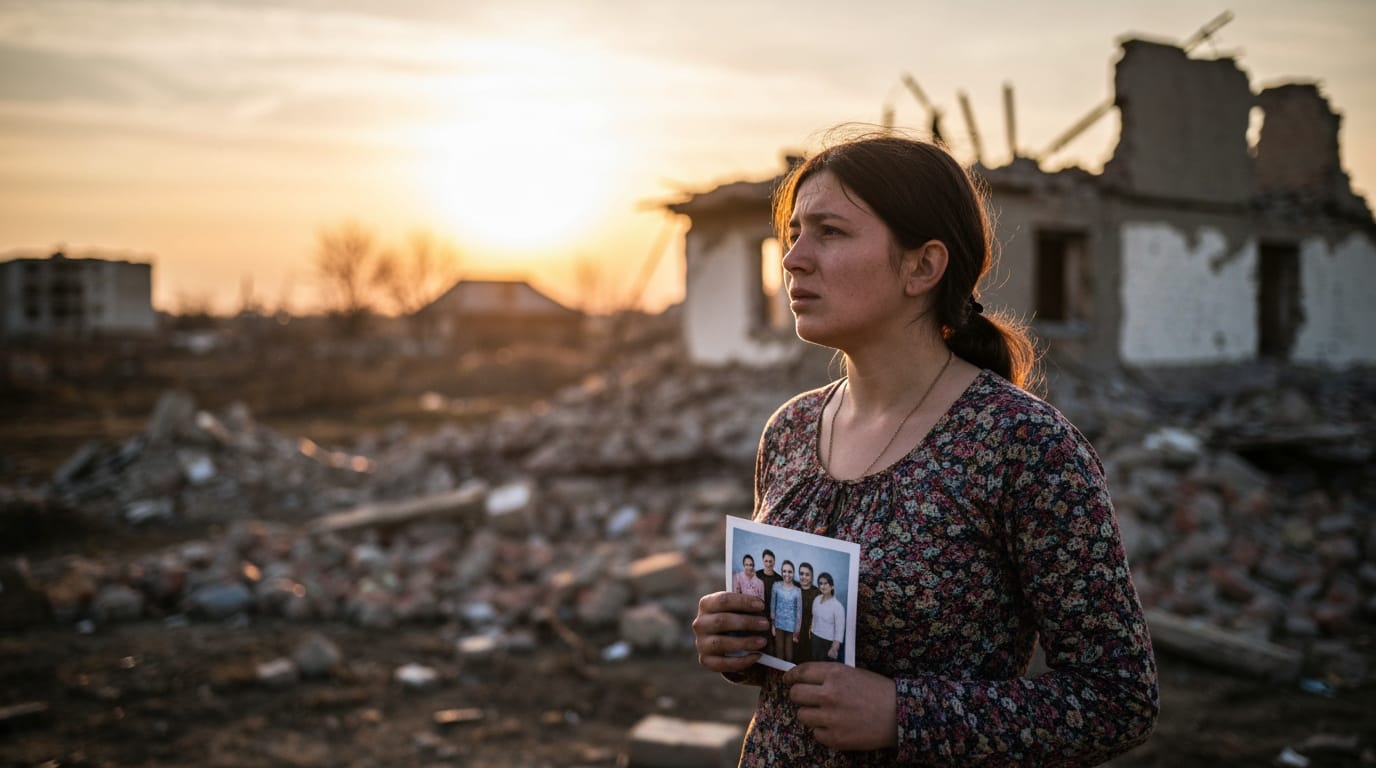
KYIV, UKRAINE – As the conflict with Russia grinds into its fourth year, the Ukrainian populace and its government remain united on core demands for any prospective peace agreement, firmly rejecting concessions that would undermine national sovereignty or reward aggression. While war weariness has seen a growing segment of the population express a desire for a swift, negotiated end to hostilities, this sentiment is consistently tempered by an overwhelming refusal to accept terms perceived as surrender, particularly those involving the formal ceding of territory or the weakening of Ukraine's future security.
Unwavering Red Lines: Territorial Integrity and Sovereignty
At the heart of Ukraine's demands for peace lies an unshakeable commitment to its territorial integrity. Both official government statements, including President Volodymyr Zelenskyy's ten-point peace formula, and widespread public opinion polls consistently emphasize the imperative of restoring Ukraine's internationally recognized borders, established in 1991. This includes the complete withdrawal of Russian troops from all occupied territories, encompassing Crimea and the areas seized since February 2022. Any peace plan that would require Ukraine to officially recognize Russian control over these territories is met with overwhelming rejection. A December 2025 poll by the Kyiv International Institute of Sociology (KIIS) revealed that 75% of Ukrainians consider a "Russian peace plan" involving such recognition completely unacceptable.
While an increasing number of Ukrainians, approximately 52% as of late 2024, indicate a preference for a negotiated end to the war, this does not translate into a willingness to relinquish sovereign land. Instead, public sentiment leans towards scenarios that might involve freezing the front line at its current position, but only under very specific conditions: robust security guarantees, continued sanctions against Russia, and crucially, no official recognition of Russian occupation. A significant 72% of Ukrainians expressed readiness to approve such a "European-Ukrainian" plan, highlighting a pragmatic approach that seeks to halt immediate bloodshed without legitimizing territorial gains achieved through force. This nuanced position underscores a national resolve to maintain the legal and moral high ground, even in the face of immense pressure.
Ukrainian officials have made it clear that a ceasefire must precede any comprehensive peace deal, a stance that contrasts with Russian demands for a cessation of hostilities only after an agreement is signed. Moreover, proposals like the potential creation of a demilitarized "free economic zone" in Donbas, which might entail Ukrainian withdrawal without Russian troops filling the vacuum, have been deemed unworkable by President Zelenskyy, raising questions about control and fairness.
The Quest for Lasting Security and Alliance Integration
Beyond territorial restitution, a paramount concern for Ukrainians is the establishment of comprehensive and legally binding security guarantees to prevent any future recurrence of aggression. President Zelenskyy's peace formula dedicates specific points to this, calling for a new security architecture. While membership in NATO has long been viewed as the most robust form of security, Ukrainian leaders have expressed a willingness to forgo an immediate NATO bid if sufficiently strong, alternative security arrangements from Western nations—particularly the United States and European allies—can be secured. These guarantees must be concrete, include a steady supply of weapons and financial aid, and ideally, provide for air defense systems to protect Ukrainian skies.
The rejection of Russian demands to reduce the size of the Ukrainian military or to abandon aspirations of joining Western alliances remains firm. A significant majority of Ukrainians (83%) strongly oppose reducing military capabilities as a condition for peace. Similarly, abandoning NATO or EU membership bids is largely unacceptable to the public. European Union integration is increasingly viewed not just as an economic and political aspiration but also as an integral component of Ukraine's long-term security framework. Discussions in late 2025 have seen the U.S. and European leaders working towards providing "robust security guarantees," including the potential for a European-led multinational force operating within Ukraine. However, the specifics of these guarantees, and their legally binding nature, are critical for Kyiv.
Justice, Accountability, and Reparations
A just peace, from the Ukrainian perspective, extends beyond mere cessation of hostilities to encompass accountability for war crimes and reparations for the extensive damage inflicted. President Zelenskyy's ten-point plan explicitly calls for the establishment of a special tribunal to prosecute Russian war crimes, a measure seen as vital for delivering justice and deterring future aggressors. This demand resonates deeply with the Ukrainian public, who have endured widespread destruction and human suffering.
Furthermore, Ukraine seeks comprehensive compensation for the immense damages incurred during the conflict, with estimates ranging from $500 billion to $1 trillion. A key aspect of this involves utilizing frozen Russian assets, a proposal that has gained traction among international partners. The establishment of mechanisms such as the Register of Damage for Ukraine and an International Claims Commission, supported by the Council of Europe, are underway to collect and process claims, signaling a tangible path towards reparations.
Humanitarian considerations also feature prominently in Ukraine's peace demands. The release of all prisoners of war and the return of Ukrainian children forcibly deported to Russia are critical points, representing a profound human interest element central to healing and recovery.
The People's Voice: Evolving Sentiment and Enduring Resolve
Public opinion in Ukraine, while showing signs of fatigue after nearly four years of full-scale war, consistently reinforces the government's principled stance. While the proportion of Ukrainians favoring a negotiated end to the war has risen significantly from 22% in 2022 to 69% in 2025, this shift is not indicative of a desire for peace at any cost. Rather, it reflects a nuanced understanding that diplomacy will be necessary, but only on terms that safeguard national dignity and future security.
Polls repeatedly show that while open to difficult compromises, the vast majority of Ukrainians (between 63% and 75%) are prepared to endure the conflict "as long as necessary" to achieve conditions acceptable to Ukraine. This collective resilience highlights that any peace agreement signed by the government would require strong public legitimacy to be sustainable. Political leaders are acutely aware that an agreement perceived as a surrender or an unfavorable concession could destabilize the domestic situation. President Zelenskyy's continued high approval ratings, even after years of war, underscore the importance of his endorsement for any proposed settlement.
Regional variations exist, with some areas less impacted by the immediate front lines showing higher initial support for fighting until victory, though even in these areas, support for a negotiated peace has grown. Critically, even among those open to territorial concessions for a quicker peace, the idea of officially recognizing Russian sovereignty over annexed lands is widely rejected.
Conclusion
The path to peace in Ukraine remains fraught with complex demands and deep-seated principles. While the war has undoubtedly taken a heavy toll, fostering a desire for resolution, the collective will of the Ukrainian people and their government remains steadfast: a just and lasting peace must be built on the foundations of restored territorial integrity, robust security guarantees against future aggression, accountability for war crimes, and comprehensive reparations. Any agreement that falls short of these fundamental requirements risks being perceived as a capitulation, undermining the very stability it seeks to achieve. The dialogue for peace, though challenging, continues to be framed by Ukraine's unwavering commitment to its sovereignty and the future security of its nation.


