UN Chief Issues Stark Warning: US-China Power Struggle Risks Global Fracture
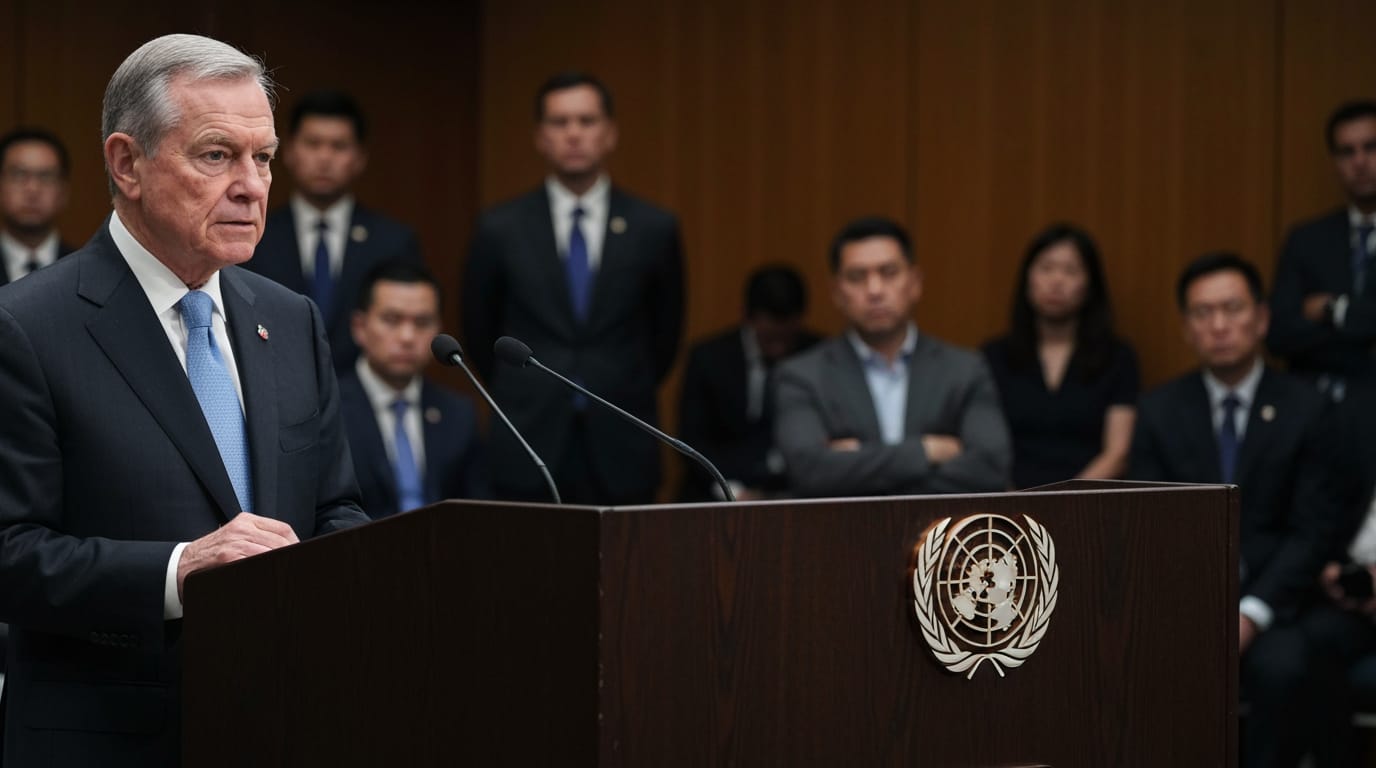
United Nations Secretary-General Antonio Guterres has repeatedly voiced alarm over the escalating power struggle between the United States and China, cautioning that the intensifying rivalry threatens to cleave the world into competing blocs and derail progress on pressing global issues. With 2026 marking his tenth and final year in office, Guterres has underscored the urgent need for a cohesive, multipolar international system, rejecting the perilous path of a world divided by conflicting interests and strategies.
A World on the Brink: The Secretary-General's Urgent Plea
Over recent years, Secretary-General Guterres has consistently highlighted the growing divergence between the world's two largest economies, portraying it as a fundamental threat to global stability. In a critical assessment, Guterres indicated concern that the world is steadily moving toward distinct economic, trade, financial, and technological regulations, alongside divergent approaches in areas like artificial intelligence and, ultimately, conflicting military and geopolitical strategies. He described this trajectory as a "recipe for trouble," predicting a future potentially less predictable and more dangerous than the historical Cold War era. The UN chief has characterized the relationship between Washington and Beijing as "completely dysfunctional," asserting that immediate repair is essential for addressing collective challenges facing humanity. His warnings, delivered across various international forums, including the annual UN General Assembly, reflect a profound concern that the present course of confrontation risks fracturing the international order.
Global Challenges Held Hostage by Division
The deepening fissures between the United States and China extend far beyond bilateral relations, impeding global efforts to tackle existential threats and foster collective well-being. Guterres has stressed that a world divided cannot effectively confront universal problems such as climate change, the lingering impacts of pandemics, and economic instability. The UN leader argued that constructive engagement between the two superpowers is indispensable for advancing global vaccination efforts, mitigating climate change, and resolving numerous other international challenges that demand a unified front. The inability of the leading global actors to find common ground risks paralyzing international institutions and undermining multilateral cooperation, leaving critical issues unaddressed and vulnerable populations exposed. This lack of cooperation, particularly on environmental stewardship, sets back the global agenda for sustainable development and threatens the planet's ecological balance.
The Contours of Competition: Key Fissures
The rivalry between the US and China manifests across multiple domains, reflecting deep-seated differences in economic models, political ideologies, and strategic ambitions. Areas of significant contention include ongoing trade disputes, fierce competition for technological supremacy, and debates surrounding human rights. Cybersecurity and online security have also emerged as flashpoints, with both nations accusing the other of malicious activities. Geopolitically, tensions frequently flare over issues such as sovereignty in the South China Sea, where China's expansive claims are challenged by several neighboring countries and the US.
Economically, the competition extends to critical resources. For instance, the struggle over rare earth minerals, vital for defense industries, advanced electronics, and electric vehicles, exemplifies a key battleground. China has established a near-monopoly in the extraction and processing of these minerals, leveraging this position to counter US trade measures, as observed in recent years. This economic leverage and strategic competition underscore the multifaceted nature of the US-China dynamic, further complicating prospects for cooperation.
The Call for Multipolarity and Cooperation
In response to the current trajectory, Secretary-General Guterres has become a prominent advocate for a multipolar global system, emphasizing that global problems cannot be resolved by a single dominant power. In recent statements at the start of his final year, Guterres cautioned against the notion of "one power calling the shots," a remark he clarified as referring to the United States. He also explicitly rejected the idea of the world being carved into rival spheres of influence, with one centered around the US and another around China. Instead, Guterres champions a "dense set of relations among different countries" to ensure a stable world where peace can be sustained, development can be widespread, and shared values can prevail.
China, for its part, has consistently expressed support for multilateralism with the UN at its core. China's UN ambassador recently reiterated that "no single country should dictate terms based on its power, and a winner-takes-all approach is unacceptable," advocating for the strengthening of the United Nations. This shared emphasis on multilateralism, despite underlying tensions, presents a potential avenue for dialogue and renewed cooperation, provided both powers prioritize collective global interests over narrow national agendas. Guterres's call for such an order serves as a reminder that robust international institutions and collaborative diplomacy are crucial counterweights to the centrifugal forces of superpower rivalry.
An Indivisible Future
The United Nations Secretary-General's persistent warnings regarding the US-China power struggle serve as a critical alarm for the international community. The stakes are immense: a fragmented world risks undermining decades of progress in global cooperation and renders humanity ill-equipped to face its most formidable challenges. Guterres's vision of a truly multipolar world, anchored by effective multilateral institutions, offers a pathway to navigating these complexities. It underscores the imperative for dialogue, compromise, and a shared commitment to global well-being. Ultimately, the future of international peace, sustainable development, and the collective ability to address crises hinges on the willingness of the United States and China to mend their "dysfunctional" relationship and embrace their shared responsibilities in an increasingly interconnected world.


