UN Resolution Ignites Global Call for Reparations, Highlighting Deep-Seated Divisions
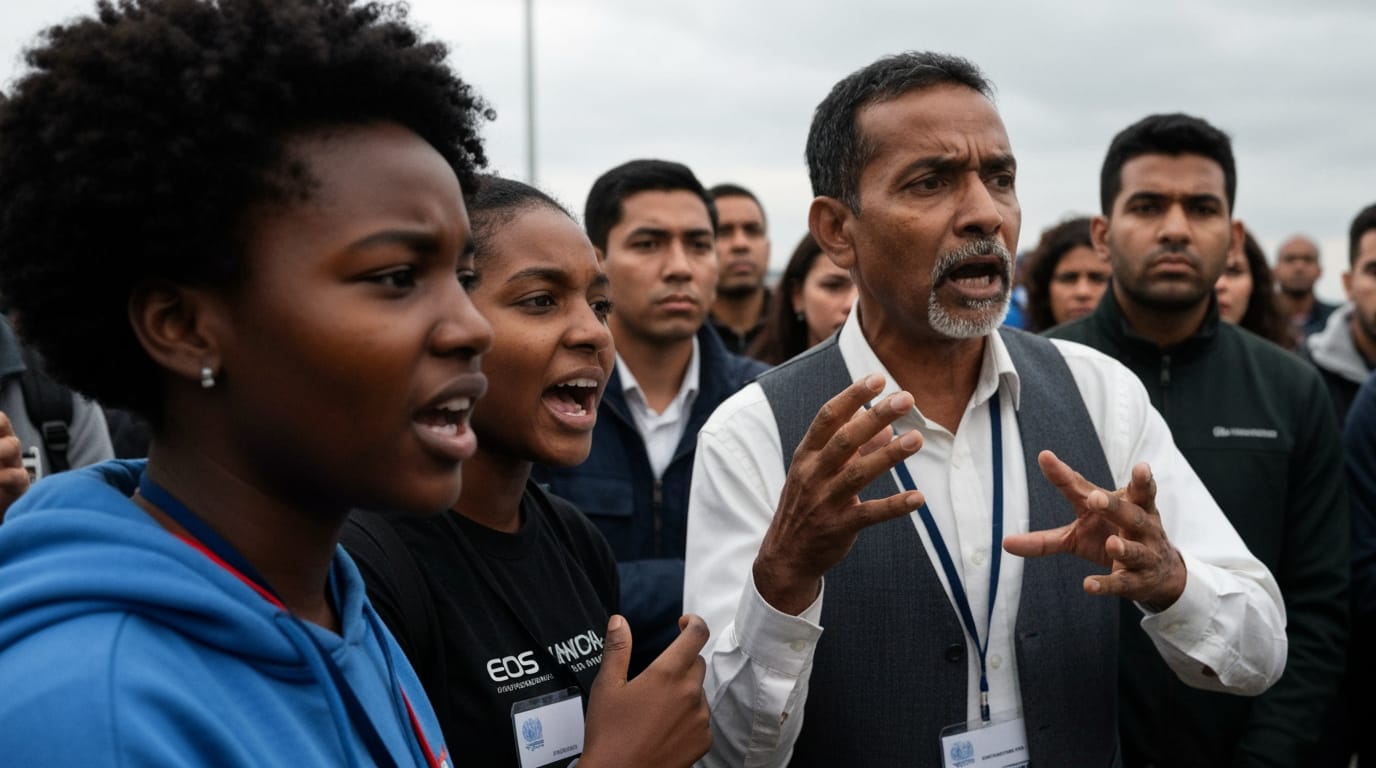
United Nations, New York – In a landmark decision, the United Nations General Assembly on Wednesday adopted a resolution declaring the trafficking of enslaved Africans "the gravest crime against humanity" and calling for reparations as "a concrete step towards remedying historical wrongs." The resolution, passed with overwhelming support, reignites a contentious global debate over historical accountability, the enduring legacies of slavery, and the practicalities of restorative justice.
The resolution, spearheaded by Ghana on behalf of the 54-member African Group, also urged the "prompt and unhindered restitution" of cultural items, including artworks, monuments, museum pieces, documents, and national archives, to their countries of origin without charge. Its adoption, with 123 votes in favor, three against, and 52 abstentions, signals a significant diplomatic moment, pushing reparatory justice firmly onto the international agenda despite a clear split among member states on the issue.
A Decades-Long Quest for Justice
The call for reparations for the transatlantic slave trade and its enduring impact is not new, but Wednesday's resolution marks an unprecedented level of formal recognition within the United Nations. Advocacy for reparatory justice gained significant international prominence at the 2001 UN World Conference Against Racism in Durban, South Africa, where demands for reparations featured prominently in discussions. This conference was crucial in framing chattel slavery as a crime against humanity, laying a vital intellectual and legal foundation for the subsequent global movement.
Over the past decade, the movement has gained considerable momentum, particularly with the launch of the CARICOM Reparations Commission in 2013, which has since inspired similar bodies in North America and Europe. This push has intensified in recent years, fueled by growing global awareness of systemic racism and inequality, notably catalyzed by events such as the murder of George Floyd in 2020. Proponents argue that the resolution serves as a "safeguard against forgetting" and an affirmation of truth, paving the way for healing and reparative justice.
Defining Reparatory Justice: More Than Monetary Compensation
The resolution articulates a comprehensive vision of reparatory justice, extending beyond simple financial payments. It calls on UN member nations to engage in talks on measures that include a full and formal apology, restitution of cultural artifacts and resources, financial compensation, rehabilitation programs, satisfaction, guarantees of non-repetition, and changes to laws, programs, and services aimed at addressing racism and systemic discrimination.
This broader interpretation reflects a growing international understanding that reparatory justice encompasses a multifaceted process of acknowledgment, institutional reform, and redress for generations of harm. Advocates emphasize that the legacy of slavery is inextricably linked to contemporary issues of economic inequality, political power, and global governance, affecting the lives of people of African descent worldwide. Ghanaian President John Dramani Mahama, a key architect of the resolution, stressed the profound impact of the transatlantic slave trade, stating it constituted "the gravest crime against humanity" due to its scale, duration, systemic nature, and brutal, enduring consequences.
A Divided International Front
Despite the significant majority vote, the resolution exposed deep divisions among nations on how to confront historical injustices. The United States, Israel, and Argentina voted against the measure, while all 27 members of the European Union and the United Kingdom abstained.
The United States, through its deputy ambassador Dan Negrea, maintained its stance that it "does not recognize a legal right to reparations for historical wrongs that were not illegal under international law at the time they occurred." The U.S. also expressed strong objections to any attempt to "rank crimes against humanity," asserting that such a hierarchy diminishes the suffering of victims of other atrocities.
Similarly, the United Kingdom, among other abstaining European nations, recognized the gravity of the issues but expressed disagreement with fundamental propositions of the text, citing concerns about "unbalanced interpretation of historical events" and the "retroactive application of international rules." British chargé d'affaires to the UN, James Kariuki, echoed the sentiment against creating a hierarchy of historical atrocities, emphasizing that "no single set of atrocities should be regarded as more or less significant than another." These objections underscore the complex legal and political challenges inherent in addressing historical claims that predate modern international legal frameworks.
Implications and the Road Ahead
While UN General Assembly resolutions are not legally binding, they carry significant moral and political weight, serving as crucial reflections of world opinion. This resolution is expected to provide renewed impetus for the global reparations movement, potentially paving the way for more concrete actions at national and regional levels. Proponents believe it will encourage member states to engage in formal discussions on reparatory justice, fostering dialogues that could lead to apologies, educational initiatives, and other forms of redress.
The resolution's emphasis on the restitution of cultural artifacts highlights an immediate and tangible area where progress could be made, offering a clear path for former colonial powers to acknowledge and remedy past injustices. The General Assembly also encouraged voluntary contributions to promote education on the transatlantic slave trade, further signaling avenues for engagement and reconciliation.
However, the deep divisions revealed by the vote indicate that the path to comprehensive global reparations will remain challenging. The debate will likely continue to grapple with fundamental questions of responsibility, feasibility, and the very definition of justice across centuries and continents. The UN resolution, nonetheless, marks a critical turning point, ensuring that the calls for reparatory justice for the "gravest crime against humanity" will resonate with renewed force in international discourse.


