UN Sounds Alarm: 2026 Aid Appeal Seeks Less Than 1% of Surging Global Arms Spending
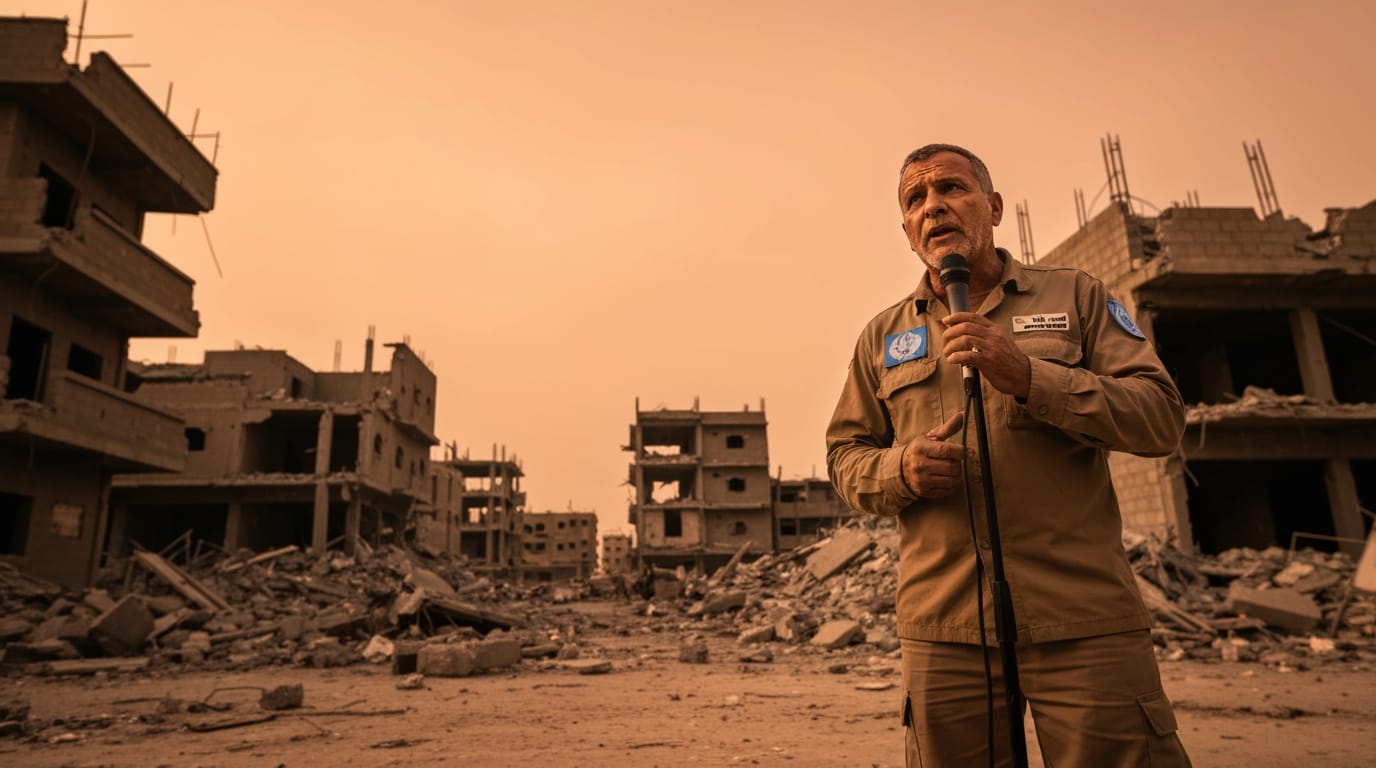
Geneva, Switzerland – In a stark illustration of global priorities, the United Nations and its partners have launched their 2026 humanitarian aid appeal, seeking $33 billion to assist 135 million people worldwide. This ambitious sum, critical for saving lives amidst escalating crises, represents a mere fraction—less than one percent—of the staggering amount nations are projected to spend on arms and defense in the same period, estimated to exceed $2.8 trillion. The pronounced disparity underscores a deepening chasm between the resources dedicated to conflict and those allocated to alleviate its human cost, prompting urgent calls from UN leadership for a profound re-evaluation of international spending.
The Global Humanitarian Overview 2026, unveiled today, targets immediate lifesaving support for 87 million individuals in 50 countries with an initial requirement of $23 billion. However, the total appeal aims to address the needs of 135 million vulnerable people through 23 country operations and six regional plans for refugees and migrants. This appeal arrives in the wake of a challenging 2025, during which humanitarian operations received only $12 billion—the lowest funding in a decade—resulting in aid reaching 25 million fewer people than intended.
The context for this year's appeal is one of unprecedented global need, fueled by persistent conflicts, the escalating impacts of climate change, economic instability, and resurgent epidemics. Humanitarian Chief Tom Fletcher lamented a year marked by "brutal cuts to humanitarian operations and a record number of deadly attacks against aid workers," describing humanitarians as "overstretched, underfunded and under attack." He characterized the current global landscape as a "time of brutality, impunity and indifference," where "the rules are in retreat, when the scaffolding of coexistence is under sustained attack, when our survival antennae have been numbed by distraction and corroded by apathy."
Major crises demand significant portions of the proposed funding. The Occupied Palestinian Territory alone requires $4.1 billion to reach approximately three million people affected by widespread violence and destruction. Sudan, grappling with the world's largest displacement crisis, needs $2.9 billion for 20 million people, with an additional $2 billion earmarked for seven million Sudanese who have fled the country. The regional plan for Syria accounts for another $2.8 billion to assist 8.6 million people. Beyond direct conflict zones, the Food and Agriculture Organization (FAO) launched its own Global Emergency and Resilience Appeal, seeking $2.5 billion to provide emergency agricultural assistance to over 100 million people in 54 countries, emphasizing proactive, cost-effective solutions to acute food insecurity. The FAO noted that despite high levels of humanitarian funding, acute food insecurity has tripled since 2016, a situation exacerbated by a persistent imbalance where only five percent of humanitarian food-sector funding supports agricultural livelihoods, trapping families in cycles of crisis.
Meanwhile, global military expenditure continues its precipitous climb. In Fiscal Year 2024, worldwide defense spending reached approximately $2.72 trillion, a 9.4 percent increase from the previous year and the steepest rise since 1987. Projections indicate this figure will exceed $2.8 trillion in Fiscal Year 2025, trending towards $3.0 trillion by Fiscal Year 2028. A UN report released in September 2025 highlighted that global military spending hit a record $2.7 trillion in 2024, a 9% increase from the prior year, with forecasts suggesting it could reach $6.6 trillion by 2035 if current trajectories persist. This surge is attributed to rising threat perceptions, demands for modernized defense technologies, and persistent geopolitical instability, reshaping national priorities and industrial policies across the globe.
United Nations Secretary-General António Guterres has been vocal about this pronounced imbalance, asserting that "the world is spending far more on waging war than in building peace." He argued that "a more secure world begins by investing at least as much in fighting poverty as we do in fighting wars," emphasizing that "excessive military spending does not guarantee peace; it often undermines it." The UN points out that global military spending now accounts for 2.5% of global GDP and 7.1% of government budgets, up from 2.2% and 6.6% respectively since 2022.
The implications of this fiscal imbalance are far-reaching. The UN estimates that eliminating extreme poverty worldwide would require just under $300 billion annually. Furthermore, redirecting even a fraction of military expenditure could address critical development gaps, such as funding education, strengthening primary healthcare, expanding clean energy, and building resilient infrastructure. For instance, less than four percent of the current $2.7 trillion in global military spending—approximately $93 billion—could end hunger by 2030, while 10 percent, around $285 billion, could ensure global child vaccination. Studies also indicate that civilian sectors tend to generate more jobs with the same resources; one billion dollars invested in education can create 26,700 jobs, compared to 11,200 in defense. Conversely, a one percent increase in military spending in low and middle-income countries often correlates with an almost equal reduction in public health services, jeopardizing essential programs.
The UN's 2026 humanitarian appeal, demanding a relatively modest sum compared to global military budgets, underscores a critical moral and practical challenge facing the international community. The plea highlights not only the immediate suffering that could be alleviated with adequate funding but also the long-term societal and economic costs of prioritizing military might over human well-being. As the world confronts complex and interconnected crises, the call to invest in peace and humanitarian action rather than an ever-escalating arms race resonates as an appeal for fundamental shifts in global priorities, emphasizing that genuine security is cultivated through stability, development, and the protection of human dignity.


