Unearthing Ancient Whispers: Newly Revealed Graffiti Offers Intimate Glimpse into Pompeii's Daily Life
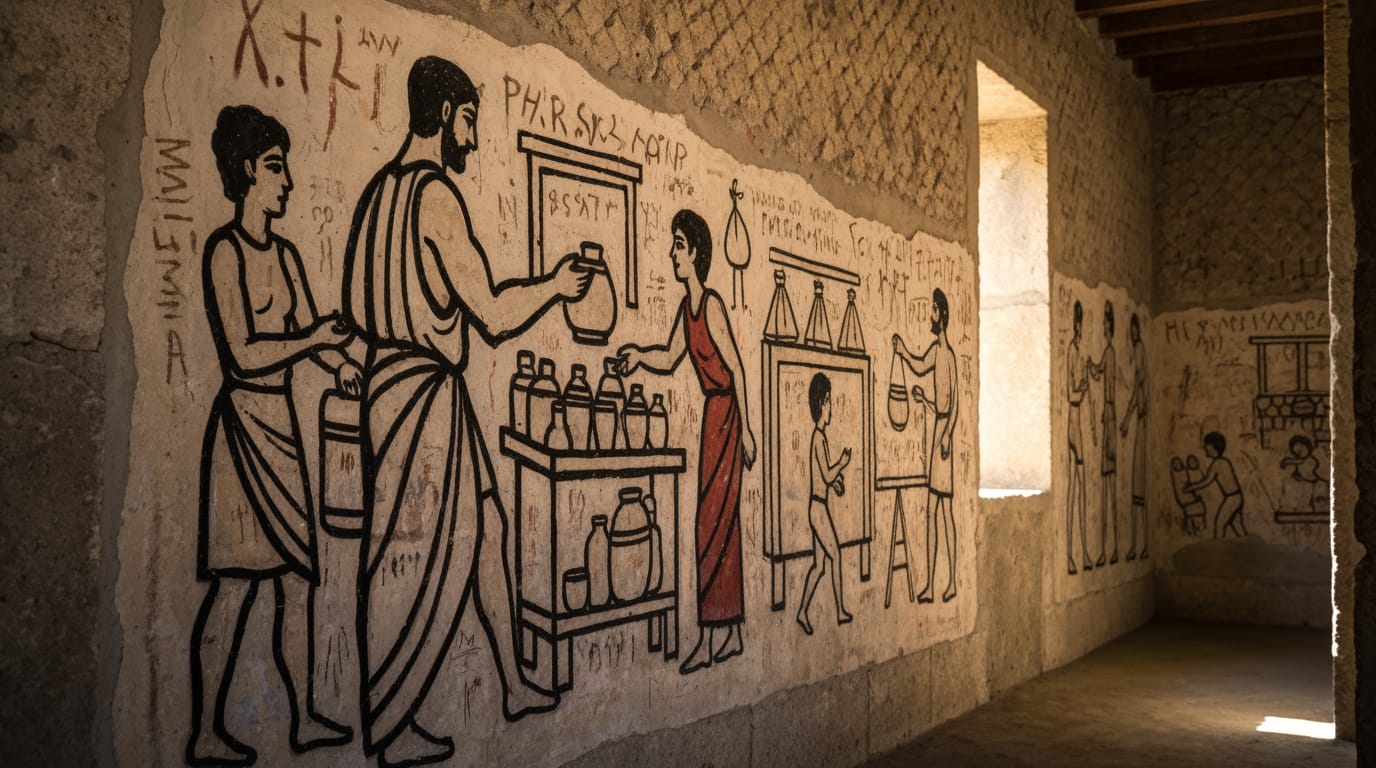
Pompeii, a city frozen in time by the catastrophic eruption of Mount Vesuvius in 79 AD, continues to yield extraordinary insights into the ancient Roman world. In a remarkable new discovery, archaeologists have unearthed 79 previously unseen examples of ancient graffiti, providing an unprecedented and intimate look into the everyday lives, loves, and leisure of its inhabitants. These vivid scribbles, preserved on the walls of a bustling corridor, challenge previous assumptions about who wrote history and offer a powerful human connection across two millennia.
The latest revelations emerged from a 90-foot (27-meter) corridor connecting Pompeii's vibrant theater district with the central thoroughfare of Via Stabiana, an area historically recognized for its dense concentration of wall writings. This corridor, a bustling artery for theatergoers, merchants, and daily commuters, served as an ancient canvas where Pompeiians freely expressed their thoughts. While the passageway itself has been known for centuries, the true depth of its inscriptions remained largely hidden until a concerted effort by an international team of researchers brought them to light.
The "Corridor Voices" project, a collaborative endeavor involving scholars from Sorbonne University in Paris, the University of Quebec in Montreal, and the Archaeological Park of Pompeii, employed cutting-edge digital imaging technology to uncover these elusive messages. Utilizing Reflectance Transformation Imaging (RTI), a technique that digitally enhances faint or eroded markings by capturing multiple photographs under varying light conditions, the team was able to render previously invisible scratches and engravings readable. This advanced methodology allowed archaeologists to meticulously map and interpret the ancient wall art, revealing a treasure trove of personal expressions that had escaped the naked eye for centuries.
The content of the newly identified graffiti paints a vibrant picture of a city teeming with human activity and emotion. Among the finds are intricate depictions of gladiatorial battles, offering a window into the popular spectacles that captivated the Roman populace. These visual narratives provide a raw, fan-level perspective on the gladiators, their triumphs, and the intense drama of the arena, elements rarely captured in formal historical accounts. Beyond the blood and sand, the walls also bore witness to declarations of affection and longing. Phrases like "Erato loves..." and "Beautiful Sabinus, Hermeros loves you!" underscore the timeless nature of human relationships and desire. These personal notes, often poignant and sometimes humorous, bypass the official narratives to offer direct access to the emotional landscape of ordinary Pompeiians. The graffiti captured here reflects the emotions, preferences, and entertainment culture of ordinary citizens, details often absent from official records.
The enduring presence of graffiti in Pompeii has long fascinated scholars, serving as a direct and unfiltered channel to the lives of those typically marginalized from historical texts. Unlike formal inscriptions or literary works, which often reflect the perspectives of the elite, graffiti provides a democratic voice, capturing the thoughts of men and women, citizens and slaves alike. It was common practice for Pompeiians to use public and private walls as communal message boards, advertisements, or simply as outlets for idle thoughts. These ancient scrawlings, typically etched into plaster with a stylus or nail, served purposes akin to modern social media or scrap paper, communicating observations, tally marks, and personal notes. Some, however, were more fleeting, written with perishable materials like charcoal or chalk, which have rarely survived. The sheer volume and variety of graffiti throughout Pompeii—over 10,000 inscriptions found to date—underscore its critical role as a historical resource, giving voice to individuals whose stories would otherwise be lost.
The recent "Corridor Voices" project exemplifies the continuous evolution of archaeological methods, where technology unlocks new dimensions of historical understanding. As archaeologists delve deeper into Pompeii's buried secrets, these everyday inscriptions remain invaluable for piecing together the complex mosaic of life in the Roman Empire. They remind us that history is not solely found in grand monuments or official decrees, but also in the spontaneous, often mundane, expressions of its people. The protection and systematic study of these fragile records continue to be a priority for the Archaeological Park of Pompeii, ensuring that the whispers of the past can continue to inform and engage future generations.
These newly revealed wall writings reaffirm the power of archaeology to connect us with individuals from distant eras, demonstrating that the universal human experiences of love, entertainment, and everyday concerns transcend the boundaries of time. Each deciphered inscription adds another thread to the rich tapestry of Pompeii's history, confirming that the more we uncover, the more we understand the profound humanity that existed within the city's walls before its tragic end.