United States and Venezuela Announce Restoration of Diplomatic Ties, Marking Historic Policy Shift
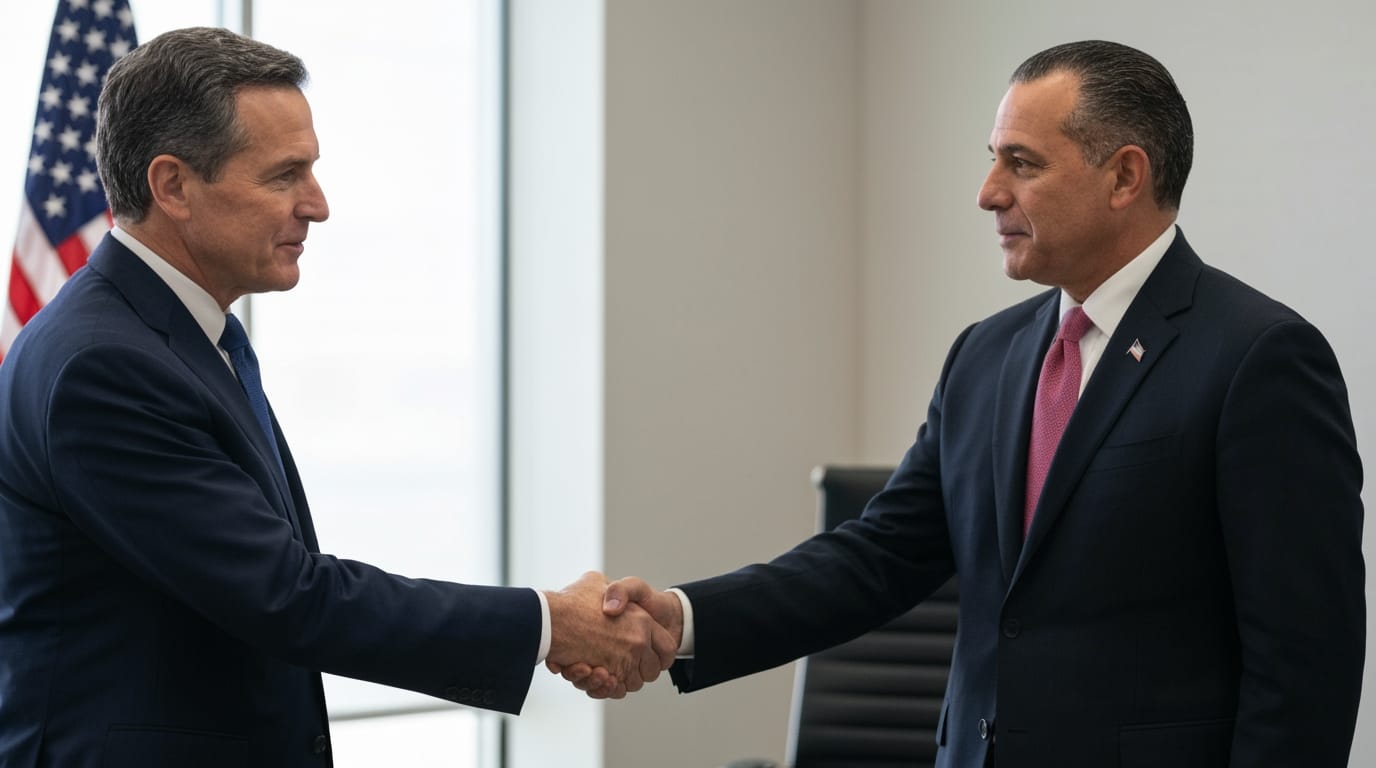
WASHINGTON D.C. – The United States and Venezuela have agreed to re-establish diplomatic relations, signaling a significant transformation in a historically turbulent bilateral relationship. The State Department announced the breakthrough on Thursday, March 5, 2026, outlining a commitment to a phased process aimed at fostering a peaceful transition to a democratically elected government in Venezuela. This development follows a period of intense geopolitical maneuvering and marks a decisive pivot from years of severed ties and escalating tensions between Washington and Caracas.
The agreement comes on the heels of a dramatic sequence of events earlier this year, including a U.S. military operation in January that led to the capture of former Venezuelan President Nicolás Maduro. With Delcy Rodríguez, formerly Maduro's vice president, now serving as acting president, a new diplomatic pathway has emerged, driven by both countries' evolving strategic priorities. The move is expected to pave the way for increased engagement, particularly regarding Venezuela's crucial oil sector, and address humanitarian and migration challenges.
A Decades-Long Chasm Narrows
The decision to restore diplomatic relations draws a stark contrast to the adversarial posture that has characterized U.S.-Venezuelan interactions for much of the 21st century. Diplomatic ties were formally severed in 2019 during the first Trump administration, when the United States, alongside dozens of other nations, recognized opposition leader Juan Guaidó as Venezuela's interim president. This move, rooted in the rejection of Maduro's 2018 re-election as fraudulent, was viewed by Caracas as a blatant interference in its internal affairs.
The roots of the strained relationship, however, trace back much further. Tensions began to escalate significantly with the rise of Hugo Chávez to the Venezuelan presidency in 1999. Chávez’s socialist agenda and staunch anti-American rhetoric created a deepening ideological divide, further exacerbated by accusations against the George W. Bush administration of supporting a 2002 coup attempt against Chávez. Over the years, expulsions of ambassadors and a series of U.S. sanctions targeting Venezuelan officials and industries, particularly its state-owned oil company PDVSA, intensified the diplomatic freeze. The U.S. Embassy in Caracas closed in 2019, with diplomatic staff relocating to neighboring Colombia.
A pivotal shift in U.S. policy occurred more recently when, as of January 2023, the U.S. ceased to recognize Juan Guaidó as Venezuela's legitimate leader, aligning with the Venezuelan opposition's own decision to dissolve his interim government. This change signaled a more pragmatic approach from Washington, acknowledging that Guaidó, despite international backing, had never truly held the reins of power in Caracas.
The January Turning Point and New Leadership
The dramatic military operation in January 2026, which saw the capture of Nicolás Maduro, profoundly altered Venezuela's political landscape and directly opened the door for the current diplomatic rapprochement. Following Maduro's removal, Delcy Rodríguez assumed the role of acting president. Discussions between the two nations, which had been ongoing in various forms, gained new momentum. Prior to his capture, Maduro himself had expressed openness to negotiating with the U.S. on issues such as drug trafficking and oil investment, indicating a potential softening of stance from the Venezuelan side. The Trump administration had also deployed special envoys, including Richard Grenell in January 2025, to engage with Venezuelan officials on matters like the repatriation of Venezuelan nationals and the return of U.S. detainees.
The State Department's recent statement emphasizes that the renewed talks are centered on facilitating a "phased process that creates the conditions for a peaceful transition to a democratically elected government" in Venezuela. This objective is intertwined with the Trump administration's expressed interest in opening Venezuela's vast oil sector to foreign companies, a move that could significantly impact global energy markets. In a gesture aimed at internal reconciliation, the acting government under Delcy Rodríguez has also approved an amnesty law, potentially leading to the release of political prisoners, activists, and lawyers.
Strategic Motivations and Economic Repercussions
The decision to restore diplomatic relations is driven by a confluence of strategic interests for both Washington and Caracas. For the United States, the primary motivations appear to be fostering democratic stability in Venezuela, securing access to its substantial oil reserves, and intensifying efforts to combat drug trafficking. The administration has made clear its desire to see a stable and democratic Venezuela, free from the political and humanitarian crises that have prompted a mass exodus of its citizens. The issue of U.S. citizens detained in Venezuela has also been a consistent point of negotiation.
For Venezuela's new acting government, the restoration of ties holds the promise of significant economic relief. Years of stringent U.S. sanctions have severely crippled Venezuela's economy, particularly its oil industry, which traditionally accounts for the vast majority of its export revenue. The recent easing of some sanctions on Venezuela's oil and gas sectors by the U.S. Office of Foreign Assets Control (OFAC) is a direct consequence of the renewed dialogue. These measures, including General License 46A and 49, authorize certain transactions involving Venezuelan-origin oil and allow for negotiations on new investments in the oil and gas sectors, albeit with specific conditions and limitations. Notably, the U.S. has also authorized specific operations for the resale of Venezuelan-origin oil to Cuba's private sector and returned $500 million from initial crude oil sales to the Venezuelan government, underscoring the economic incentives at play. The Venezuelan oil infrastructure, historically geared towards servicing the U.S. market, stands to benefit from a renewed trading partnership.
Navigating the Future: Challenges and Opportunities
While the restoration of diplomatic ties marks a historic turning point, the path forward remains complex and fraught with challenges. The deep-seated distrust and ideological differences that have long defined the relationship will require careful navigation. While the U.S. aims for a democratic transition, the nature and timeline of such a transition will likely be a significant point of negotiation and potential contention. The conditional nature of sanctions relief means that sustained cooperation and adherence to agreed-upon frameworks will be crucial for Venezuela to realize full economic benefits.
Despite the complexities, the re-establishment of diplomatic relations offers a significant opportunity for both nations. For Venezuela, it presents a chance to rebuild its shattered economy, address the humanitarian crisis, and potentially embark on a path toward greater political stability and international reintegration. For the United States, it represents a strategic opening to influence democratic reforms, stabilize a key South American nation, and secure vital energy interests. The success of this diplomatic reset will ultimately depend on consistent dialogue, mutual commitment to the stated objectives, and the ability of both governments to manage expectations amidst a long history of animosity. The world will be watching closely as Washington and Caracas attempt to forge a more constructive future.


