United States Formally Withdraws from World Health Organization
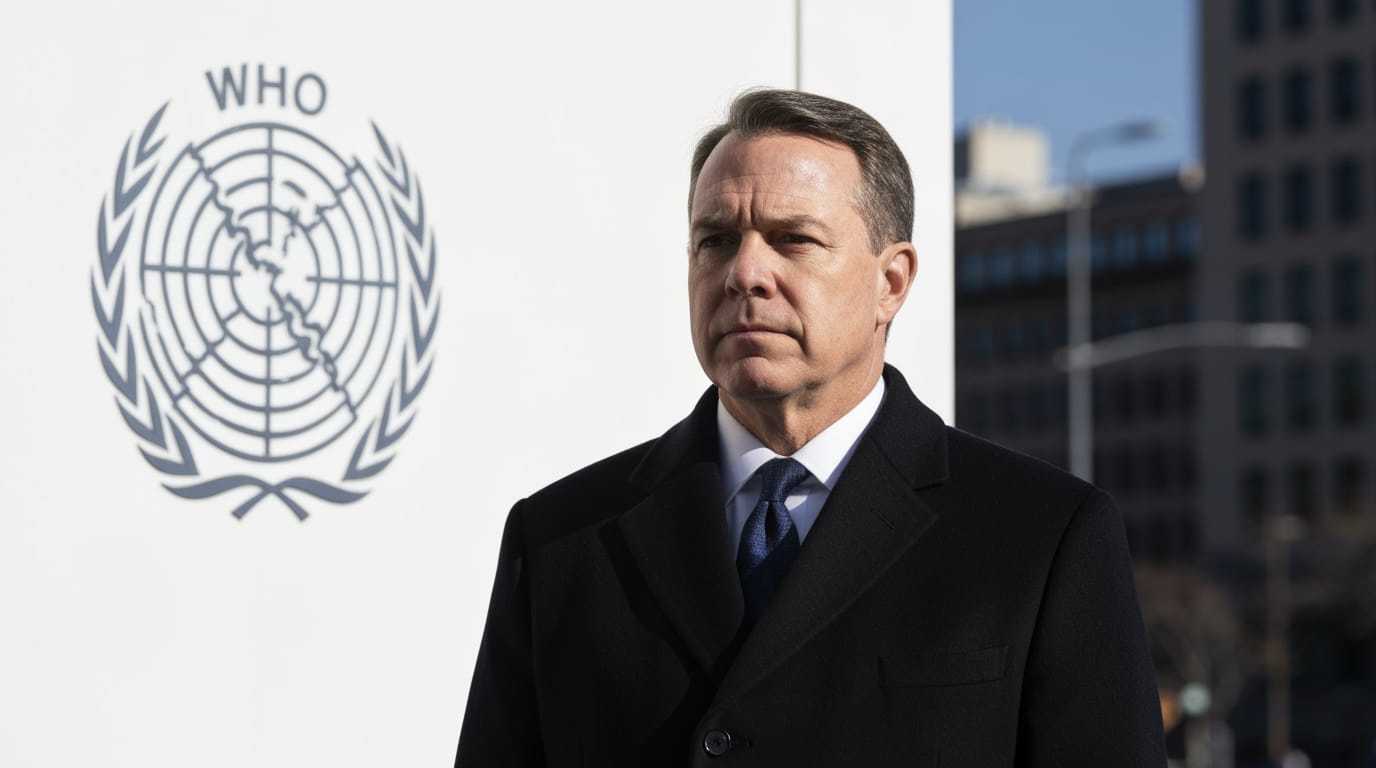
The United States today officially exited the World Health Organization (WHO), marking a profound shift in its engagement with global public health institutions. The departure, which became effective on January 23, 2026, culminates a year-long process initiated by an executive order from President Donald Trump on the first day of his second term in January 2025. This move reconfigures the landscape of international health diplomacy and raises significant questions about future pandemic preparedness and global health initiatives.
The formal withdrawal today follows a presidential directive issued on January 20, 2025, which mandated the US intent to leave the WHO and paused all future transfer of US government funds and resources to the organization. This action also led to the recall and reassignment of US government personnel working within the WHO structure. This is not the first time a Trump administration has pursued such a course; an earlier attempt to withdraw in July 2020 was subsequently reversed by President Joe Biden on his inaugural day in January 2021, underscoring a fluctuating commitment to the global health body across different administrations.
The administration cited several key reasons for its decision to withdraw, primarily focusing on the WHO's handling of the COVID-19 pandemic. Concerns were repeatedly raised regarding the organization's response to the pandemic's origins in Wuhan, China, and its perceived failure to implement critical reforms. A significant point of contention was the allegation that the WHO lacked independence and was unduly influenced by certain member states, particularly China. Financial contributions also played a prominent role in the stated rationale, with the US administration arguing that it bore a disproportionately large financial burden compared to other nations. For instance, the US reportedly contributed around $500 million annually, while China, despite a significantly larger population, contributed approximately $39 million.
Upon issuing the executive order in January 2025, the administration also revoked a previous presidential letter from January 2021 that had retracted the initial withdrawal notification, and rescinded an executive order from January 2021 aimed at strengthening US leadership in global health. Furthermore, the directive instructed the Secretary of State and the Director of the Office of Management and Budget to identify alternative, "credible and transparent" international partners to undertake activities previously managed by the WHO. The Director of the White House Office of Pandemic Preparedness and Response Policy was also tasked with reviewing and replacing the 2024 U.S. Global Health Security Strategy.
The WHO, in response to the withdrawal notice, expressed regret over the US decision, highlighting its longstanding partnership with the United States since its establishment in 1948. The organization also noted that the US had not settled its assessed fees for both 2024 and 2025, a point that has been a subject of international discussion. Global health experts and international bodies have voiced considerable apprehension regarding the implications of the US departure. Many warn that the absence of the United States, historically the WHO's largest financial contributor, could create a substantial void in global health financing and leadership, potentially hindering the WHO's capacity to respond effectively to future health crises and sustain vital programs. Critics also suggest that exiting the WHO could diminish US influence in critical discussions surrounding revisions to the International Health Regulations and the development of a new Pandemic Accord, both crucial for enhancing global preparedness and coordinated responses to emerging health threats.
The United States has historically been a foundational pillar of the WHO, playing a pivotal role in its creation in 1948 and consistently serving as its most significant financial supporter. Over the past decade, US contributions have varied, ranging between $163 million and $816 million annually. This latest withdrawal marks a significant departure from decades of multilateral engagement in global health. While the administration's stated aim is to identify alternative partners for global health initiatives, the immediate and long-term impacts on worldwide health security remain a subject of intense debate. Prominent figures like Bill Gates, a major funder of global health initiatives, have expressed skepticism about a swift return of the US to the WHO, suggesting that a re-engagement is unlikely in the near future.
As the world grapples with persistent health challenges and the threat of future pandemics, the formal withdrawal of its most substantial benefactor from the WHO fundamentally alters the dynamics of global health governance. The move underscores a reorientation of US foreign policy towards multilateral organizations, compelling both the United States and the international community to navigate a complex and uncertain path for coordinated global health action.