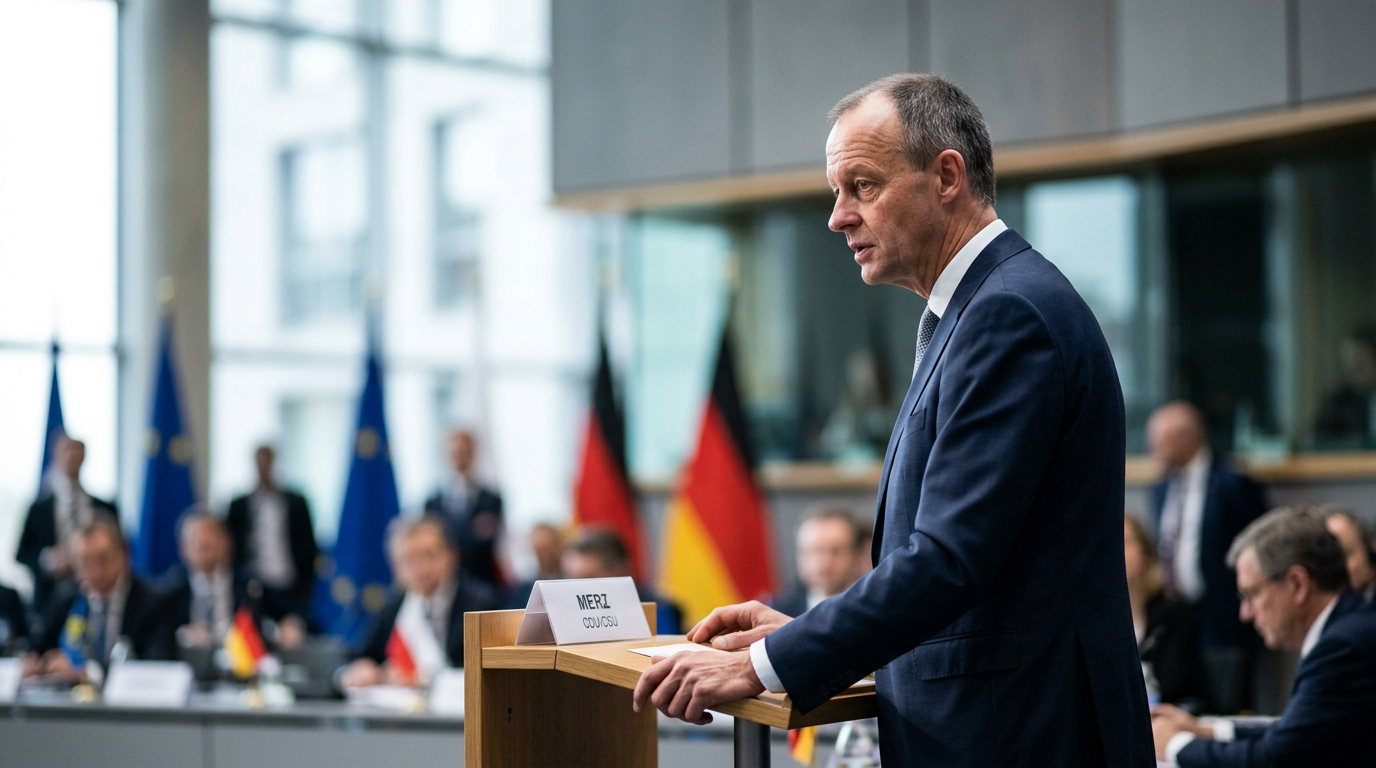
United States Launches Strikes Against ISIS in Northwest Nigeria, Trump Announces
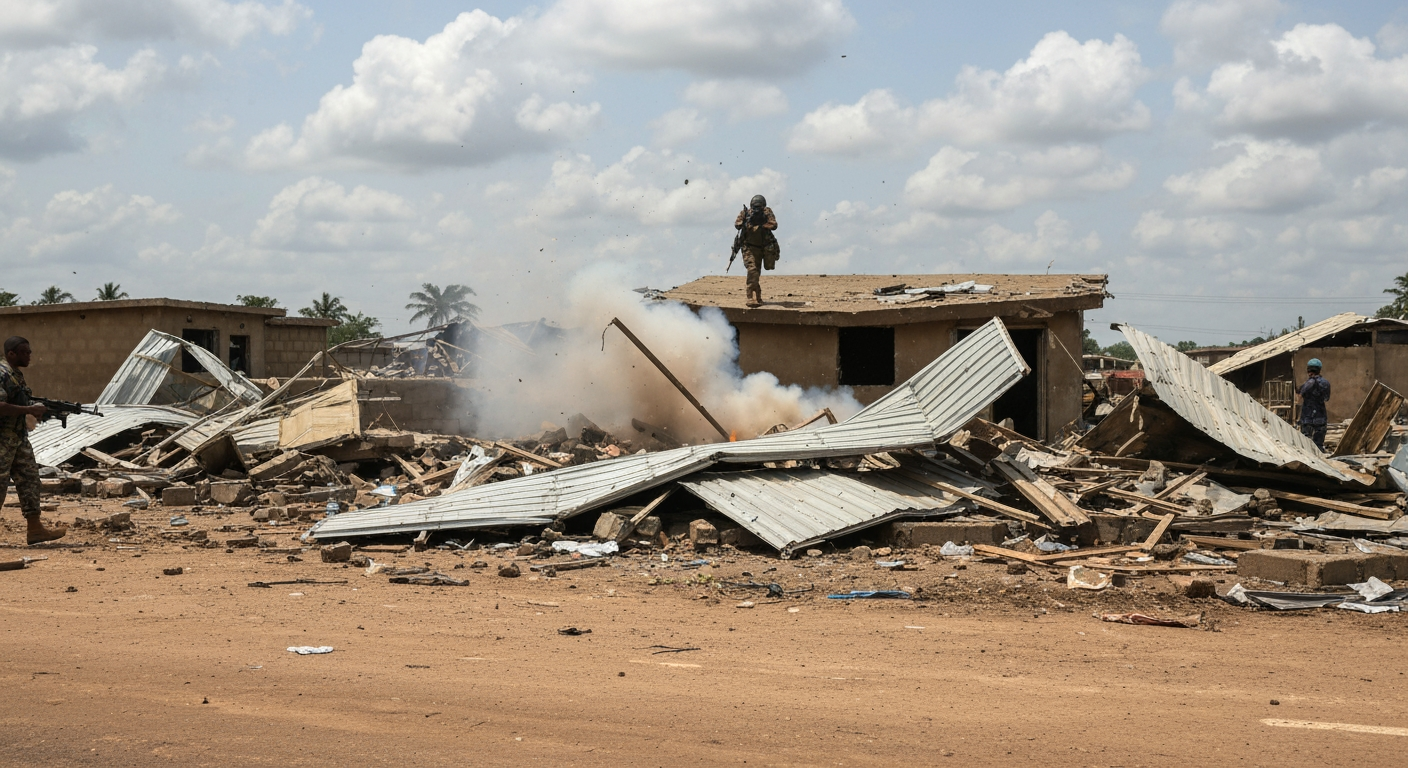
In a significant and assertive move, President Donald Trump announced on Christmas Day that the United States military had launched "powerful and deadly" strikes against Islamic State (ISIS) targets in northwest Nigeria. The proclamation, made via his Truth Social platform, stated the operations were a direct response to what he described as the "vicious killing" of Christians in the region by the militant group.
The surprise announcement marks an escalation in U.S. military engagement in Africa, particularly concerning the persistent threat posed by ISIS affiliates. President Trump's declaration emphasized a decisive stance against religious persecution, framing the strikes as a fulfillment of prior warnings to terrorist groups. The precise timing and scope of the military action, as well as its long-term implications for the volatile West African nation, are now at the forefront of international attention.
Presidential Proclamation Signals Decisive Action
President Trump's message, shared on Truth Social on Thursday, December 25, 2025, declared that "at my direction as Commander in Chief, the United States launched a powerful and deadly strike against ISIS Terrorist Scum in Northwest Nigeria." He explicitly linked the offensive to the protection of Christians, asserting that the militants had been "targeting and viciously killing, primarily, innocent Christians, at levels not seen for many years, and even Centuries!" The President had previously warned these groups that if the "slaughtering of Christians" did not cease, there would be "hell to pay," a promise he claimed was fulfilled with these strikes.
In a striking detail, Trump credited the "Department of War" and Secretary of War Pete Hegseth with executing "numerous perfect strikes, as only the United States is capable of doing." This phrasing, invoking a historical U.S. government department title, underscores the gravity and unique nature of the operation as presented by the administration. The President's message concluded with a stark warning: "MERRY CHRISTMAS to all, including the dead Terrorists, of which there will be many more if their slaughter of Christians continues."
Evolving U.S.-Nigerian Counterterrorism Dynamics
The strikes follow a period of heightened rhetoric and increasing U.S. focus on security challenges in Nigeria. Just last month, in November 2025, President Trump had issued warnings to the Nigerian government under President Bola Tinubu, threatening military intervention if attacks against Christians in the country were not curtailed. At that time, the U.S. had also designated Nigeria as a "Country of Particular Concern" regarding religious freedom.
Nigerian officials, while expressing openness to U.S. assistance in combating terrorism, had previously underscored the importance of respecting Nigeria's territorial integrity and had voiced opposition to unilateral military actions within its borders. However, recent discussions between a high-level Nigerian delegation and U.S. officials had signaled a strengthening of security partnerships, including enhanced intelligence support and potential defense equipment provisions.
Adding to the complex operational landscape, the U.S. Africa Command (AFRICOM) had, as recently as December 19, 2025, dismissed reports of U.S. military airstrikes or airspace control in Nigeria and Benin. AFRICOM stated then that no direct airstrikes had been conducted by U.S. forces in the region, emphasizing its collaborative approach with regional partners to strengthen counterterrorism efforts. Despite this, U.S. intelligence-gathering flights, operating from Ghana, have been actively conducted over large parts of Nigeria since late November 2025, with the stated aim of gathering intelligence on militant groups. These surveillance activities were reportedly agreed upon by Nigeria following meetings between Nigerian and U.S. defense officials.
The Persistent Threat of ISIS-West Africa Province
The primary target of the U.S. strikes is the Islamic State West Africa Province (ISWAP), a potent and increasingly sophisticated extremist group operating primarily in northeastern Nigeria and extending its influence across the Lake Chad Basin. ISWAP emerged as a splinter faction of Boko Haram in 2015 when it pledged allegiance to ISIS, subsequently becoming one of the Islamic State's largest and most lethal branches.
The group is known for its tactical evolution, employing ambushes, military-style assaults, roadside bombs, kidnappings, and targeted killings. It frequently targets regional military installations, government personnel, foreign aid workers, and, notably, Christian communities, exploiting sectarian divisions and economic hardships to bolster its ranks. Reports indicate that ISWAP has intensified its insurgency throughout 2025, launching numerous coordinated attacks on military bases and infrastructure, particularly in Borno State. This surge in activity has exposed vulnerabilities in Nigeria's counterterrorism strategies and highlighted ISWAP's growing operational capability.
Broader Context of Global Counterterrorism
The strikes in Nigeria occur amidst a backdrop of intensified U.S. counterterrorism efforts globally. Just days prior, on December 19-20, 2025, the U.S. military had launched a major operation, "Operation Hawkeye Strike," against ISIS targets in Syria. These strikes in Syria were a retaliatory measure following an attack that killed two U.S. soldiers and a civilian interpreter.
This synchronized action against ISIS strongholds in both the Middle East and Africa signals a potentially renewed and aggressive posture by the U.S. administration against the global terror network and its affiliates. The interconnected nature of these groups means that actions in one theater can have ripple effects across others, influencing recruitment, operational planning, and morale.
The U.S. has a long-standing security partnership with Nigeria, focusing on counterterrorism efforts against groups like Boko Haram and ISWAP, and providing significant training and defense support. However, the direct nature of the announced strikes represents a notable shift, moving beyond traditional advisory and support roles to direct offensive action.
Conclusion: A New Chapter in Counterterrorism?
President Trump's announcement of U.S. military strikes against ISIS in northwest Nigeria marks a critical moment in the ongoing fight against global terrorism. Prompted by concerns over the targeting of Christians, these "powerful and deadly" operations signal a more direct and potentially expansive U.S. intervention strategy in regions plagued by extremist violence. While details surrounding the specific impacts of the strikes remain to be fully assessed, the declaration itself, coupled with recent U.S. actions in Syria and ongoing surveillance in Nigeria, indicates a robust and unequivocal commitment to dismantling ISIS and its affiliates. The implications for regional stability, U.S.-Nigerian relations, and the broader international counterterrorism landscape will undoubtedly unfold in the coming days and weeks as the world watches the aftermath of this Christmas Day military action.
Related Articles

Ratko Mladić, "Butcher of Bosnia" and Convicted War Criminal, Dies at 84
THE HAGUE, Netherlands – Ratko Mladić, the former Bosnian Serb military commander known as the "Butcher of Bosnia" and convicted of genocide, war crimes, and crimes against humanity, has died at the age of 84. Serbian...

Long-Awaited 9/11 Mastermind Trial Set for 2028, Decades After Attacks
GUANTANAMO BAY, Cuba – Nearly a quarter-century after the devastating terror attacks of September 11, 2001, a military judge has finally set a trial date for Khalid Sheikh Mohammed, the alleged mastermind behind the...