US Agriculture Braces for Potential Fallout as Trade Tensions with China Escalate
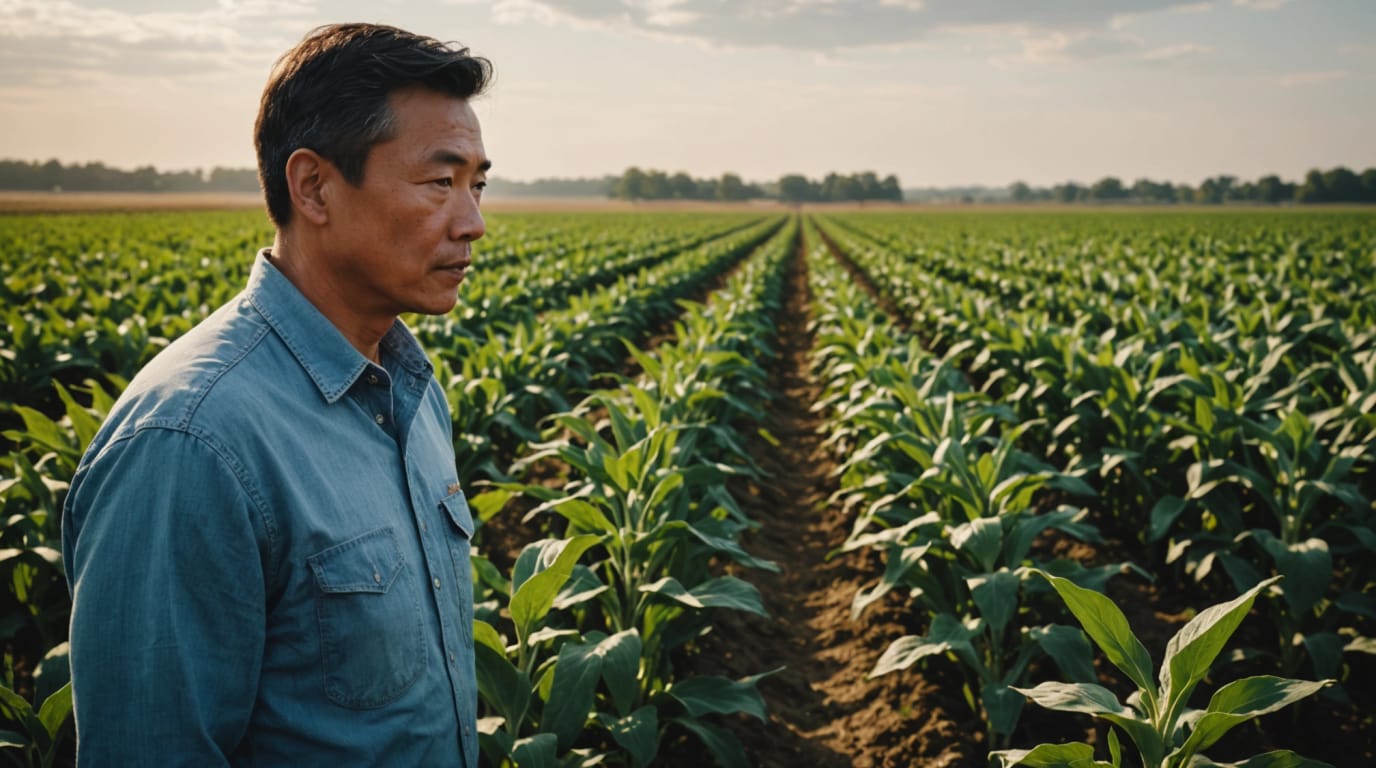
American farmers are facing renewed uncertainty as trade relations between the United States and China have deteriorated in recent weeks. Increased tariffs and retaliatory measures between the two economic giants are raising concerns about the stability of U.S. agricultural exports, farm incomes, and the overall health of rural economies. With China being a major importer of U.S. agricultural products, the potential for a prolonged trade war could have significant consequences for American agriculture.
China's Retaliatory Tariffs Target US Agriculture
In response to recent U.S. tariff hikes, China has announced it will impose additional tariffs on key U.S. farm products, effective March 10, 2025. These tariffs include a 15% additional duty on imports of U.S. chicken, wheat, corn, and cotton, and a 10% additional duty on imports of U.S. sorghum, soybeans, pork, beef, aquatic products, fruits, vegetables, and dairy products. These measures are a direct response to President Trump's decision to raise tariffs on all imports from China to 20%. China's Ministry of Commerce also announced that 10 new companies were added to the unreliable entities list, which has little immediate impact but opens them up to restrictions, including possible bans on investment and trade with China.
These tariffs are not unprecedented. During the 2018 trade war, U.S. agriculture experienced more than $27 billion in losses, with soybeans accounting for 71% of those losses, according to the American Soybean Association (ASA). The current tariffs are sparking fears of a repeat of those losses, particularly as commodity prices are already down nearly 50% from three years ago, while costs for land and inputs like seed, pesticides, and fertilizer remain high.
Impact on Key Agricultural Sectors
Several sectors within U.S. agriculture are particularly vulnerable to the effects of a trade war with China.
- Soybeans: Soybeans are China's No. 1 agricultural import from the U.S. In 2017, U.S. soybean exports to China accounted for 52% of the market share. A study by the World Agricultural Economic and Environmental Services found that a renewed trade war could cause a steep drop in soybean prices, with Brazil and Argentina likely claiming the lost market share. If China cancels its current waiver and reverts to tariffs already on the books, U.S. soybean exports to China would fall 14 to 16 million metric tons annually, an average decline of 51.8% from baseline levels expected for those years.
- Corn: China is also a significant importer of U.S. corn. The same study found that U.S. corn exports to China would fall about 2.2 million metric tons annually, an average decline of 84.3% from the baseline expectation. The top two destinations for U.S. corn and ethanol are Mexico and Canada, with 40% of U.S. corn exports going to Mexico and more than 40% of U.S. ethanol exports shipped to Canada.
- Beef and Pork: U.S. meat exports could also be impacted, with China singling out pork and beef for a 10% counter tariff. Mexico, China, and Canada accounted for $8.4 billion in U.S. red meat exports last year, according to the U.S. Meat Export Federation (USMEF).
Government Response and Mitigation Efforts
The U.S. government has historically intervened to support farmers during trade disputes. During Donald Trump's first term, his administration used funding from the Commodity Credit Corporation to alleviate political problems caused by China retaliating against U.S. agricultural products. The administration doled out up to $30 billion to farmers.
Secretary of Agriculture Brooke Rollins has promised to have a plan ready for farmers, if needed, such as the Market Facilitation Program (MFP). In 2019, MFP provided direct payments to producers impacted by retaliatory tariffs, resulting in the loss of traditional exports. However, some analysts are concerned that the USDA fund Trump tapped for a $28 billion farm bailout during his first-term tariff clash with China is now running low.
Long-Term Implications and Market Diversification
Beyond the immediate financial impacts, a prolonged trade war with China could have lasting consequences for U.S. agriculture. One major concern is the potential for China to shift its import reliance to other countries, such as Brazil and Argentina, which could lead to a permanent loss of market share for American farmers.
Economists and industry experts are urging U.S. farmers to explore alternative markets and diversify their export destinations. While it is possible to divert exports to other nations, one study found that there is insufficient demand from the rest of the world to offset the major loss of soybean exports to China to support the farmgate value.
The Broader Economic Impact
The effects of a trade war extend beyond the farm sector, impacting equipment manufacturers and related industries. Tariffs on steel, aluminum, and farm inputs from China drove up the cost of making equipment in the U.S. by about 9 percentage points in 2018.
Moreover, the money spent on farmers to offset losses from trade disputes increases the budget deficit. Since the trade aid packages were undertaken using the Commodity Credit Corporation's discretionary authority, no congressional budget offset was required, thus increasing total federal spending.
Conclusion
As trade tensions between the U.S. and China continue to escalate, the U.S. agricultural sector faces significant challenges. While government support programs may provide temporary relief, the long-term implications of a prolonged trade war could reshape global agricultural markets and negatively impact American farmers for years to come. Diversification of export markets and adaptation to changing global trade dynamics will be crucial for the resilience of U.S. agriculture in the face of these uncertainties. The ability of the U.S. and China to find common ground and de-escalate trade tensions will ultimately determine the fate of American agriculture in the coming years.