US Cedes Electric Vehicle Lead as Trump Policies Reshape Automotive Landscape
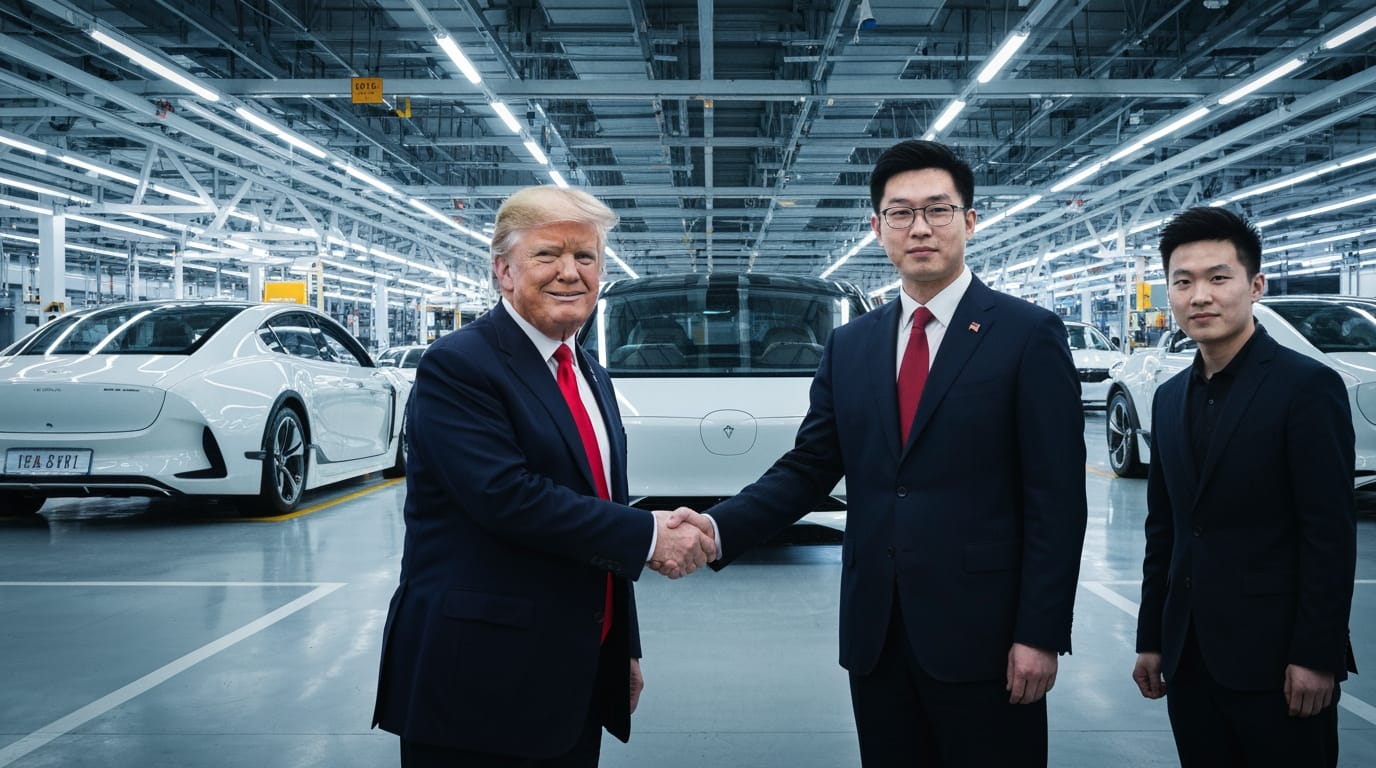
The global automotive industry is undergoing a profound transformation, with electric vehicles (EVs) at its forefront. However, the United States, once a pioneer in automotive innovation, appears to be yielding its position in the rapidly expanding EV market to China, a shift exacerbated by recent policy decisions. While China aggressively pursues dominance in electric mobility, the U.S. has seen a significant rollback of federal support for EVs under former President Donald Trump, creating a diverging path that carries substantial economic, environmental, and technological implications.
A Stark Divergence in Policy and Market Trajectory
Under the Trump administration, policies have been enacted that significantly alter the trajectory of electric vehicle adoption in the United States. President Trump has moved to reverse Biden-era initiatives aimed at accelerating the transition to EVs, including rescinding federal EV tax credits and halting the distribution of unspent funds for the National Electric Vehicle Infrastructure (NEVI) highway charging program. These actions also include resetting Corporate Average Fuel Economy (CAFE) standards to levels that are achievable with conventional gasoline and diesel vehicles, rather than the more stringent targets designed to incentivize EV production. The administration argues that easing these standards and removing EV mandates will reduce costs for American families and automakers, allowing the industry to adjust more gradually and protecting U.S. auto jobs. Environmental experts, however, contend that these changes will increase emissions and weaken U.S. competitiveness in a global market increasingly embracing clean technology.
Modeling by institutions like the Salata Institute suggests that eliminating EV tax credits alone could cut the EV share of new vehicle sales in 2030 by 6 percentage points, from a projected 48% under previous policies to 42%. The most extreme scenario, involving the removal of all Inflation Reduction Act (IRA) and Bipartisan Infrastructure Law (BIL) support for EVs, alongside withdrawing California's Clean Air Act waiver, could slash the 2030 EV sales share by 16 percentage points, down to 32%. Such policy reversals are estimated to increase 2030 emissions by tens of millions of metric tons and significantly cut federal fiscal costs by billions of dollars. Automakers like Ford have already begun to reset their EV strategies, taking significant financial write-downs amid slowing demand and regulatory changes, pivoting towards hybrid models and focusing on smaller, more affordable electric vehicles.
China's Unyielding Drive for EV Hegemony
In stark contrast to the U.S. approach, China has methodically built an end-to-end electric vehicle ecosystem over the past two decades, achieving undisputed global leadership in the sector. China produces over 60% of all electric vehicles globally, and its domestic market alone accounts for more than half of worldwide EV sales. In 2024, China's EV sales exceeded 11 million units, representing almost half of all passenger vehicles sold in the country, a nearly 40% increase from the previous year. This impressive growth is projected to continue, with the Chinese EV market expected to reach $1,298.6 billion by 2032, exhibiting a compound annual growth rate of 14.0% from 2025.
China's dominance extends beyond vehicle production to the critical supply chain components, particularly batteries. Chinese firms CATL and BYD control almost half of global battery production, with CATL holding a 37% market share as of October 2025. China produces over 75% of the world's lithium-ion battery cells and refines around 60% of the world's lithium and 70% of cobalt, essential minerals for modern batteries. This vertical integration and strategic foresight, especially in prioritizing Lithium Iron Phosphate (LFP) batteries, have created a formidable "moat" around China's battery production, leaving Western manufacturers struggling to catch up. The result is that Chinese companies can offer EVs at significantly lower prices than their American and European counterparts.
The Shifting Global Automotive Landscape
The diverging strategies between the U.S. and China are reshaping the global automotive landscape. Globally, electric car sales have continued to rise, with over a quarter of new cars sold being electric in 2025. However, while China surged, the U.S. market experienced slower growth in 2024, with EVs accounting for just 10% of passenger car sales, significantly less than the global average of 22%.
Emerging markets are increasingly becoming significant players in EV adoption, often surpassing advanced economies in EV sales shares. Countries in Southeast Asia and Latin America are seeing rapid increases, with some, like Vietnam, doubling their EV sales share since 2024 to nearly 40% in 2025. This growth in emerging markets is often fueled by the availability of affordable Chinese-made EVs and supportive new policy mechanisms, such as tax cuts and efforts to attract foreign investment in EV manufacturing. In 2025, Chinese exports have been instrumental in meeting the demand for EVs in these new markets, with non-OECD countries becoming top destinations for Chinese vehicles.
Implications for US Competitiveness and Future Innovation
The contrast in national strategies has substantial implications for the U.S. position in future automotive technology and industry. While the Biden administration had aimed for 50% of all new vehicles sold in the U.S. by 2030 to be electric, the current policy reversals under the Trump administration threaten to undermine these goals. The U.S. still lacks the comprehensive infrastructure for refining and processing key battery minerals, tasks overwhelmingly carried out in China, which refines over 80% of the world's supply of many of these materials. This dependency and the lack of a unified national EV strategy, where federal, state, and private-sector efforts often work in parallel rather than in coordination, contribute to the U.S. lagging behind.
The long-term consequences of this trajectory include a potential loss of technological leadership, reduced market share for U.S. automakers, and a weakening of the domestic supply chain for critical EV components. As China continues to dominate global EV sales, battery production, and exports, the U.S. faces the challenge of re-evaluating its strategic approach to electric mobility to avoid being marginalized in a rapidly evolving global industry. Without sustained, coherent support for EV adoption and domestic manufacturing, the U.S. risks ceding a significant portion of the future automotive market to foreign competitors.