US-Iran Peace Talks in Limbo as Vice President Vance Delays Switzerland Trip
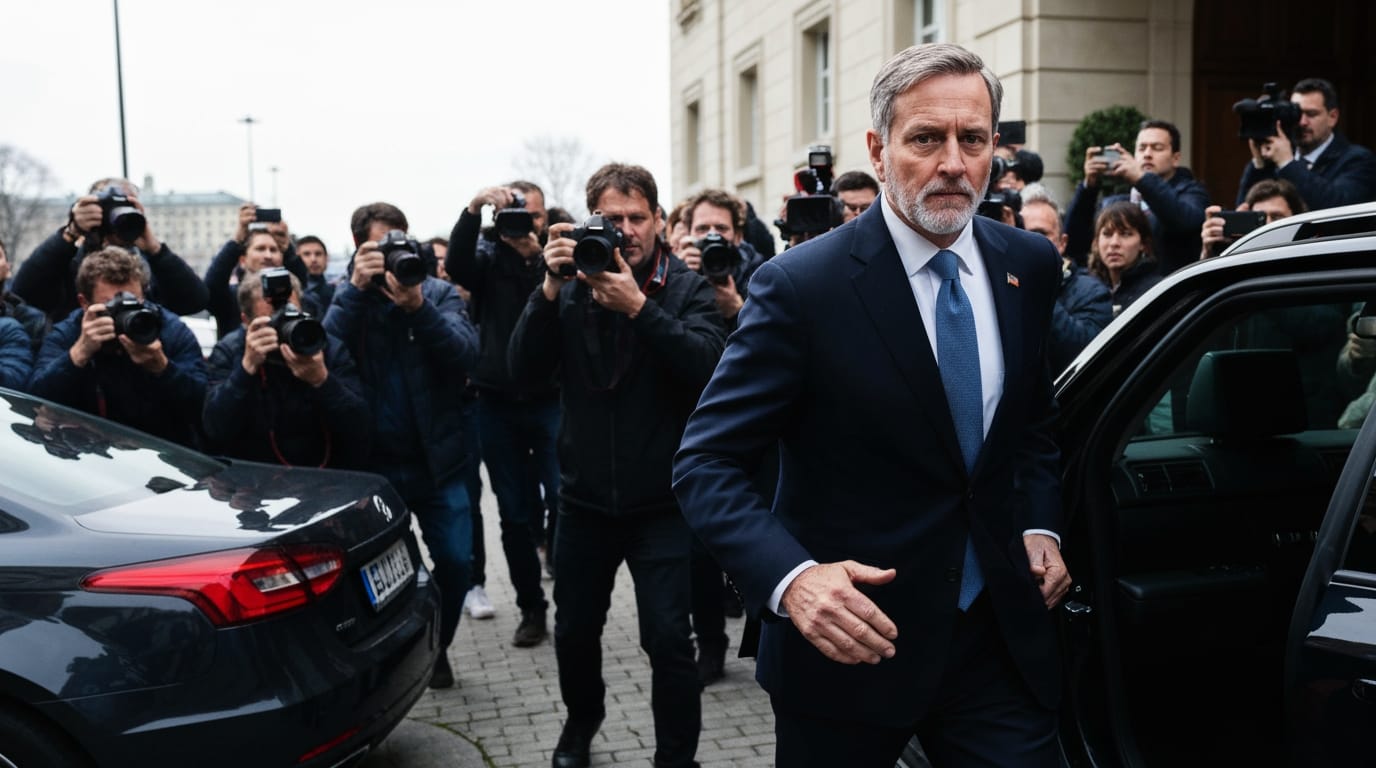
WASHINGTON D.C. – Hopes for immediate progress in the delicate U.S.-Iran peace process have been cast into doubt following the abrupt delay of Vice President J.D. Vance's planned trip to Switzerland for technical negotiations. The White House cited unresolved logistical issues as the reason for the postponement, fueling uncertainty just days after a landmark preliminary agreement aimed at ending hostilities between Washington and Tehran. This setback underscores the inherent complexities and deep-seated mistrust that continue to plague diplomatic efforts between the two long-antagonistic nations, threatening to derail the nascent peace initiative before it gains significant traction.
The delay clouds the next crucial phase of implementing the recently signed 14-point "Islamabad Memorandum of Understanding" (MoU), which was intended to lay the groundwork for a comprehensive resolution to their protracted conflict. The MoU, electronically signed by U.S. President Donald Trump and Iranian President Masoud Pezeshkian on June 17, 2026, represented a significant diplomatic breakthrough following months of intense mediation by Pakistan and Qatar. The agreement called for an immediate ceasefire, the reopening of the vital Strait of Hormuz, and a commitment to broader discussions on contentious issues, including Iran's nuclear program and the scope of international sanctions. Initial technical talks, meant to flesh out the operational details of this ambitious accord, were slated to commence this weekend in Switzerland, a nation with a long history of facilitating dialogue between the two powers.
A Promising Start Encounters Early Hurdles
The Islamabad MoU had, until now, injected a cautious optimism into a region weary of conflict. Its provisions were far-reaching, encompassing an end to military operations "on all fronts" between the U.S., Iran, and their respective allies, particularly in Lebanon. Crucially, the agreement stipulated the immediate lifting of the U.S. naval blockade on Iran and the granting of sanctions waivers for Iran's fossil fuel sector, allowing oil tankers to resume passage through the Strait of Hormuz. This economic concession was seen as a vital confidence-building measure from Washington, directly addressing one of Tehran's primary grievances. Furthermore, the MoU established a 60-day window for subsequent technical negotiations to address the more intricate and contentious issues, such as the future of Iran's nuclear ambitions, the precise extent of sanctions relief, and a proposed multi-billion-dollar reconstruction and economic development program for Iran. Mediators like Pakistan and Qatar played pivotal roles in brokering this initial agreement, with the Swiss government offering the serene Bürgenstock Resort as a neutral venue for the forthcoming discussions.
Logistical Labyrinth or Deeper Disagreements?
The White House attributed Vice President Vance's delayed departure to the lack of finalized logistical details for the technical talks, with a spokesperson stating, "The logistics of these negotiations have never been simple or predictable". Vance himself had expressed uncertainty regarding the precise timing of his travel, acknowledging the inherent difficulties in coordinating such high-stakes diplomacy. While the U.S. delegation reportedly remained prepared to depart at the earliest opportunity, this official explanation may only tell part of the story.
Reports from Iranian media, including the semi-official Tasnim news agency, suggested a more complex picture. Iranian negotiators were reportedly seeking tangible signs of the interim agreement's implementation by the U.S. before committing their delegation to the Swiss talks. There was also no immediate confirmation from Tehran regarding its delegation's travel plans. Compounding the issue was a perceived disagreement over the necessity of a formal signing ceremony in Switzerland. While U.S. officials had anticipated such a ceremony, Iran's foreign ministry indicated it was unnecessary given that the presidents of both nations had already electronically endorsed the MoU. Pakistan's Prime Minister Shehbaz Sharif similarly postponed his own planned visit to Switzerland, citing the electronic signing as making a ceremonial event redundant. Furthermore, some reports linked Iran's reluctance to immediately engage in talks to ongoing Israeli military actions in southern Lebanon, suggesting that regional dynamics continue to exert significant influence on the diplomatic timetable. These elements collectively suggest that beyond mere logistics, a deeper set of political and trust-related hurdles contributed to the current impasse.
The Stakes: What's at Play in Switzerland
The planned technical talks in Switzerland are critical because they are designed to translate the broad strokes of the Islamabad MoU into concrete, actionable steps. Central to these discussions are the intricate details surrounding Iran's nuclear program. Future negotiation points include uranium enrichment levels, the management of existing stockpiles of highly enriched uranium, and the extent of international inspections, issues that have historically been major flashpoints between the two countries. The 60-day timeframe for these negotiations, as outlined in the MoU, is ambitious, particularly given the decade-plus efforts that preceded the earlier 2015 nuclear deal.
Beyond the nuclear file, the talks were also expected to define the precise mechanisms for sanctions relief, a key Iranian demand, and the implementation of the proposed $300 billion reconstruction and economic development program. This program, envisioned to be primarily funded by the private sector with support from the U.S. and regional partners, offers a pathway for Iran's economic recovery but requires meticulous planning and mutual trust to materialize. The success or failure of these technical discussions will profoundly impact the credibility and longevity of the entire peace process, determining whether the MoU evolves into a durable peace agreement or remains a temporary cessation of hostilities.
Domestic and Regional Repercussions
The delay in Switzerland reverberates far beyond the diplomatic chambers. Domestically, the initial MoU had already drawn sharp criticism from some U.S. congressional Republicans and other hardliners who perceive it as too lenient on Tehran and a concession to Iran's demands. Vice President Vance had appeared at the White House earlier to defend the deal, emphasizing that Iran would first need to comply with U.S. demands despite the concessions. The current uncertainty surrounding the talks could embolden these critics, making it more challenging for the Trump administration to build political consensus and maintain support for the deal.
Regionally, the implications are equally significant. The MoU explicitly aims to address the conflict "on all fronts," including the volatile situation in Lebanon. Reports linking Iran's hesitation to Israeli military actions in southern Lebanon underscore how interconnected regional conflicts are with U.S.-Iran relations. The fragility of the current ceasefire and the ongoing security concerns for actors like Israel add layers of complexity to any diplomatic resolution. The failure to quickly transition to substantive technical talks risks reigniting tensions and undermining the fragile stability achieved through the initial MoU.
A Fragile Path Forward
The postponement of Vice President Vance's trip to Switzerland has cast an undeniable shadow over the nascent U.S.-Iran peace process. While the White House maintains that the U.S. remains committed to the technical talks and is ready to proceed "as soon as possible," the episode highlights the profound challenges inherent in forging peace between two adversaries with decades of animosity. The logistical hurdles, coupled with the apparent need for confidence-building measures and clarity on implementation from both sides, suggest that the path to a comprehensive agreement will be neither simple nor swift. The world watches closely as Washington and Tehran navigate this delicate phase, with the potential for lasting peace hanging in the balance, dependent on their ability to overcome entrenched distrust and operational complexities.


