US Judge Upholds Charges Against Maduro, Citing Constitutional Rights Amid Legal Fee Stalemate
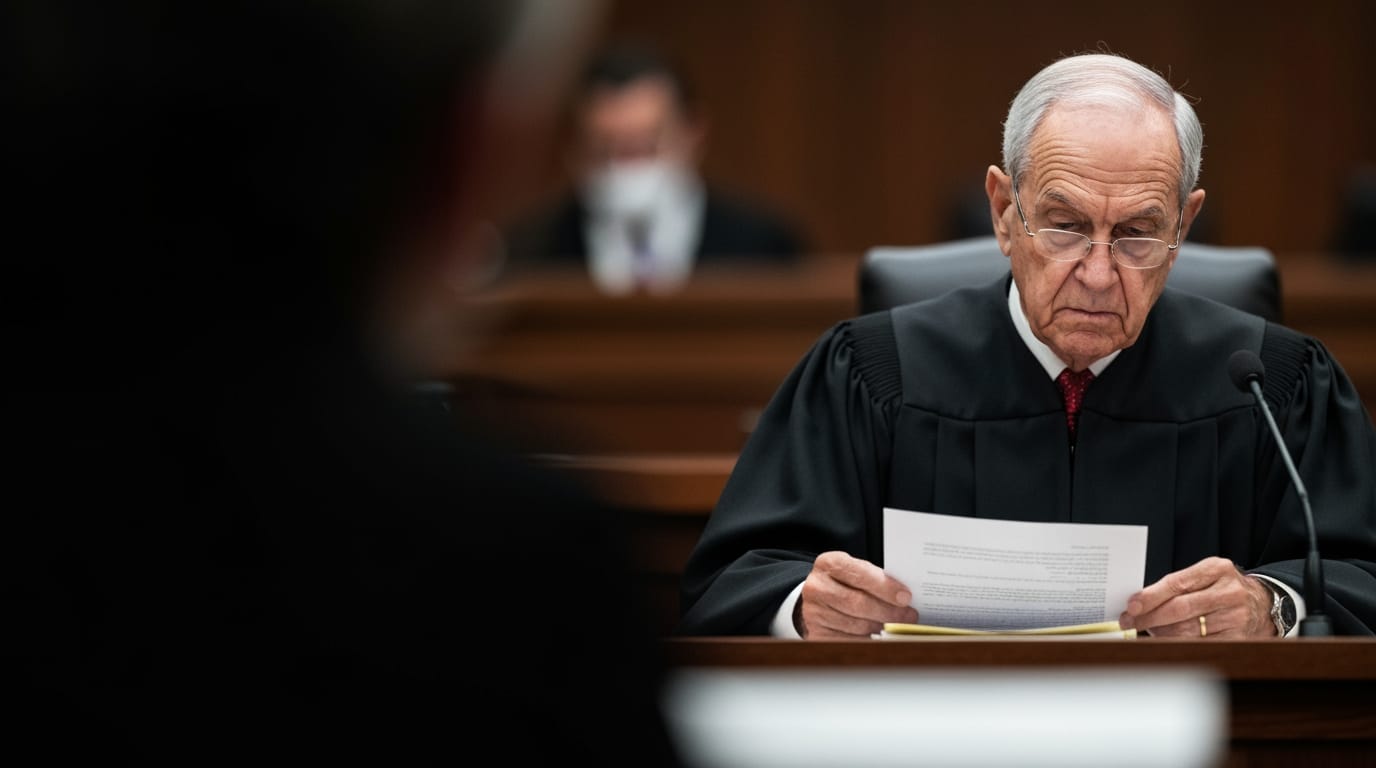
A federal judge in New York has declined to dismiss narcoterrorism charges against former Venezuelan President Nicolas Maduro and his wife, Cilia Flores, despite defense arguments that U.S. sanctions are impeding their ability to pay for legal representation. The ruling by Senior U.S. District Judge Alvin Hellerstein keeps the high-profile case moving forward but highlights a constitutional quandary regarding a defendant's right to counsel when foreign policy interests intersect with the judicial process.
The decision came during a recent hearing where attorneys for Maduro and Flores argued that Washington's financial sanctions on Venezuela effectively block their clients from accessing state funds that, under Venezuelan law, would typically cover their legal expenses. The defense contended that this prohibition infringed upon their Sixth Amendment right to a chosen lawyer, asserting that both Maduro and Flores lack the personal wealth to fund their extensive defense against the serious charges.
The Court's Stance on Dismissal and Future Considerations
During the proceedings, Judge Hellerstein firmly stated, "I am not going to dismiss the case," signaling his intent to proceed with the indictment against the former Venezuelan leader and his spouse. However, the judge's decision was not an outright rejection of the defense's underlying concerns. He indicated that he could revisit the dismissal request if he later determines that the U.S. government is arbitrarily preventing Maduro from paying for counsel. This leaves open the possibility of a future challenge if the legal funding issue remains unresolved. Both Maduro, 63, and Flores, 69, remain in federal custody in New York, having pleaded not guilty to charges that include narcoterrorism conspiracy and drug trafficking, charges that could lead to decades in prison. No trial date has yet been established, adding to the uncertainty surrounding the complex legal battle.
The Heart of the Legal Fee Controversy
The central dispute revolves around the U.S. Treasury Department's Office of Foreign Assets Control (OFAC). According to defense attorneys, OFAC initially granted a license allowing Venezuelan state funds to be used for Maduro's legal fees but then revoked that permission just hours later without providing a clear explanation. Barry Pollack, Maduro's lead attorney, who previously represented WikiLeaks founder Julian Assange, has been vocal about the difficulties this presents. He explicitly stated his intention to withdraw from the case if the Venezuelan government cannot cover his fees, underscoring the severity of the funding blockade. The defense posits that under Venezuelan law and custom, the government is obligated to pay for the legal expenses of its president and first lady. The inability to access these funds, they argue, directly impedes their clients' constitutional right to a proper defense.
Judicial Scrutiny and Competing Arguments
Judge Hellerstein expressed considerable skepticism regarding the prosecution's rationale for continually blocking the funds. He questioned why the prohibition should remain in place, particularly now that Maduro and Flores are in U.S. custody and arguably no longer pose a national security threat to the United States. The judge emphasized that the right to constitutionally guaranteed legal counsel is "paramount" and "overrides other rights" in this context. He also appeared unconvinced by the prosecution's suggestion that public defenders could represent the couple, noting that such a defense would come at a "great expense" and could severely strain resources intended for those without other legal recourse.
Conversely, prosecutors maintained that the OFAC license was issued in error and subsequently revoked. They argued that blocking these funds aligns with legitimate national security and foreign policy interests, especially since the U.S. has not recognized Maduro as Venezuela's legitimate president since 2019. Prosecutor Kyle Wirshba contended that allowing Maduro and Flores to use state funds would undermine the very sanctions designed to prevent them from "plundering their country's wealth."
Broader Context and Geopolitical Undercurrents
The legal proceedings unfold against a backdrop of significant geopolitical tensions between the United States and Venezuela. Maduro and Flores were captured in a dramatic "surprise raid" by U.S. special forces in Caracas on January 3, a move that dramatically escalated the long-standing dispute. The U.S. administration, having deemed Maduro's 2018 reelection fraudulent, has maintained a policy of non-recognition and has implemented extensive sanctions against his government.
Beyond the legal fee debate, Maduro's defense plans to challenge the legality of his capture by U.S. forces and assert claims of presidential immunity, arguing that the alleged offenses occurred while he was serving as the head of state. These arguments introduce complex questions of international law and the boundaries of national sovereignty, adding layers of geopolitical significance to an already high-stakes criminal case.
The ongoing deliberation over legal funding underscores the intricate challenges presented when a criminal justice system operates under the shadow of international diplomacy and sanctions. Judge Hellerstein's cautious approach seeks to balance the executive branch's foreign policy prerogatives with the fundamental constitutional rights afforded to all defendants in the U.S. legal system. The outcome of the funding question will undoubtedly shape the trajectory of this unprecedented trial, marking a critical juncture in the legal and political saga of Nicolas Maduro.


