US Military Strike in Caribbean Kills Three, Escalating Anti-Narcotics Campaign
WASHINGTON D.C. — A U.S. military strike in the Caribbean Sea on Friday resulted in the deaths of three alleged drug traffickers, marking the latest deadly engagement in the Trump administration's aggressive "Operation Southern Spear" counter-narcotics campaign. This incident, confirmed by U.S. Southern Command (SOUTHCOM), further intensifies the debate surrounding the legality and efficacy of using military force against suspected illicit maritime activity.
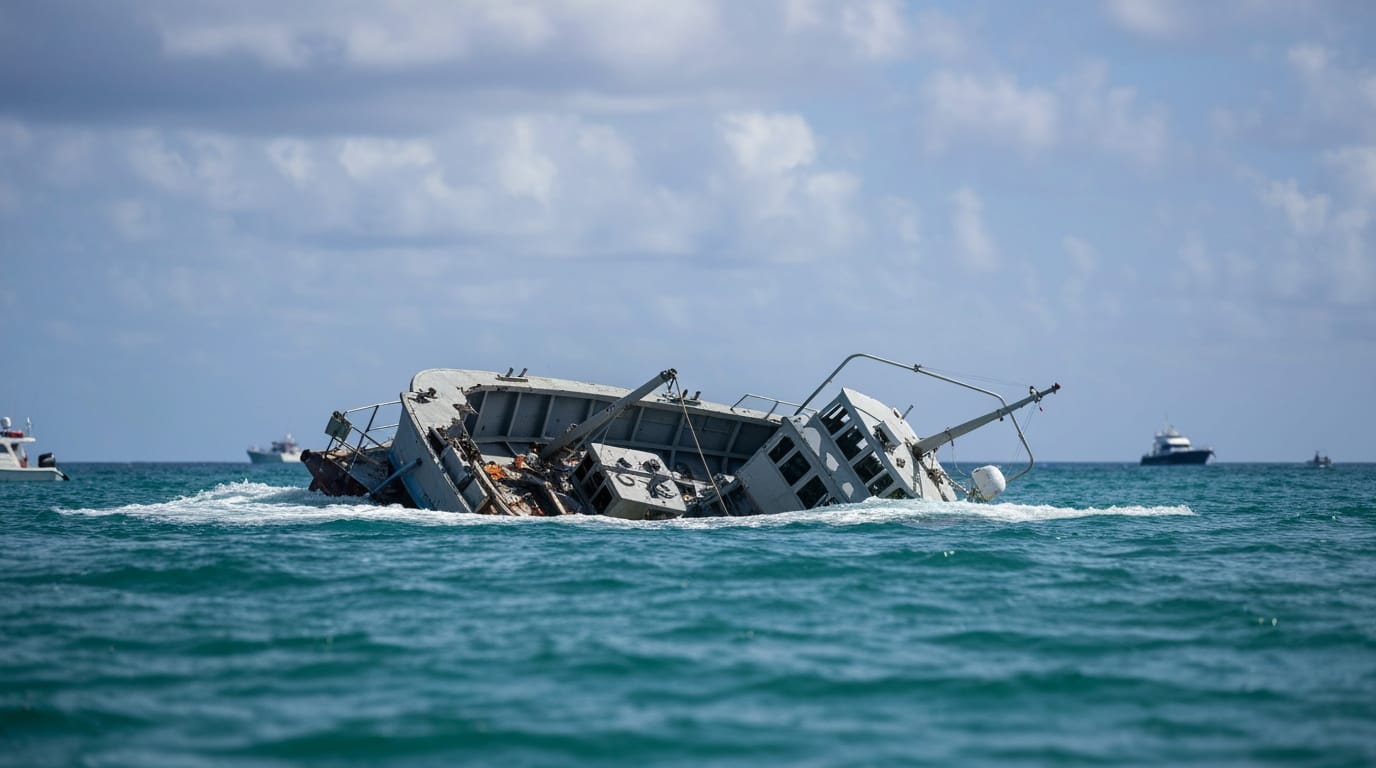
The strike, which occurred on February 13, 2026, targeted a vessel identified by SOUTHCOM as transiting along known narco-trafficking routes and actively engaged in drug operations. A video accompanying the command's announcement depicted a boat exploding in flames after being hit, a visual testament to the kinetic nature of these operations. This action brings the total number of fatalities from such U.S. strikes in the Caribbean and Eastern Pacific to at least 133 individuals across 38 or 39 separate attacks since early September.
The Latest Incident: A Pattern of Force
Friday's strike in the Caribbean is not an isolated event but rather part of an accelerating pattern of military interdictions. It followed closely on the heels of another deadly attack earlier in the week in the Eastern Pacific, which killed two suspected drug smugglers and left one survivor. U.S. Southern Command, responsible for military operations across Latin America and the Caribbean, has maintained that intelligence confirmed the vessel's involvement in narcotics trafficking. The administration's justification for these lethal actions is rooted in its characterization of drug cartels as "Designated Terrorist Organizations" and the operations as an active "non-international armed conflict."
This approach represents a significant shift from traditional law enforcement methods for drug interdiction. Defense Secretary Pete Hegseth and President Donald Trump have consistently framed these operations as crucial to national security, asserting they are necessary to stem the flow of illicit drugs, particularly fentanyl, into the United States. Videos of these strikes have often been shared on social media by administration officials, accompanied by strong rhetoric emphasizing a firm stance against "narco-terrorists."
Operation Southern Spear: An Escalation of Military Action
The intensified military campaign, dubbed "Operation Southern Spear," commenced in September 2025 with an increase in naval assets and personnel deployed to the Caribbean. The administration's rationale for this escalation centers on the idea that these cartels pose an existential threat, necessitating a military response. President Trump formally notified Congress in October 2025 that the U.S. was engaged in a "non-international armed conflict" with drug cartels, a determination that, under the administration's legal interpretation, permits the targeting and killing of enemy combatants without the immediate threat required in law enforcement scenarios.
These operations involve a coordinated effort between various U.S. military branches, including the Navy and the Coast Guard, often with law enforcement detachments aboard Navy vessels. The objective, according to SOUTHCOM, is to disrupt the flow of illicit drugs to the homeland and protect Americans, as well as to reassure allies and build their capacity in counter-narcotics efforts. The administration claims these "highly effective" kinetic strikes have led some "top cartel drug-traffickers" to cease operations indefinitely, though specific evidence to support such claims has not been widely publicized.
Legal and Ethical Scrutiny
The escalating number of fatalities and the aggressive nature of "Operation Southern Spear" have drawn sharp criticism from international bodies and legal experts. The UN Human Rights Chief, Volker Türk, has voiced concerns over the legality of these strikes, asserting that they may constitute "extrajudicial killings" and find "no justification in international law." Türk argues that countering illicit drug trafficking falls under law enforcement, which operates under stricter limits on lethal force, only permissible as a last resort when there's an imminent threat to life. Critics contend that the U.S. has provided little public evidence that individuals on the targeted vessels posed such an imminent threat.
Legal scholars and human rights organizations have questioned the administration's declaration of "armed conflict" with drug cartels, particularly without explicit congressional authorization for such a conflict. They highlight a perceived lack of accountability and due process for those killed in these strikes. The U.S. Justice Department, however, maintains that these actions align with the law of armed conflict. The debate underscores a fundamental tension between national security imperatives and international human rights law in the context of global drug interdiction efforts.
Broader Implications and Regional Response
While the U.S. asserts these operations are vital for national security, their long-term implications for regional stability and international relations remain a subject of ongoing analysis. Some operations have involved cooperation with regional partners; for instance, a September 2025 strike that also killed three individuals saw the Dominican Republic's collaboration with the U.S. Navy, leading to the recovery of 1,000 kilograms of cocaine. This joint effort was hailed by the Dominican Republic as a historic collaboration against "narco terrorism."
However, the aggressive posture has also fueled tensions, particularly with Venezuela, which has accused the U.S. of using the anti-narcotics campaign as a pretext for regime change. The presence of a significant U.S. military footprint, including aircraft carriers and other warships, has been met with increased vigilance and naval deployments by Venezuela. The U.S. military has significantly increased its presence in the region, including deployments of its most advanced naval assets, with the stated aim of disrupting drug trafficking networks.
Conclusion
The latest U.S. military strike in the Caribbean, resulting in three fatalities, underscores the Trump administration's unyielding commitment to its "Operation Southern Spear." This campaign, characterized by direct military engagement and a redefinition of the fight against drug trafficking, has undeniably led to a significant increase in interdictions and casualties. However, it also continues to generate profound questions regarding the interpretation of international law, human rights, and the appropriate scope of military action in combating transnational crime. As the death toll mounts and the legal debate persists, the balance between aggressive enforcement and adherence to international legal norms remains a critical point of contention on the global stage.