DP World Chairman Replaced Amid Explosive Jeffrey Epstein Revelations
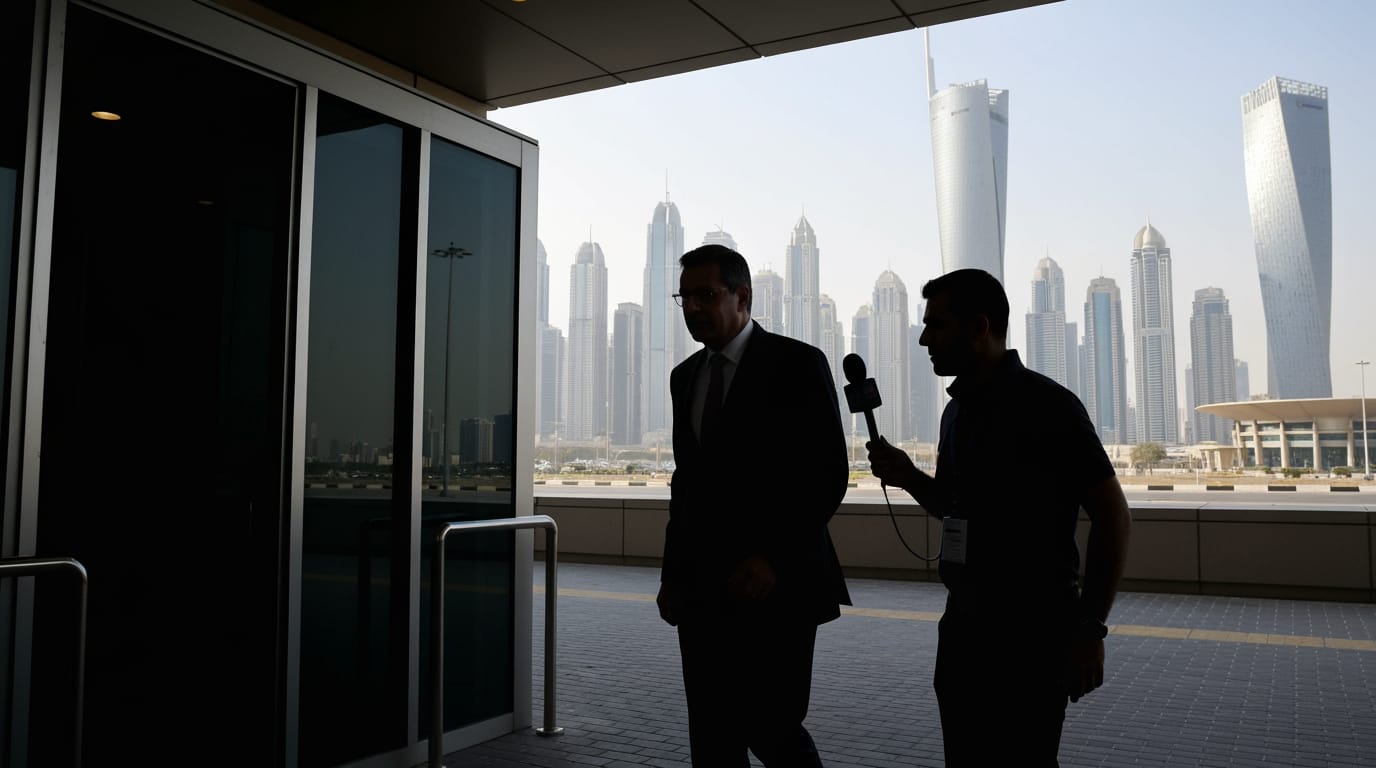
Dubai's global port operator, DP World, has undergone a significant leadership restructuring, replacing its long-serving Chairman and CEO, Sultan Ahmed bin Sulayem, following the release of U.S. Department of Justice documents detailing extensive and explicit communications with convicted sex offender Jeffrey Epstein. The move marks a dramatic turn for one of the world's largest logistics powerhouses, whose operations are integral to global trade, and underscores the far-reaching impact of the Epstein scandal on high-profile individuals and corporations worldwide. Essa Kazim has been appointed as the new Chairman, while Yuvraj Narayan will assume the role of Group Chief Executive Officer.
The Unveiling of Controversial Correspondence
The leadership change at DP World was precipitated by the recent public disclosure of a trove of documents related to Jeffrey Epstein, the deceased financier who was charged with sex trafficking. These documents, released by the U.S. Department of Justice, revealed a long-standing and often sexually explicit correspondence between Sultan Ahmed bin Sulayem and Epstein. Reports indicate that bin Sulayem's name appeared thousands of times within these files, portraying a relationship that Epstein himself described as a "close personal friend." The exchanges, spanning from at least 2007 until weeks before Epstein's death in 2019, continued even after Epstein's 2008 conviction for soliciting prostitution from a minor, raising serious questions about judgment and corporate governance.
Among the particularly disturbing revelations were emails that included "inappropriate and lewd exchanges" and "sexually explicit content." In one instance, a 2015 email from bin Sulayem to Epstein allegedly detailed a sexual encounter, describing a woman as having provided "the best sex I ever had amazing body." Another unsettling communication, dating back to April 2009, showed Epstein sending an email to bin Sulayem asking, "where are you? are you ok I loved the torture video." These documents also suggest that the two men discussed visits to Epstein's private island, introduced each other to powerful figures, and delved into various topics including business, politics, and religion, alongside their candid discussions about sex and women. Furthermore, it has been reported that bin Sulayem may have played a role in Epstein's acquisition of Great St. James island, with bin Sulayem reportedly listed as a beneficial owner. Bin Sulayem also reportedly used Epstein to lobby then-British business secretary Peter Mandelson regarding a significant port project.
It is crucial to note that while the documents have exposed a troubling association, Sultan Ahmed bin Sulayem has not been accused or charged by authorities with any crimes in connection with Epstein's activities. Being named in these documents does not, by itself, constitute evidence of criminal wrongdoing.
Sultan Ahmed bin Sulayem's Enduring Legacy and DP World's Global Clout
Sultan Ahmed bin Sulayem had been a colossal figure in Dubai's economic landscape for decades, steering DP World from its origins as a regional port operator to a global titan in logistics and supply chain management. His leadership, which included serving as Chairman since 2007 and Group Chief Executive Officer since 2016, saw the company expand its footprint across dozens of countries, becoming one of the world's largest port operators. DP World now handles approximately one-tenth of the world's container trade, operating crucial terminals in major hubs like London Gateway, and owning significant entities such as P&O Ferries.
Under bin Sulayem's stewardship, DP World diversified its portfolio, playing a pivotal role in strengthening global supply chains and reinforcing Dubai's position as a leading hub for trade and logistics. The company's vast network of ports, terminals, and logistics parks are vital arteries in the intricate system of international commerce, impacting economies far beyond the UAE. His departure marks the end of an era defined by aggressive expansion and strategic acquisitions that cemented DP World's formidable presence on the global stage.
Swift Corporate Action and Initial Repercussions
The announcement of the leadership change came from the Dubai Government Media Office, which, notably, did not explicitly name Sultan Ahmed bin Sulayem nor did it refer to the Epstein revelations as the reason for the reshuffle. This understated approach by the state-owned entity is characteristic of how sensitive corporate and governmental changes are often communicated in the region. Before the official announcement of his removal, DP World had declined to comment on bin Sulayem's relationship with Epstein when contacted by media outlets.
Despite the lack of explicit acknowledgment, the timing of the leadership change, immediately following the public release of the Epstein documents, leaves little doubt about the causal link. The revelations quickly sparked concern among DP World's international partners and investors. For instance, Canada's La Caisse pension fund, a significant investor in DP World Canada, and British International Investment (BII) had both signaled that they would pause or halt future investment projects with the company pending a response to the situation. The swift action by DP World in replacing its top executive appears to have mollified some concerns, with BII confirming that it would resume investment projects, welcoming DP World's decision and expressing eagerness to continue their partnership. This indicates the immediate pressure felt by the company to safeguard its reputation and maintain vital international partnerships.
Broader Implications for Global Governance and Reputational Risk
The forced departure of such a prominent global business leader due to connections with a convicted sex offender highlights the increasingly rigorous scrutiny faced by executives and corporations in the modern era. The Epstein scandal continues to uncover hidden ties between the financier and influential figures across various sectors, demonstrating the enduring reputational risks for those associated with his illicit network. This incident serves as a stark reminder that personal conduct, even when not directly linked to criminal charges, can have profound professional and institutional consequences, particularly for entities with a public profile and significant international dealings.
For DP World, a company deeply embedded in the sensitive global infrastructure of trade, maintaining trust and a clean reputation is paramount. The episode underscores the critical importance of robust corporate governance frameworks that anticipate and mitigate such reputational threats. The swift response, albeit understated, indicates a recognition of the need to address investor and partner concerns quickly to avoid prolonged disruption to its operations and strategic growth objectives. As DP World moves forward under new leadership, the challenge will be to rebuild trust, reassure stakeholders, and continue its vital role in the global economy, all while navigating the lingering shadows of a scandal that continues to reverberate across the international stage.
The transition at DP World not only marks a new chapter for the logistics giant but also sends a clear message across the corporate world: associations with individuals like Jeffrey Epstein, regardless of direct criminal implication, carry an immense and undeniable cost. The episode serves as a powerful case study in the intersection of personal accountability, corporate integrity, and the intricate demands of global business leadership in a transparent and interconnected world.


