Orbán Declares EU a Greater Threat to Hungary Than Russia Amidst Tight Election Race
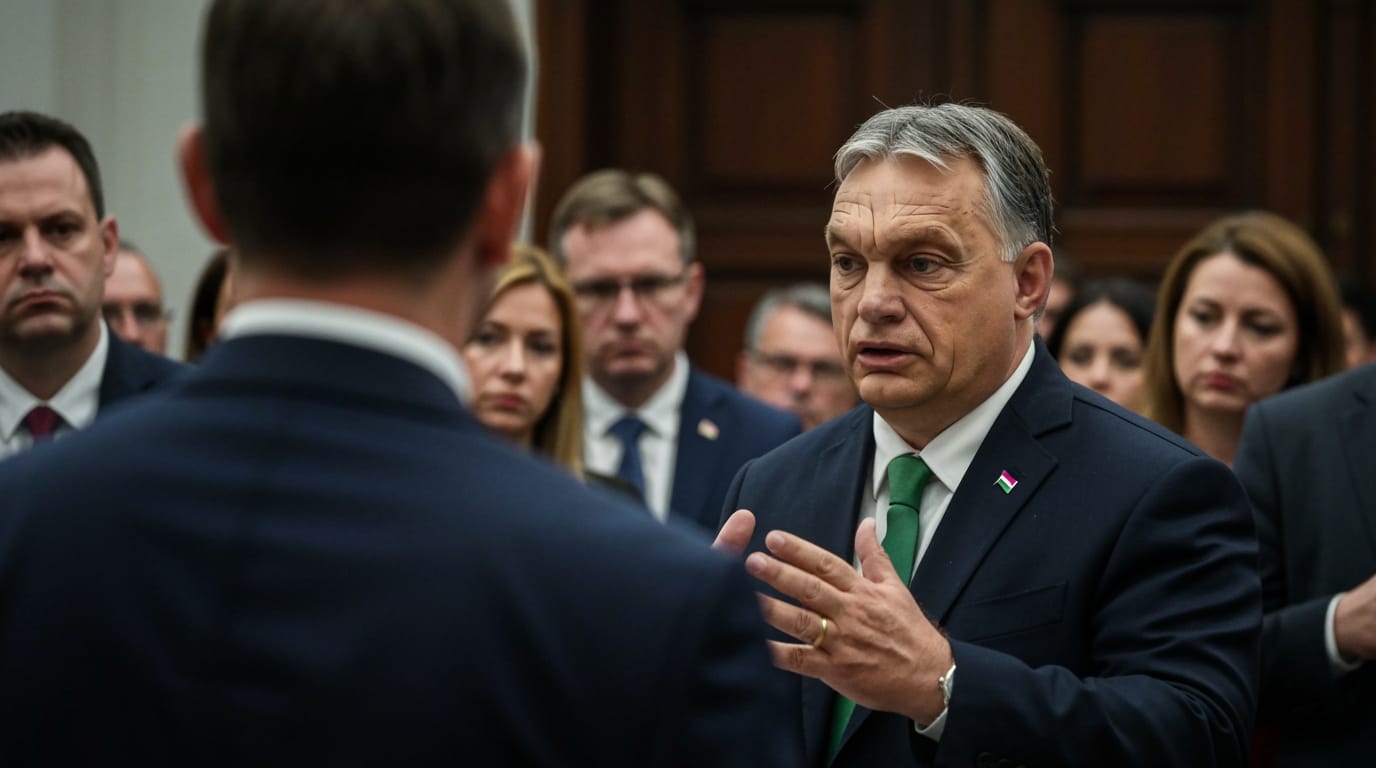
BUDAPEST, Hungary – In a provocative statement resonating across European capitals, Hungarian Prime Minister Viktor Orbán declared the European Union, not Russia, to be the primary threat facing his nation. The nationalist leader's remarks, delivered to supporters on Saturday, escalate his long-standing anti-Brussels rhetoric as his Fidesz party navigates a challenging national election campaign. Orbán's assertion casts a stark light on the deep ideological divides fracturing the European bloc, particularly amidst a continental effort to present a united front against Russian aggression.
The Provocative Declaration Amidst Election Fervor
Addressing a rally just weeks before Hungary's April 12 national elections, Prime Minister Orbán drew a contentious parallel between the European Union and the oppressive Soviet regime that dominated Hungary for over four decades in the previous century. He dismissed concerns about Russian President Vladimir Putin's threat to European security as "primitive and unserious," advocating instead that "those who love freedom should not fear the East, but Brussels." This audacious comparison marks a significant escalation in Orbán's ongoing critique of the EU, positioning his government as a bulwark against perceived overreach from the bloc's de-facto capital.
The timing of Orbán's fiery declaration is not coincidental. His Fidesz party faces its most formidable electoral challenge since he returned to power in 2010, with independent polls indicating they are trailing the center-right Tisza party, led by Péter Magyar. In this high-stakes political environment, Orbán's campaign has increasingly relied on an anti-EU narrative, suggesting the Union would compel Hungarians into military service in Ukraine if his party were to lose power. This rhetoric aims to rally his conservative base by painting the EU as an existential danger, a strategy that has proven effective in past elections.
Deepening Rifts: Hungary's Contentious Relationship with Brussels
Orbán's latest pronouncement is the culmination of years of escalating tension between Budapest and Brussels. The European Union has repeatedly expressed alarm over what it perceives as democratic backsliding in Hungary, citing concerns about judicial independence, media freedom, and pervasive corruption. These disputes have led to significant financial repercussions for Hungary, with the EU freezing billions of euros in cohesion funds earmarked for the country due to its failure to meet rule-of-law conditions.
A recent development further exacerbated these tensions when an Advocate General of the European Court of Justice questioned the European Commission's decision to unfreeze approximately 10 billion euros for Hungary at the end of 2023. The Advocate General argued that Hungary had not fully implemented the judicial reforms required for the release of these funds, suggesting the Commission's decision was premature. This legal challenge, initiated by the European Parliament, underscores the deep institutional mistrust surrounding Hungary's commitment to core EU values. Should the court side with Parliament, it could place the Commission in an uncomfortable position and potentially necessitate the recouping of the disbursed funds, further straining Hungary's financial relationship with the bloc.
Moscow's Ally: Hungary's Divergent Foreign Policy
Orbán's perception of Russia stands in stark contrast to the prevailing view within the European Union. While most EU nations have condemned Russia's full-scale invasion of Ukraine and implemented stringent sanctions, Hungary has maintained close diplomatic and economic ties with Moscow. Orbán has been a consistent opponent of military and financial aid to Kyiv and has frequently criticized the effectiveness of EU sanctions against Russia, asserting that they have "crushed Europe" rather than Moscow. He has argued that the real threat to Europe is "economic stagnation and loss of competitiveness," rather than Russian military power, which he deems considerably weaker than the combined strength of the EU.
Hungary's "Eastern Opening" policy, initiated in 2010, explicitly prioritized strengthening ties with Eastern powers, including Russia, as a counterbalance to its Western alliances. This approach has seen Orbán meet with President Putin on multiple occasions, sometimes without a clear mandate from the EU, drawing sharp criticism from other member states and European officials. Such actions are perceived by many as undermining the EU's unified foreign policy and potentially benefiting Russia's geopolitical objectives. Hungary's reluctance to fully support Ukraine, including its historical delaying of critical aid packages and objections to Ukraine's EU accession, further highlights its distinct position within the bloc.
European Unease and the Quest for Unity
Orbán's defiant stance poses a significant challenge to European unity and the bloc's ability to act cohesively on critical foreign policy matters. His statements and actions create internal divisions, complicating the EU's efforts to project a strong and unified front, particularly in response to Russia's aggression in Ukraine. While the rotating Council Presidency typically entails representing the EU's common positions, Orbán's recent independent diplomatic overtures, including visits to Kyiv and Moscow during Hungary's presidency, have been explicitly clarified by European Council President Charles Michel and High Representative Josep Borrell as reflective solely of Hungarian national foreign policy, not the collective will of the EU.
The ongoing disputes over rule of law and the associated financial withholdings also underscore a fundamental struggle within the EU: how to uphold its foundational values when a member state appears to be systematically eroding them. The possibility of a court ruling requiring Hungary to repay previously unfrozen funds would set a critical precedent regarding the Commission's role in enforcing rule-of-law conditions and could further intensify the institutional standoff. The situation remains a litmus test for the EU's capacity to enforce its principles and maintain internal cohesion in the face of persistent internal challenges.
A Fractured Future for European Harmony?
Viktor Orbán's declaration that the European Union, rather than Russia, represents the primary threat to Hungary encapsulates the profound internal conflicts simmering within the bloc. His rhetoric, strategically deployed during a competitive election cycle, underscores a growing populist narrative that seeks to redefine national sovereignty in opposition to supranational institutions. This ideological clash not only impacts Hungary's future trajectory within the EU but also presents formidable obstacles to the bloc's ambition of a unified and effective foreign policy, especially concerning the ongoing war in Ukraine. The unfolding weeks, particularly with the impending election, will likely determine whether Orbán's polarizing stance further entrenches Hungary's isolation or if it sparks a broader re-evaluation of the European Union's internal dynamics. The path forward for European harmony remains uncertain, continuously challenged by divergent national interests and deeply held political philosophies.


