Audacious German Bank Heist Leaves Thousands Devastated, Exposes Major Security Flaws
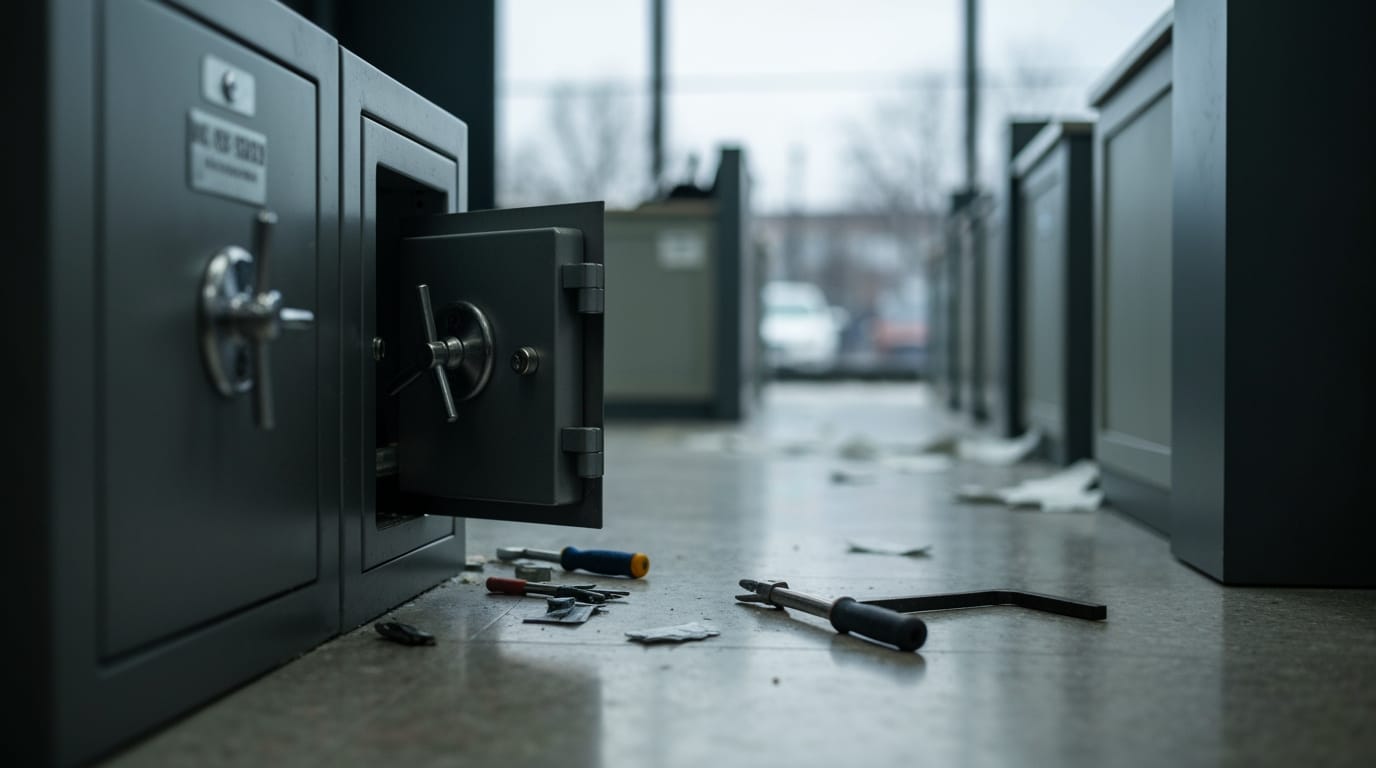
GELSENKIRCHEN, GERMANY – A meticulously planned and executed bank heist over the recent Christmas holiday weekend in Gelsenkirchen, Germany, has left thousands of ordinary citizens reeling, their life savings and cherished heirlooms stolen from safe-deposit boxes at a local Sparkasse branch. The audacious robbery, described by police as having the hallmarks of a Hollywood thriller, has exposed critical vulnerabilities in modern banking security and ignited a furious public outcry over inadequate insurance coverage and lax safeguards.
The scale of the crime, with an estimated 3,000 to 3,250 safe-deposit boxes ransacked, has sent shockwaves through the community and prompted a nationwide reevaluation of financial institution security protocols. While initial estimates of the stolen valuables range widely from €10 million to €90 million, some reports suggest the total could soar as high as €300 million, potentially marking it as one of Germany’s largest-ever bank robberies.
The Heist Unfolds: A Weekend of Precision and Power
The elaborate plot began to unravel on the morning of Monday, December 29, 2025, when a fire alarm triggered at the Sparkasse branch in Buer, a suburb of Gelsenkirchen, summoned emergency services. Instead of flames, police and firefighters discovered a gaping hole in the basement wall of the bank, leading directly into the vault. It quickly became apparent that a sophisticated team of burglars had systematically breached the bank’s supposedly impregnable defenses.
Investigators believe the thieves initiated their operation sometime between Friday, December 26, and Sunday, December 28, taking advantage of the quiet Christmas holiday lull. Gaining access through an adjoining parking garage, they manipulated an emergency exit before deploying a massive 300-kilogram drill to bore through the reinforced concrete wall of the underground vault. Surveillance footage reportedly showed masked suspects, estimated to be between five and seven men, leaving the scene early Monday morning in a black Audi RS 6 and a white Mercedes van, both reportedly bearing stolen license plates. Police officials have highlighted the "very professionally executed" nature of the burglary, suggesting extensive planning, inside knowledge, or considerable criminal expertise. The operation would have required industrial electrical power and generated significant noise, leading to questions about the bank's detection capabilities.
A Community in Crisis: The Human Cost of the Robbery
The aftermath of the heist has been a scene of profound distress and anger. Hundreds of anxious customers converged on the closed bank in the days following the discovery, desperately seeking information about their holdings. For many, the safe-deposit boxes held not just financial assets, but irreplaceable sentimental items – family heirlooms, precious jewelry, and documents representing generations of hard work and savings.
Reports indicate that approximately 2,700 to 3,000 customers were directly impacted, with up to 95% of the bank's safe-deposit boxes breached. Many victims were described as small depositors, everyday individuals who had diligently saved their wealth in a financial institution they believed to be secure. The emotional toll has been immense, with some victims expressing that their life savings and retirement dreams had vanished overnight. One victim, a carpet trader, described feeling "numb" upon learning his box was among those emptied, fearing his retirement plans were irrevocably lost. Adding to the complexity, a significant number of the affected customers were reportedly of Turkish or Arab origin, sparking allegations of targeted discrimination, though authorities have not yet confirmed this.
Uninsured Losses and Mounting Security Concerns
The Gelsenkirchen heist has thrust Germany’s safe-deposit box insurance landscape into harsh scrutiny. While the average insurance coverage for each box was around €10,000, many victims assert their losses far exceeded this amount, with some individual holdings valued over €500,000. This significant disparity highlights a fundamental issue: banks typically insure the physical structure and basic contents, but not the specific, often high-value, items individuals choose to store, nor do they often require customers to declare the full value of contents.
Legal experts are now questioning the adequacy of existing bank security measures. Jürgen Hennemann, an insurance lawyer with extensive experience in German bank robberies, noted a troubling trend of escalating criminal brazenness, which he attributes to financial institutions failing to adequately upgrade their security systems despite repeated warnings over the past decade. The fact that the perpetrators could operate for an entire weekend, using heavy machinery to drill through a vault wall, without immediate detection, underscores the severity of the security lapse. Authorities are facing pressure to provide answers on how such a prolonged and destructive operation went unnoticed until a fire alarm, indicating an issue other than burglary, finally alerted them.
Investigation Underway Amid Broader Implications
As the investigation continues, police have yet to make any arrests, and the perpetrators remain at large. The Gelsenkirchen Police Department has initiated a comprehensive inquiry, reviewing surveillance footage and interviewing witnesses. The sheer scale and professionalism of the heist suggest a well-organized criminal enterprise, a point acknowledged by investigators who likened it to a scene from "Ocean's Eleven."
This incident adds to a troubling pattern of high-profile heists across Europe, including a recent robbery at the Louvre Museum. While German authorities have faced sophisticated bank robberies before, such as the 1995 Berlin-Zehlendorf tunnel heist, the Gelsenkirchen event stands out due to the sheer number of safe-deposit boxes affected and the potentially colossal financial losses. The implications extend beyond the immediate victims, raising questions about trust in financial institutions, the effectiveness of security technologies, and the future of safe-deposit services in an increasingly digitized world. The incident serves as a stark reminder that even in an era of advanced security, determined and well-equipped criminals can exploit vulnerabilities, leaving a trail of financial devastation and shattered lives.


