Trump Pledges National Voter ID for Midterms, Setting Stage for Constitutional Clash
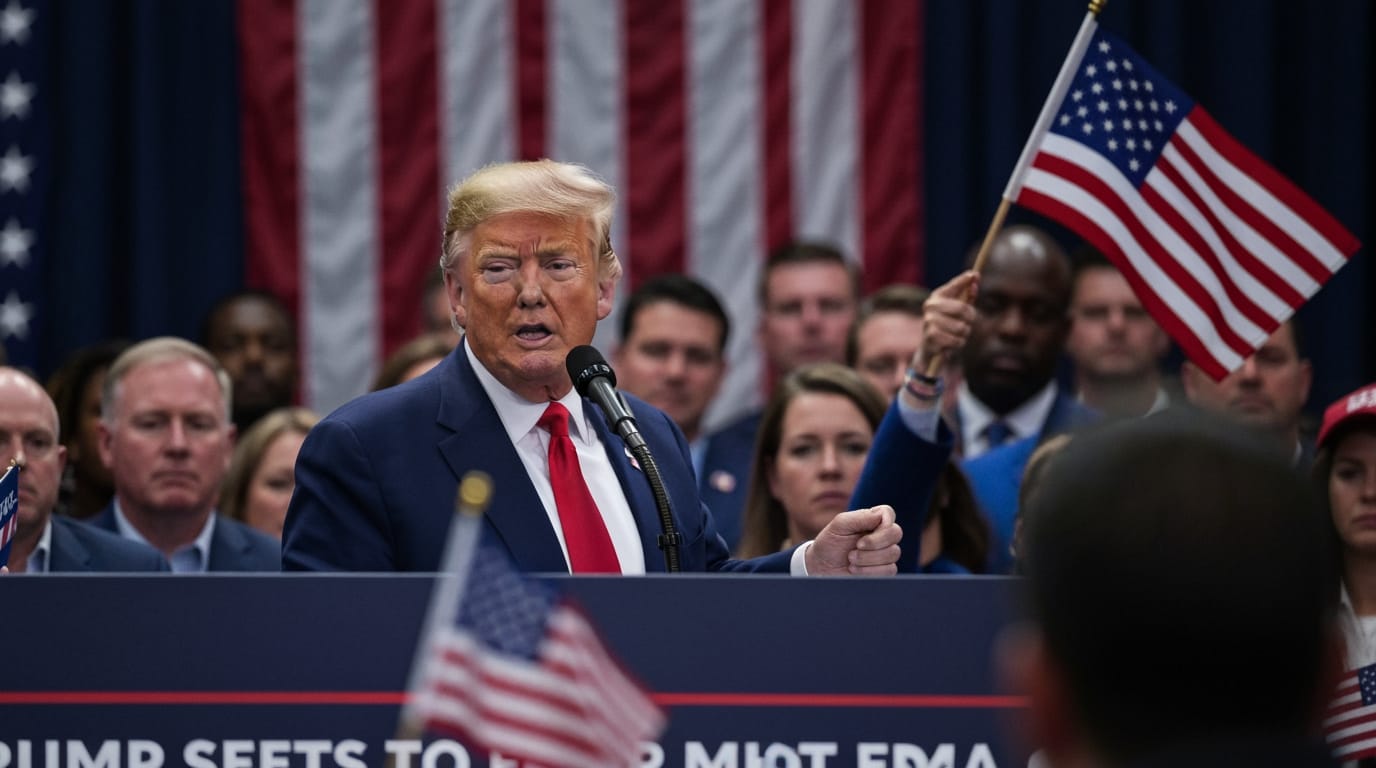
WASHINGTON – Former President Donald Trump has reignited a fierce national debate over election integrity, vowing to unilaterally impose a nationwide voter identification requirement for the upcoming midterm elections, scheduled for November 2026. His declaration, delivered through social media, signals an intent to bypass Congress if necessary, even as the Republican-controlled House of Representatives recently passed legislation aligning with his demands. This aggressive stance is poised to escalate the long-standing battle between federal and state powers in election administration, drawing immediate condemnation from voting rights advocates and setting the stage for significant legal challenges.
Trump's pronouncement arrived amidst a broader push by some Republican lawmakers to enact stricter voting regulations. He asserted that a national voter ID mandate, coupled with proof of citizenship requirements and limitations on mail-in ballots, would be implemented "whether approved by Congress or not." This suggests a reliance on executive authority to enact sweeping changes to the electoral process. His statements echo persistent, unproven claims of widespread voter fraud in past elections, which he argues necessitate these measures to ensure electoral honesty.
The Legislative Front: SAVE America Act Advances in House
Aligning with the former President's vision, the House of Representatives recently passed the Safeguard American Voter Eligibility (SAVE) America Act. This legislation, approved largely along party lines, seeks to mandate documentary proof of U.S. citizenship for voter registration and require photo identification at the polls for federal elections. The bill also includes provisions to curb mail-in voting, with exceptions for military personnel, individuals with disabilities, or those facing illness or travel restrictions.
Proponents of the SAVE America Act argue that these measures are crucial for safeguarding the integrity of elections and restoring public confidence in the voting process. They contend that requiring identification for voting is a common-sense security measure, akin to presenting identification for other everyday activities. Supporters often point to polls indicating broad public support for voter ID laws, with some surveys showing favorability from majorities across demographic groups, including Democrats. For instance, a 2025 Pew Research poll found 83% of U.S. adults favored requiring government-issued photo identification to vote, including 71% of Democrats and 95% of Republicans.
Despite its passage in the House, the SAVE America Act faces a significant hurdle in the Senate, where it is widely expected to be blocked by a filibuster. Senate Democrats have voiced strong opposition, labeling such legislation as voter suppression tactics. Senator Lisa Murkowski (R-AK) has also indicated her opposition, highlighting concerns about federal overreach and the practical challenges of implementing new requirements so close to an election.
Constitutional Showdown: Who Controls Elections?
The prospect of a presidential executive order to enforce national voter ID and other electoral changes immediately raises serious constitutional questions. Election experts widely assert that a president lacks the legal authority to unilaterally alter election rules, as the U.S. Constitution largely entrusts the administration of elections to individual states, with oversight from Congress.
Previous attempts by the former President to enact similar changes via executive order have met with judicial resistance. For example, a federal judge in 2025 issued a permanent injunction against a March 2025 executive order that aimed to require documentary proof of citizenship for voter registration and limit mail-in ballots. The ruling emphasized that the authority to regulate federal elections rests with Congress and the states, not the executive branch. Critics argue that using executive orders in this manner represents an unprecedented assertion of federal power over a domain traditionally managed at the state level.
The Help America Vote Act (HAVA) of 2002 already mandates some form of identification for first-time voters who register by mail and do not provide specific identification information. However, this federal law is far less expansive than the blanket requirements now being proposed. The Supreme Court's 2013 decision in Shelby County v. Holder also reduced federal oversight over state election laws, further emphasizing state autonomy in this area.
The Enduring Debate: Security Versus Access
At the heart of the voter ID controversy lies a fundamental disagreement over election security versus voter access. Supporters of strict voter ID laws argue they are a necessary deterrent against various forms of voter fraud, including impersonation, duplicate voting, and voting by non-citizens. They contend that such laws ensure only eligible citizens cast ballots and can boost public confidence in election results.
However, opponents argue that strict voter ID laws disproportionately burden and disenfranchise eligible voters, particularly those from marginalized communities. These groups often include low-income individuals, racial and ethnic minorities, the elderly, and people with disabilities, who may face significant challenges in obtaining the specific forms of identification required. Obtaining a government-issued photo ID can involve costs for underlying documents (like birth certificates), transportation to distant government offices, and time away from work. Estimates suggest millions of Americans lack readily accessible documents that would be required under strict new laws.
Furthermore, critics argue that the type of in-person voter fraud that photo ID laws are designed to prevent is exceedingly rare. Studies have shown the rate of in-person voter impersonation to be infinitesimally small, making these laws an overbroad solution to a nearly non-existent problem. Instead, opponents contend the primary effect of such laws is voter suppression. Research suggests strict voter ID laws can depress turnout, especially among less educated and lower-income populations, and disproportionately impact voters of color.
A Patchwork of Laws and an Uncertain Future
Currently, voter identification requirements vary widely across the United States. As of late 2024, 36 states have some form of voter ID law, ranging from requesting a non-photo ID to requiring a strict photo ID that must be presented for a ballot to count. Fourteen states do not generally require voters to present identification at the polls on Election Day, though some may have requirements for first-time voters or those who registered by mail. This creates a complex and often confusing landscape for voters and election officials alike.
A federal mandate for voter ID would drastically alter this state-centric system, potentially creating chaos for election administrators already deep into preparations for the 2026 midterms. The push for a national standard highlights the ongoing tension between a desire for uniform election rules and the deeply ingrained principle of state control over voting processes.
As the 2026 midterm elections draw closer, the battle over voter identification laws is poised to intensify. The clash between presidential declarations, congressional legislation, and judicial review will determine the extent to which voting access and election security are balanced, shaping the future of American democracy. The outcome will not only affect how millions of Americans cast their ballots but also redefine the boundaries of federal power in regulating the nation's electoral system.