US Military Strikes in Eastern Pacific Kill Eight, Intensifying Drug War Scrutiny
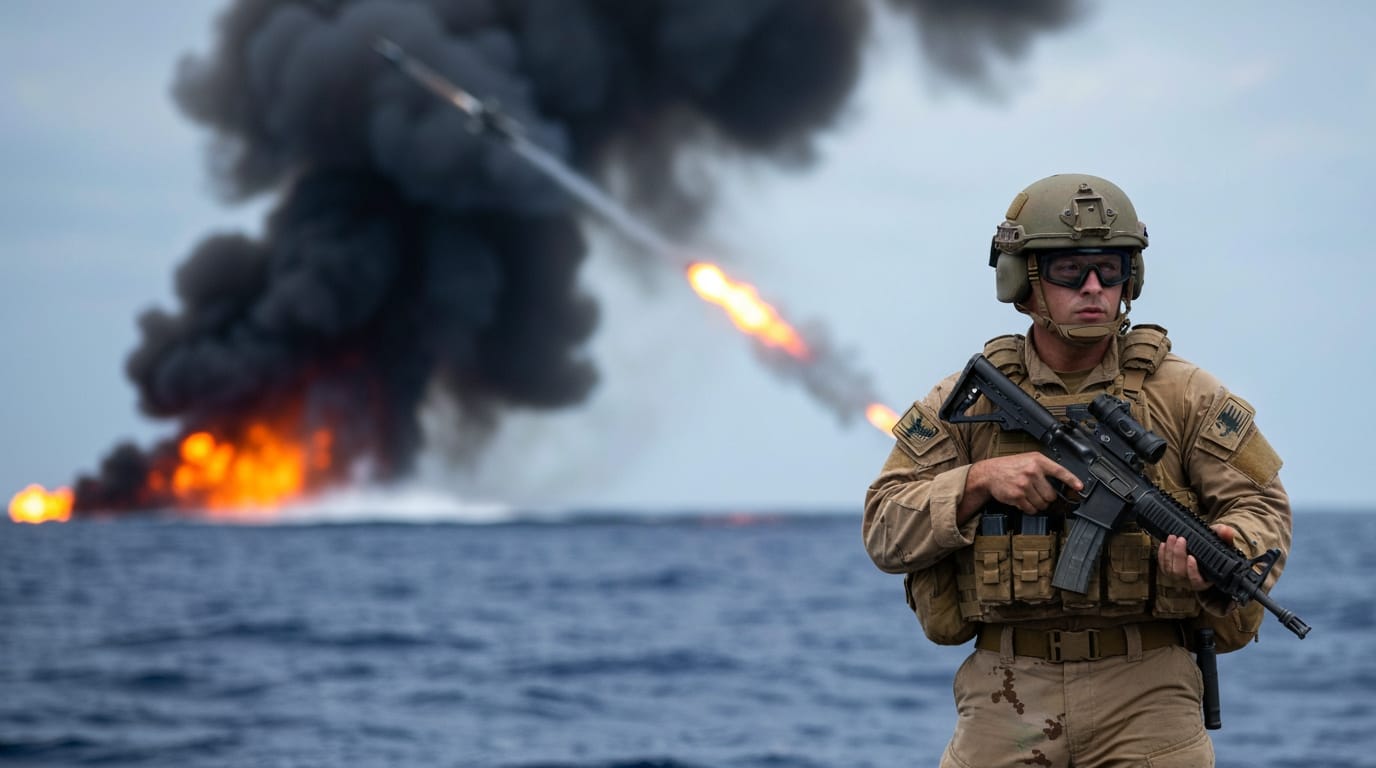
The United States military announced Monday it conducted deadly strikes on three vessels in the Eastern Pacific, resulting in the deaths of eight individuals. The operations, which the U.S. Southern Command (SOUTHCOM) stated targeted vessels engaged in narco-trafficking, mark a significant escalation in the Trump administration's aggressive campaign against drug smuggling in the region. This latest incident adds to a growing death toll and intensifies congressional and legal scrutiny over the legality and methodology of these maritime interdictions.
The Latest Operations and Casualties
The strikes unfolded on Monday, December 15, 2025, when Joint Task Force Southern Spear executed kinetic strikes on three vessels in international waters. According to SOUTHCOM, intelligence had confirmed these boats were traversing known narco-trafficking routes in the Eastern Pacific and were operated by "designated terrorist organizations" involved in drug smuggling. The military released video footage purportedly showing the vessels before being consumed by large explosions, though it did not provide specific evidence of drug trafficking related to these particular incidents. A total of eight men were killed across the three operations: three on the first vessel, two on the second, and three on the third. This event underscores the lethal nature of the ongoing military campaign in the region, aimed at disrupting the flow of illicit drugs.
Escalation of the Anti-Drug Campaign
These recent strikes are part of a broader, intensified campaign by the Trump administration against drug trafficking, particularly impacting the Pacific and Caribbean waters near Venezuela. Since early September, the U.S. military, operating under Pentagon chief Pete Hegseth, has reportedly targeted at least 26 alleged drug-smuggling vessels, leading to the deaths of a minimum of 95 individuals. President Donald Trump has consistently defended these aggressive tactics, framing them as a necessary escalation to curb the influx of drugs into the United States. He has asserted that the U.S. is engaged in an "armed conflict" with drug cartels. Earlier on the day of the strikes, President Trump signed an executive order classifying fentanyl as a "weapon of mass destruction," signaling a continued commitment to militarized responses in the war on drugs. This strategic shift represents a notable departure from historical precedents in combating drug smuggling, traditionally relying more on law enforcement and interdiction by coast guard assets.
Legal and International Scrutiny Mounts
The increasing frequency and lethality of these military operations have drawn significant attention and sparked considerable controversy regarding their legal underpinnings. Legal experts have raised concerns, with some characterizing the strikes as potentially "unlawful extrajudicial killings." The administration, however, maintains that its operations in the SOUTHCOM region adhere to both U.S. and international law, asserting compliance with the law of armed conflict. Pentagon press secretary Kingsley Wilson reiterated this stance, defending the legality of the actions.
The scrutiny extends to Capitol Hill, where lawmakers are intensifying their examination of the administration's maritime campaign. Closed-door briefings for members of both the House and Senate are anticipated, with Defense Secretary Pete Hegseth and Secretary of State Marco Rubio expected to provide further details to address mounting questions. Prior incidents have further fueled the debate; for instance, a controversial earlier strike reportedly killed survivors clinging to the wreckage of a vessel after an initial attack, a move that some critics have labelled a possible war crime. While Hegseth maintained he did not order a second strike, attributing it to Admiral Frank Bradley, such events underscore the ethical and legal complexities inherent in these operations.
Geopolitical Implications and Venezuela
Beyond drug interdiction, the military campaign carries significant geopolitical weight, particularly concerning Venezuela. The intensified operations are widely seen as exerting pressure on Venezuelan President Nicolás Maduro, who faces charges of narcoterrorism in the U.S. The U.S. has significantly increased its military presence in the region, deploying naval assets that include the world's largest aircraft carrier and numerous other warships. This military buildup, coupled with actions such as the recent seizure of a sanctioned oil tanker accused of illicit crude smuggling, signals a broader strategy.
President Maduro has consistently rejected the U.S. claims, contending that the true purpose of the military operations is not drug combat but rather a pretext for regime change in Caracas. This narrative highlights the intricate web of political tensions intertwined with the anti-drug efforts, painting the Eastern Pacific as a contested zone where the war on drugs converges with broader geopolitical objectives. The perceived dual purpose of the campaign further complicates international perceptions and the legal justification of these lethal strikes.
Conclusion
The recent U.S. military strikes in the Eastern Pacific, which killed eight individuals aboard alleged narco-trafficking vessels, underscore the Trump administration's aggressive and militarized approach to combating drug smuggling. While officials justify these actions as necessary to stem the flow of illicit drugs and target "designated terrorist organizations," the campaign has sparked significant debate. Critics question the legality of the strikes under international law, citing a departure from traditional interdiction methods and raising concerns about potential extrajudicial killings. As congressional scrutiny mounts and legal experts voice reservations, the administration continues to defend its strategy, maintaining that all actions comply with the law of armed conflict. The broader context of regional geopolitical tensions, particularly with Venezuela, further complicates the narrative, as the anti-drug mission becomes intertwined with perceived efforts for political pressure. The ongoing controversy surrounding these lethal operations promises to keep the Eastern Pacific a flashpoint for international law, human rights, and geopolitical strategy.


