Europe Launches Landmark Commission to Address Ukraine War Damages
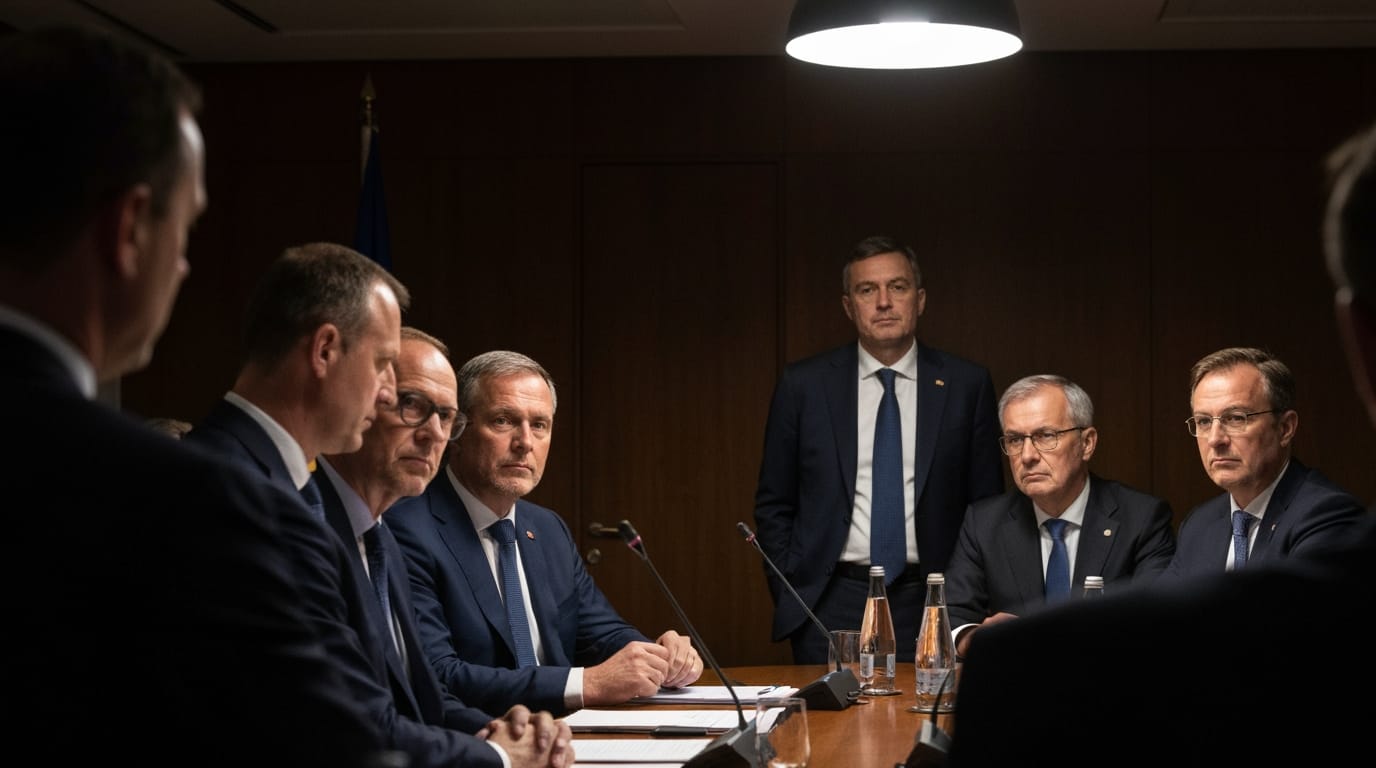
THE HAGUE, Netherlands – December 16, 2025 – European leaders, including Ukrainian President Volodymyr Zelenskyy, convened today in The Hague to inaugurate a new International Claims Commission, marking a pivotal step towards securing reparations for the extensive damage inflicted by Russia's full-scale invasion of Ukraine. This landmark initiative aims to hold Russia accountable for its internationally wrongful acts and provide compensation to Ukraine and its people for losses estimated to be in the hundreds of billions of dollars.
The establishment of this commission represents the second critical phase in a multi-pronged international compensation mechanism, building upon the foundation laid by the Register of Damage for Ukraine, created in 2023. The primary objective of the new body will be to meticulously review, assess, and adjudicate compensation claims, ultimately determining the amount of restitution due in each case. This development underscores a united European commitment to justice and reconstruction in a war-torn nation.
The Genesis of Accountability: From Register to Commission
The journey toward this compensation mechanism began with a resolution by the UN General Assembly in November 2022, emphasizing Russia's responsibility for its violations of international law and the need for an international reparations framework. In response, the Council of Europe, an organization dedicated to upholding human rights, democracy, and the rule of law, established the Register of Damage Caused by the Aggression of the Russian Federation against Ukraine (RD4U) in May 2023. Headquartered in The Hague with an office in Kyiv, the Register's initial mandate was to serve as a crucial repository for evidence, collecting and recording claims for damages, losses, or injuries sustained since February 24, 2022.
Since its opening to applications in April 2024, the Register has already received over 80,000 claims from individuals, organizations, and public bodies in Ukraine. Initially focusing on residential property damage, the Register has expanded to encompass a wide array of categories, including the destruction of critical infrastructure, personal injuries, deaths of family members, cases of missing persons, and violations such as torture, sexual violence, and forced deportations. The European Union solidified its commitment by becoming a full participant in the Register in July 2024, reinforcing its dedication to ensuring Russia compensates for its actions.
The newly launched International Claims Commission represents the logical progression from documenting harm to actively deciding on compensation. While the Register collects and records claims, the Commission's role is to evaluate their merits and determine the financial awards. This distinction is vital, transforming a data-gathering exercise into a process of legal adjudication and potential restitution. The Commission will consider claims related to all violations of international law committed by the Russian Federation within Ukraine's internationally recognized borders, including its territorial waters and airspace, from the onset of the full-scale invasion.
The Staggering Scale of Destruction and the Search for Funding
The sheer scale of destruction in Ukraine presents an unprecedented challenge for the Commission. According to a February 2025 study by the Ukrainian Government, the World Bank Group, the European Commission, and the UN, the total cost of reconstruction and recovery over the next decade is estimated at a staggering $524 billion (€506 billion). Direct damage alone has reached $176 billion (€170 billion), an increase from previous assessments. Housing and transport infrastructure bear the brunt of this devastation, accounting for more than half of the direct war damage, with an estimated $84 billion needed for housing and nearly $78 billion for the transport sector. Critical energy infrastructure and commercial industries have also suffered extensive damage.
A critical aspect of the Commission's long-term effectiveness lies in securing adequate funding for the eventual compensation payouts. Discussions are ongoing regarding potential sources, with significant attention focused on utilizing frozen Russian assets. European officials are exploring proposals such as a reparations loan backed by immobilised Russian central bank assets, a mechanism designed to comply with international law while providing substantial financial support to Ukraine. The convention establishing the Claims Commission will formally come into force once ratified by 25 signatories and upon the assurance of sufficient initial funding.
Navigating Complexities: Legal Hurdles and Political Realities
The path to full compensation is fraught with complexities. One of the most significant challenges involves overcoming the legal principle of state immunity, which generally protects state assets from confiscation. While the EU's proposed reparations loan aims to navigate this by focusing on the interest generated from frozen assets or by treating the immobilized cash balances as no longer the Kremlin's direct property, these are novel legal interpretations that face scrutiny. Furthermore, Russia has consistently rejected allegations of war crimes and is unlikely to voluntarily cooperate with the compensation mechanism, adding a layer of political difficulty to the process.
The human element of this undertaking is also immense. The Ukrainian legal system is grappling with "immense challenges" in delivering justice and providing comprehensive redress to victims. The Commission will need to process potentially hundreds of thousands of claims, each representing a personal tragedy or a severe loss. The meticulous documentation, evaluation, and eventual payment of compensation will require a robust administrative and legal framework, as well as sustained international cooperation and financial backing.
A Beacon for International Justice
The establishment of the International Claims Commission is a significant milestone, representing a collective international commitment to justice and accountability for the war in Ukraine. Co-hosted by the Netherlands and the 46-nation Council of Europe, and supported by over 50 states and the European Union, the Commission is a testament to the international community's resolve to address the consequences of Russia's aggression.
This initiative is not merely about financial restitution; it is a profound declaration that aggression will have consequences and that victims of international law violations deserve recourse. While the challenges are formidable, the creation of this Commission, following the initial efforts of the Register of Damage, provides a concrete pathway towards rebuilding Ukraine and offering a measure of justice to those whose lives have been irrevocably altered by the conflict. The long road to full recovery and comprehensive reparations lies ahead, but today marks a crucial stride forward in holding perpetrators accountable and supporting the resilience of the Ukrainian people.