Federal Judge Quashes Subpoenas in DoJ's Federal Reserve Probe, Citing Political Pressure
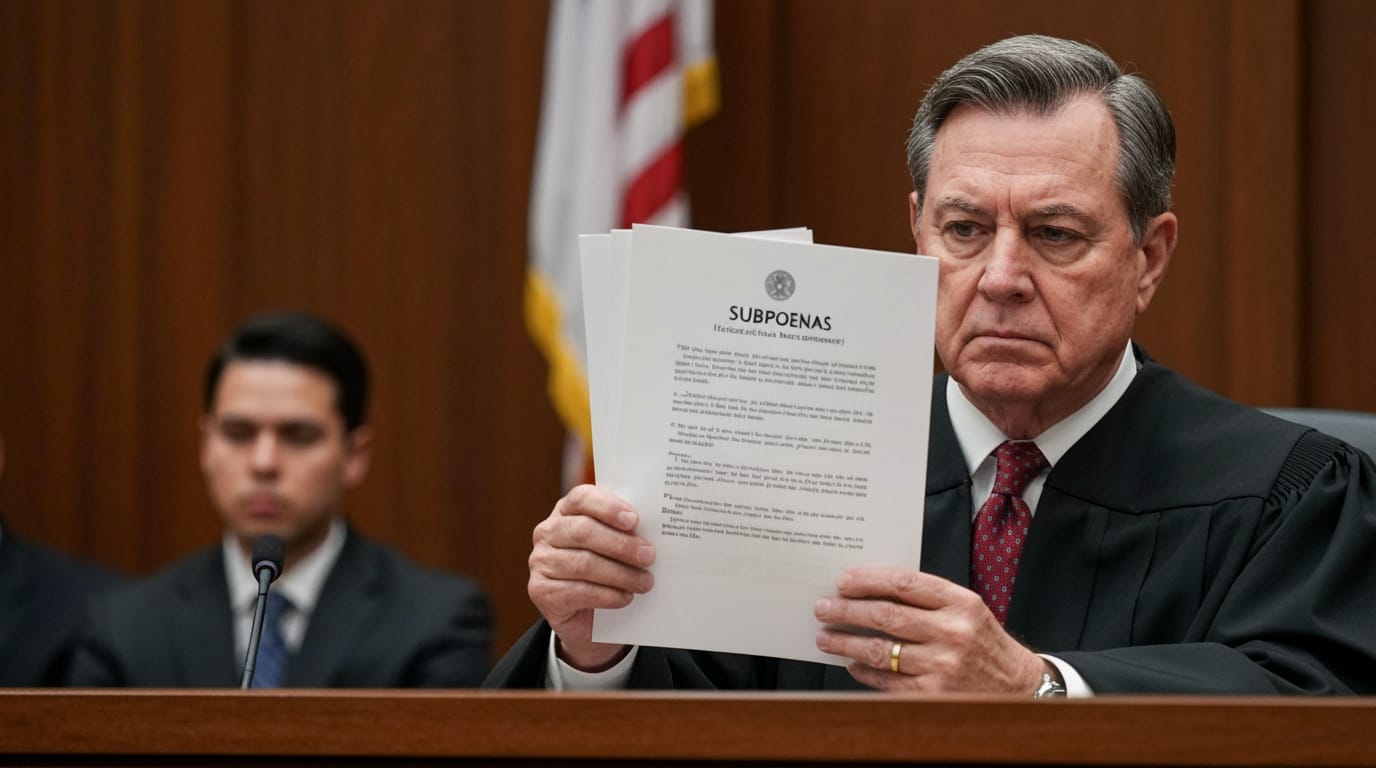
Washington D.C. — A federal judge has delivered a significant blow to the Justice Department, quashing grand jury subpoenas issued to the Federal Reserve Board as part of a criminal investigation targeting Chairman Jerome Powell. In a strongly worded ruling unsealed Friday, Chief Judge James Boasberg of the U.S. District Court for the District of Columbia found that the subpoenas were merely a "pretext" to exert political pressure on Powell, rather than a legitimate inquiry into criminal activity. This decision marks a major victory for the Federal Reserve's long-cherished independence and a notable setback for the Department of Justice and U.S. Attorney Jeanine Pirro's office, who initiated the controversial probe.
A Courtroom Rebuke of Executive Influence
Chief Judge Boasberg's ruling, dated March 11, meticulously detailed what he described as "abundant evidence" that the subpoenas' "dominant (if not sole) purpose is to harass and pressure Powell either to yield to the President or to resign and make way for a Fed Chair who will." The judge explicitly stated that the government had offered "essentially zero evidence" to suggest Powell committed any crime beyond "displeasing the President," dismissing the stated justifications for the subpoenas as "thin and unsubstantiated pretexts." This judicial intervention comes amid heightened concerns about the weaponization of federal law enforcement for political ends, particularly in the context of the Trump administration's ongoing public criticisms of Federal Reserve policy.
The subpoenas, first revealed by Chairman Powell in January, were ostensibly part of a criminal investigation into alleged fraud and false statements related to his June 2025 testimony before the Senate Banking Committee. The testimony focused on a multi-year, $2.5 billion renovation project at the Federal Reserve's office buildings, which had reportedly faced cost overruns. However, Powell publicly decried the investigation as retaliatory, characterizing it as an attempt to undermine the central bank's independence and punish him for the Fed's interest rate policies.
The Genesis of a Contentious Investigation
The origins of the DoJ's probe are deeply intertwined with the increasingly fractious relationship between the Trump administration and the Federal Reserve. President Donald Trump has been a vocal and persistent critic of Chairman Powell, whom he appointed, particularly regarding the Fed's reluctance to aggressively cut interest rates. Trump has repeatedly argued for lower rates to stimulate economic growth, often publicly lamenting the Fed's "slow-and-steady" approach and even musing about firing Powell.
The renovation project at the Fed's headquarters became a focal point of this tension. While Powell defended the project in his Senate testimony, dismissing some public reports as inaccurate and misleading, the Trump administration, through figures like Office of Management and Budget Chair Russell Vought, accused Powell of leading an "ostentatious" renovation that might be "violating the law." These accusations provided the nominal basis for the criminal inquiry by U.S. Attorney Jeanine Pirro's office. However, critics, including Powell himself, maintained that these were mere pretexts for a broader campaign to pressure the Fed into aligning its monetary policy with the President's wishes.
Adding to the backdrop of this case are previous instances where the Trump administration's Department of Justice has pursued investigations against perceived political adversaries. Judge Boasberg's opinion drew parallels to these cases, noting that "being perceived as the president's adversary has become risky in recent years," and that "in his second term, Trump has urged the Department of Justice to prosecute such people, and the department's prosecutors have listened." This pattern has fueled concerns among legal scholars and politicians about the politicization of the justice system and its potential to erode democratic norms.
Safeguarding the Fed's Independence
The Federal Reserve, as the nation's central bank, is designed to operate with a significant degree of independence from political influence. This autonomy is considered crucial for its ability to make monetary policy decisions—such as setting interest rates—based on economic data and long-term stability rather than short-term political considerations. The investigation into Chairman Powell and the subsequent quashing of the subpoenas underscore the delicate balance between legitimate oversight and unwarranted political interference.
Chairman Powell's decision to publicly disclose the subpoenas in a video statement in January was an unprecedented move, signaling the gravity with which the Federal Reserve viewed the situation. In that statement, Powell asserted that the threat of criminal charges was a direct consequence of the Federal Reserve setting interest rates based on its assessment of public good, "rather than following the preferences of the President." The judge's ruling effectively validates Powell's concerns, reinforcing the institutional safeguards intended to protect the Fed's independence.
Economists and former Fed officials have largely rallied behind Powell, with many viewing the DoJ's actions as a dangerous precedent that could undermine the credibility and effectiveness of the central bank both domestically and internationally. The financial markets, while initially reacting with some trepidation to the news of the investigation, have largely demonstrated a belief in the Fed's ability to fend off such pressures, underscoring the perceived strength of these institutional checks and balances.
Political Fallout and the Path Forward
U.S. Attorney Jeanine Pirro wasted no time in condemning Judge Boasberg's decision. At a hastily called news conference, Pirro strongly criticized the ruling, labeling Boasberg an "activist judge" and asserting that his decision "neutered the grand jury's ability to investigate crime." She argued that the ruling effectively "bathed Powell in immunity," proclaiming it "wrong and without legal authority." Pirro confirmed her office's intention to appeal the decision to the D.C. Circuit Court, indicating that the legal battle is far from over.
The controversy has also spilled over into Senate politics, directly impacting the confirmation process for President Trump's nominee to replace Powell as Fed chair. With Powell's term set to expire in May, Trump nominated former Fed Governor Kevin Warsh for the position. However, Republican Senator Thom Tillis of North Carolina, a key member of the Senate Banking Committee, had previously vowed to block the consideration of any Fed nominees until the criminal probe into Powell was dropped. Following Boasberg's ruling, Tillis reiterated his stance, stating that the decision confirmed "just how weak and frivolous the criminal investigation of Chairman Powell is" and that appealing the ruling would "only delay the confirmation of Kevin Warsh as the next Fed chair."
Conclusion: A Precedent for Institutional Integrity
Judge Boasberg's decision to quash the subpoenas against Federal Reserve Chairman Jerome Powell represents a critical moment in the ongoing debate over institutional independence and the rule of law. By unequivocally rejecting the Justice Department's efforts as politically motivated, the court has sent a clear message about the limits of executive power and the imperative of safeguarding key government institutions from partisan interference. The ruling reaffirms the principle that while government officials are not above the law, the powers of investigation must be exercised based on legitimate evidence of wrongdoing, not as instruments of political pressure or retribution. While the DoJ's announced appeal signals a continuation of the legal wrangling, the federal court's initial strong stance has set an important precedent for maintaining the integrity and autonomy of the Federal Reserve, a cornerstone of economic stability.


