Venezuela Announces Release of 'Large Number' of Prisoners Amidst Political Turmoil
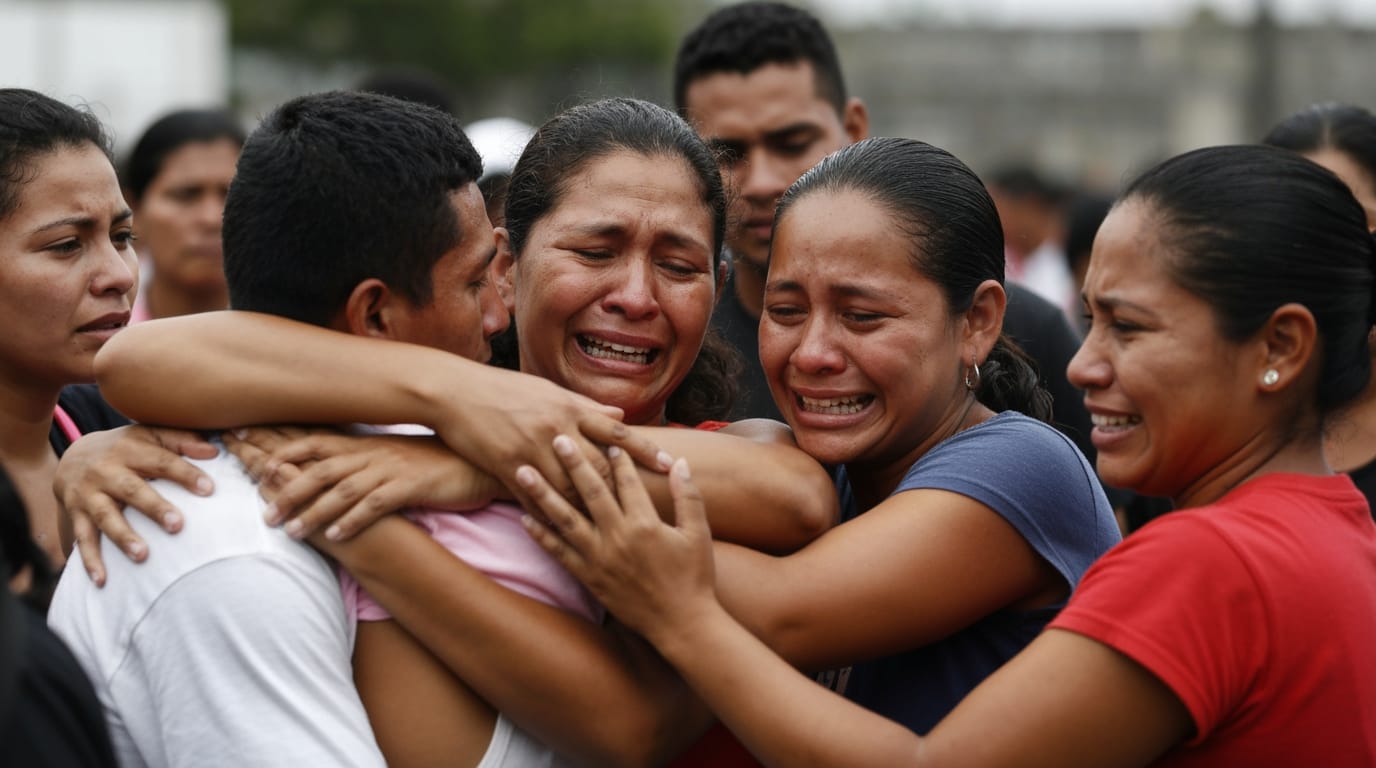
CARACAS, VENEZUELA – Venezuela's government has declared its intention to release a "significant number" of prisoners, including both Venezuelan nationals and foreigners, in what officials describe as a gesture to "seek peace" amidst heightened political tensions. The announcement, made by Jorge Rodríguez, head of Venezuela's National Assembly, on Thursday, January 8, 2026, comes less than a week after the capture of former President Nicolás Maduro by U.S. forces.
The unexpected declaration signals a potential shift in the country's domestic and international posture, though specific details regarding the identities and exact number of detainees to be freed remain undisclosed. Rodríguez stated that the releases were "happening right now" and characterized the move as a "unilateral gesture to reaffirm our unbreakable decision to consolidate peace in the republic and peaceful coexistence among all."
A Gesture Amidst Geopolitical Shifts
The announcement unfolds in the immediate aftermath of former President Nicolás Maduro's apprehension by U.S. forces, who are now transporting him to New York to face federal drug-trafficking charges. This significant event has plunged Venezuela into further political uncertainty and placed intense international pressure on the interim government. The decision to release prisoners is widely interpreted as a potential concession and a move to ease diplomatic tensions with international actors, particularly the United States, which has long called for the release of opposition figures and critics.
While the Venezuelan government consistently denies holding "political prisoners," human rights organizations within the country present a different picture. Foro Penal, a prominent human rights watchdog, reported 863 individuals detained for "political reasons" as of December 29, 2025. This figure includes 105 women, a teenager, and 85 foreign nationals, many of whom were reportedly arrested following the tumultuous 2024 election, an election widely viewed as fraudulent. The U.S. government and Venezuela's opposition have consistently demanded the liberation of these individuals.
Unspecified Numbers and International Scrutiny
Despite the declaration of a "large number" of releases, Jorge Rodríguez did not provide specific figures or names of those to be freed. However, initial reports indicate that the Spanish government has already announced the release of five Spanish citizens in Caracas. The Spanish foreign ministry lauded this decision as a "positive step in the new phase Venezuela is entering." One of the confirmed releases is Rocío San Miguel, a Spanish-Venezuelan lawyer, activist, and human rights defender who was detained in February 2024 and accused of treason, conspiracy, and terrorism.
Human rights advocates are proceeding with caution, awaiting concrete evidence of the releases. Alfredo Romero, director of Foro Penal, expressed that while the announcement was "good news," his organization would be "verifying each release." Prior instances of promised releases have sometimes failed to materialize in full, leading to skepticism among observers. For example, in the days leading up to a recent U.S. operation, the regime indicated it would release 187 individuals, but only a portion of those releases could be independently verified.
A Pattern of Strategic Releases
The timing of this prisoner release aligns with a historical pattern where the Venezuelan government utilizes such gestures during politically strategic moments. Ronal Rodríguez, a researcher at the Venezuelan Observatory at the University of Rosario in Bogotá, noted that the government periodically releases prisoners, often using them as "bargaining chips." This approach has been observed in previous instances, such as the release of 13 political prisoners in August 2025 and 21 individuals in December 2023. A notable prisoner exchange in July 2025 also saw the release of American citizens and lawful permanent residents held in Venezuelan prisons, in return for Venezuelans detained in El Salvador.
The ongoing mass detentions, particularly those following the 2024 election, have drawn significant international criticism. Human Rights Watch and the Committee for the Freedom of Political Prisoners in Venezuela have highlighted cases of dozens of political prisoners held incommunicado for extended periods, describing the lack of communication as a form of torture. Prisons such as El Helicoide, the headquarters of Venezuela's intelligence service, have been cited by the United Nations Independent International Fact-Finding Mission on Venezuela as containing torture rooms.
Looking Forward
The announced release of a "large number" of prisoners by Venezuela's interim government marks a critical development in the country's turbulent political landscape. While the precise scope and implications of this gesture remain to be fully seen, it represents a potential opening for dialogue and a response to sustained international pressure. The international community, human rights organizations, and the families of those detained will be closely monitoring the coming days to ascertain the full extent of these releases and their impact on the ongoing quest for peace and justice in Venezuela.


