Venezuela Infuses $300 Million Oil Revenue into Local Economy Amidst Shifting U.S. Sanctions
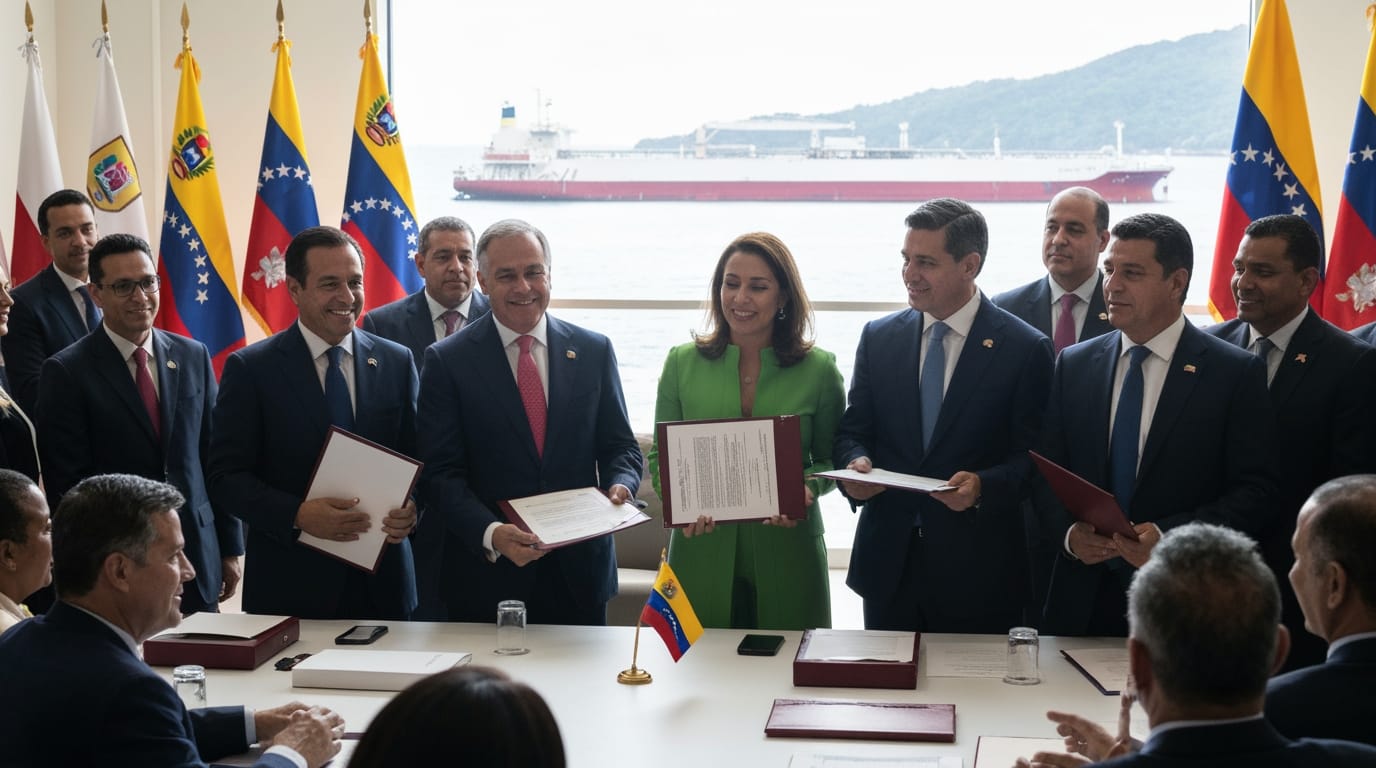
CARACAS, VENEZUELA – Venezuela has begun injecting $300 million in oil revenues into its local banking system, marking a significant development in the nation's efforts to stabilize its economy amidst a complex and evolving landscape of U.S. sanctions. This infusion of foreign currency, routed through private banks, aims to provide much-needed liquidity for imports and bolster the severely depreciated national currency. The move comes as the global energy market witnesses a dramatic geopolitical shift concerning Venezuela's oil sector and the broader U.S. policy approach.
The Return of Essential Foreign Exchange
The Venezuelan government recently announced that four local private banks would receive a total of $300 million derived from oil sales, with each institution slated to distribute approximately $75 million. This capital injection is specifically designated for sale to Venezuelan companies requiring foreign currency to facilitate critical imports. The funds originate from a trust account established in Qatar, a mechanism designed to circumvent existing U.S. sanctions that currently target Venezuela's central bank. According to economist Alejandro Grisanti of Ecoanalitica, a total of $500 million from oil sales has already been deposited into this Qatar trust, with the $300 million distribution representing the initial portion released into the local market. This strategic maneuver addresses a tightening supply of U.S. dollars within Venezuela's economy, a direct consequence of years of stringent U.S. sanctions and seizures of oil assets.
A Shifting Landscape of Sanctions
The backdrop to this recent financial maneuver is a long and intricate history of U.S. sanctions against Venezuela's oil industry. Beginning in January 2019, the U.S. Treasury Department, following consultations with the State Department, designated Petróleos de Venezuela, S.A. (PDVSA), the state-owned oil company, for operating within Venezuela's oil sector. This action effectively froze $7 billion of PDVSA's U.S. assets and prevented the company from being paid for petroleum exports to the United States, imposing severe economic pressure on the Maduro administration.
The Biden administration later reviewed these sanctions, leading to a temporary relaxation of some restrictions in the petroleum sector in October 2023. This easing was contingent upon electoral agreements made between the Venezuelan government and opposition parties, aimed at fostering free and fair elections. However, most of these sanctions were reimposed in April 2024 after the U.S. State Department determined that commitments outlined in the Barbados Agreement for democratic elections had not been fully honored. Despite the general re-imposition, waivers were granted to certain companies, allowing them to continue operating in the oil sector under individual licenses. These new frameworks often employ targeted authorization systems and private waiver structures, requiring initial shipments to be sold exclusively to American buyers and maintaining Treasury Department oversight of all transaction proceeds.
Chevron's Pivotal Role and Market Dynamics
A key player in this evolving scenario is U.S. energy giant Chevron. The company, which had existing investments in Venezuela, was granted specific licenses allowing it to increase production for sales to the U.S. Reports indicate that Chevron increased its loadings of Venezuelan crude oil in early January 2026, demonstrating one of the fastest export paces in months. The company is also reportedly negotiating with the U.S. government to expand its operating license in Venezuela, a move that could lead to larger crude volumes and broader international sales. The funds generated from these sales are managed through accounts in Qatar, ensuring secure movement with U.S. oversight.
This re-engagement has broader implications for the U.S. and global energy markets. The United States has initiated the sale of Venezuelan oil as part of a $2 billion agreement with Caracas, with Chevron expected to be among the U.S. companies gaining operational approvals. Other entities, including Marathon Petroleum, Valero Energy, and traders like Glencore and Mercuria, are also reportedly seeking licenses for Venezuelan oil transactions. The U.S. energy chief has indicated that Venezuelan oil is currently fetching prices 30% higher than before, reflecting changing market dynamics and the perceived value of this crude supply.
Geopolitical Shifts and Controlled Revenue Flows
The current financial developments are unfolding within a backdrop of significant geopolitical change impacting Venezuela. Recent reports, dated early January 2026, indicate a dramatic shift with the capture and removal of President Nicolás Maduro by U.S. forces. Following this operation, U.S. authorities declared their intention to control Venezuelan oil sales indefinitely. These proceeds are now directed into accounts overseen by Washington, under the stated premise that the revenues will benefit both Venezuela and the United States. This intervention is characterized by the U.S. government as a move to secure energy supplies and prevent Venezuela's oil wealth from aligning with strategic competitors. This new arrangement profoundly alters the mechanisms through which Venezuela's oil revenues are managed and accessed.
Economic Implications and Future Prospects
The injection of $300 million into Venezuelan private banks is expected to provide critical liquidity to private companies that have struggled to import raw materials, a situation exacerbated by the chronic shortage of U.S. dollars. By increasing the supply of foreign currency through official channels, this measure aims to help stabilize production in some sectors and potentially exert downward pressure on the black market exchange rate. The bolivar experienced a severe depreciation of 83% in 2025, contributing significantly to high inflation. While this controlled infusion of dollars seeks to mitigate currency pressure, analysts caution that such measures are unlikely to achieve lasting economic stability without broader, systemic economic reforms.
Historically, Venezuela had resorted to alternative methods for oil transactions, with reports indicating that the country collected approximately 80% of its crude oil sales revenue in Tether's USDT stablecoin, primarily from sales to China, to circumvent U.S. sanctions. The current framework, however, represents a more structured and internationally sanctioned approach to market re-entry for Venezuelan oil. The long-term effectiveness of this strategy will depend on the sustained flow of oil revenues, the transparent and efficient operational execution by the private banks, and the overarching political stability in the nation. The evolving dynamics of U.S. involvement and the conditional nature of market access will continue to shape Venezuela's path toward economic recovery and integration into the global energy landscape.


