Venezuela Plunged into New Uncertainty Following U.S. Capture of Nicolás Maduro
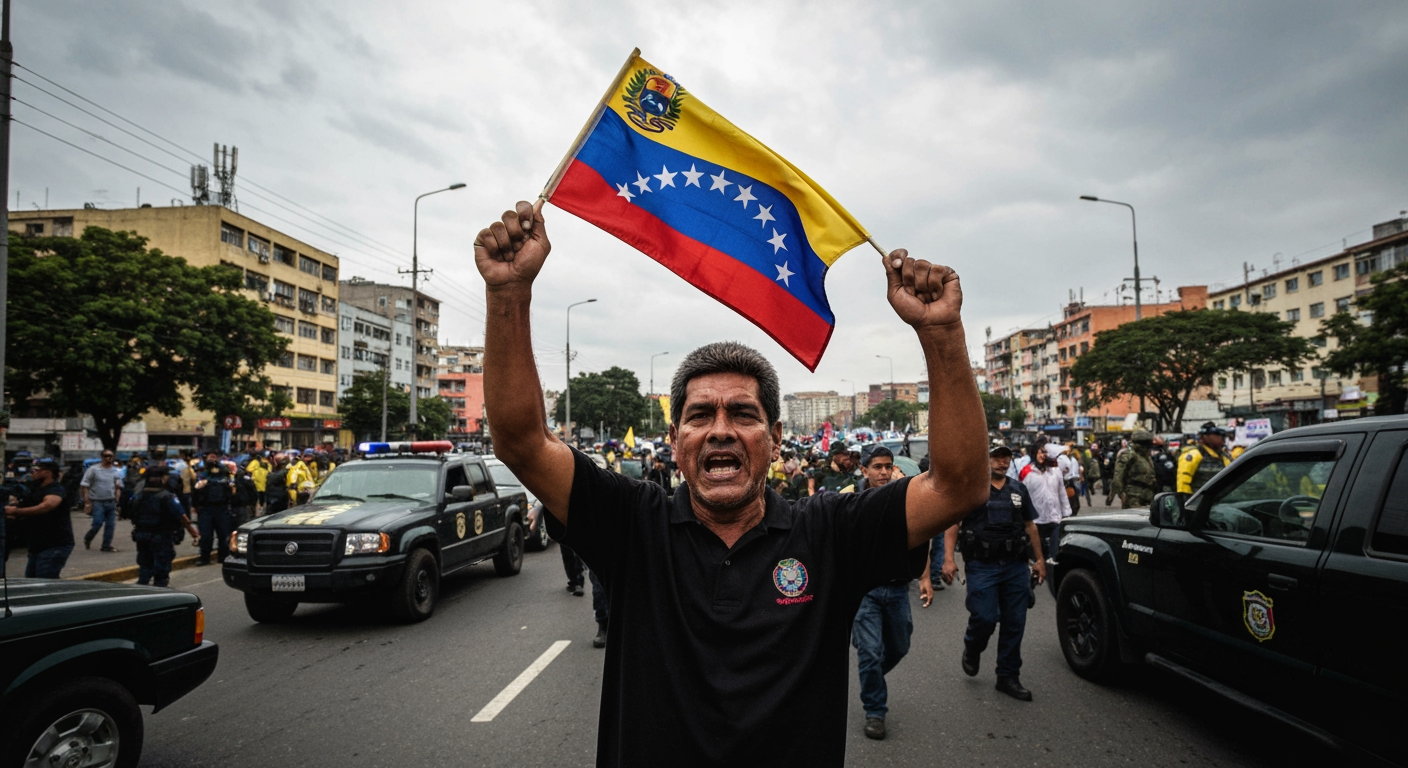
The global stage witnessed a dramatic escalation in the long-running Venezuelan crisis this past week, as U.S. forces reportedly captured President Nicolás Maduro and his wife, Cilia Flores, in a military operation inside Venezuela. The apprehension, confirmed by U.S. officials on January 3, 2026, marks an unprecedented moment in international relations, sparking a firestorm of global condemnation and support while plunging the South American nation into deeper political uncertainty. Maduro, who was swiftly transferred to the United States, appeared in a New York federal court where he pleaded not guilty to charges of narco-terrorism and drug trafficking, vehemently maintaining his innocence and claiming to be a "prisoner of war".
The Dramatic Apprehension and Arraignment
In a move described by U.S. officials as a "surgical law enforcement operation," American military forces entered Venezuelan territory on January 3, 2026, to apprehend Nicolás Maduro and Cilia Flores. President Donald Trump publicly announced the capture, stating that the pair had been taken into U.S. custody and flown out of Venezuela to face criminal charges. The operation, which reportedly involved U.S. military strikes in Caracas, included cutting power to parts of the capital to facilitate the extraction.
Maduro, 63, made his initial court appearance in Manhattan two days later, on January 5, dressed in an orange shirt, blue shirt, and beige pants, with his ankles shackled. He faces four federal criminal counts, including "narco-terrorism" conspiracy, cocaine importation conspiracy, and possession of machine guns and destructive devices. Each charge carries a maximum sentence of life in prison. Maduro was initially indicted in March 2020, along with 14 members of his inner circle, as part of a sprawling drug-trafficking case that accused Venezuelan officials and Colombian guerrillas of coordinating to traffic cocaine into the U.S.. During his arraignment, Maduro insisted to federal judge Alvin Hellerstein that he remained "still president of my country," was illegally "captured" from his home, and was a "prisoner of war". His defense lawyer indicated plans to file a motion challenging the legality of what they termed a "military abduction".
A Decade of Crisis: The Road to Capture
The U.S. action culminates years of escalating tensions and a severe, multifaceted crisis in Venezuela. The country has been gripped by political and economic turmoil, exacerbated by hyperinflation, rampant corruption, and mismanagement, particularly after a steep decline in global oil prices and domestic oil production. Since 2014, Venezuela has seen a massive exodus, with over 7.9 million people having left the country, making it one of the world's largest displacement crises.
The political legitimacy of Nicolás Maduro has been widely contested, particularly following the disputed 2018 presidential election. In 2019, Juan Guaidó, then president of the National Assembly, declared himself interim president, garnering recognition from nearly 60 countries, including the United States, and sparking a four-year presidential crisis. However, Guaidó's interim government was dissolved by the opposition in December 2022, after it was deemed to have failed in its objectives, leaving Maduro in what was described as his strongest position in a decade.
The U.S. has imposed extensive sanctions on Venezuelan government entities, individuals linked to the Maduro administration, and key economic sectors like oil, gold, mining, and banking. These sanctions, initially a response to repression and human rights abuses, were intensified during the 2019 presidential crisis to pressure Maduro to resign. While temporarily eased in October 2023 in exchange for promises of political prisoner releases and free 2024 elections, most sanctions were reimposed when these promises were not fully met. The U.S. has consistently maintained that Maduro had turned Venezuela into a "criminal enterprise at the service of drug traffickers and terrorist groups". U.N. reports and international human rights organizations have documented serious human rights abuses by the Maduro regime, including extrajudicial killings, political prisoners, torture, and arbitrary detentions.
Global Outcry and Divided Responses
The capture of Maduro has triggered a cacophony of reactions across the globe, highlighting deep international divisions. Numerous countries, including Russia, China, Iran, Brazil, and Cuba, swiftly condemned the U.S. military operation, characterizing it as a blatant violation of Venezuela's sovereignty and international law. China's Foreign Ministry expressed being "deeply shocked" and "strongly condemn[ed]" what it called "hegemonic acts" by the U.S., urging Washington to adhere to the UN Charter. Russia's Foreign Ministry described it as an "act of armed aggression" and called for Maduro's immediate release. Oxfam also strongly rejected the U.S. intervention, warning of potential impacts on peace, democracy, and human rights.
Conversely, the United States has staunchly defended its actions, portraying the capture as a legitimate law enforcement operation against an "indicted drug trafficker" and "narco-terrorist". Michael Waltz, the U.S. Ambassador to the United Nations, argued that Maduro was an "illegitimate so-called president" who had "unlawfully refused to peacefully cede power" after the disputed 2024 elections. The U.S. asserts that the operation was in furtherance of existing federal indictments and was necessary to protect Americans from narco-terrorism.
The United Nations Secretary-General, António Guterres, expressed "deep alarm" and concern that international law had not been respected, deeming the operation a "dangerous precedent". European nations generally urged restraint and emphasized the importance of upholding international law, while acknowledging Maduro's lack of legitimacy.
Venezuela's Precarious Future: Political Vacuum and Humanitarian Concerns
With Maduro now in U.S. custody, Venezuela faces an immediate and profound political vacuum. The U.S. has stated its intention to "run" Venezuela until a transition of power can take place, though the practical implications remain unclear. The country's democratic institutions have been in a state of deterioration for years, with severe government crackdowns on the opposition and control over state institutions. The 2024 presidential election results, which claimed a narrow Maduro victory, were widely rejected by international observers and triggered widespread protests that were met with violent repression.
The humanitarian crisis continues to be dire, with an estimated 7.9 million people in Venezuela requiring urgent support at the start of 2026, representing over a quarter of the population. Shortages of food, medicine, and essential services persist, and the migration of Venezuelans, including children through dangerous routes like the Darién Gap, has continued unabated. The United Nations Humanitarian Response Plan for Venezuela remains severely underfunded, receiving only 17% of the over $600 million needed last year. The International Criminal Court has authorized the resumption of investigations into alleged crimes against humanity in Venezuela, with particular focus on abuses by security forces.
Conclusion
The U.S. capture of Nicolás Maduro represents a watershed moment, ending his contentious presidency but simultaneously opening a new, unpredictable chapter for Venezuela. While proponents hail it as justice served against a leader accused of narco-terrorism and human rights abuses, critics decry it as a dangerous precedent that undermines international law and national sovereignty. As Maduro navigates the U.S. judicial system, the world watches to see how Venezuela's political landscape will evolve, how the deep humanitarian crisis will be addressed, and what the long-term implications of this bold international intervention will be for global diplomacy and the principle of national sovereignty. The path forward for Venezuela, already fraught with challenges, now appears more uncertain than ever.
Related Articles

Ratko Mladić, "Butcher of Bosnia" and Convicted War Criminal, Dies at 84
THE HAGUE, Netherlands – Ratko Mladić, the former Bosnian Serb military commander known as the "Butcher of Bosnia" and convicted of genocide, war crimes, and crimes against humanity, has died at the age of 84. Serbian...

Long-Awaited 9/11 Mastermind Trial Set for 2028, Decades After Attacks
GUANTANAMO BAY, Cuba – Nearly a quarter-century after the devastating terror attacks of September 11, 2001, a military judge has finally set a trial date for Khalid Sheikh Mohammed, the alleged mastermind behind the...