Venezuela's New Leadership Proposes Sweeping Amnesty Amidst Political Upheaval
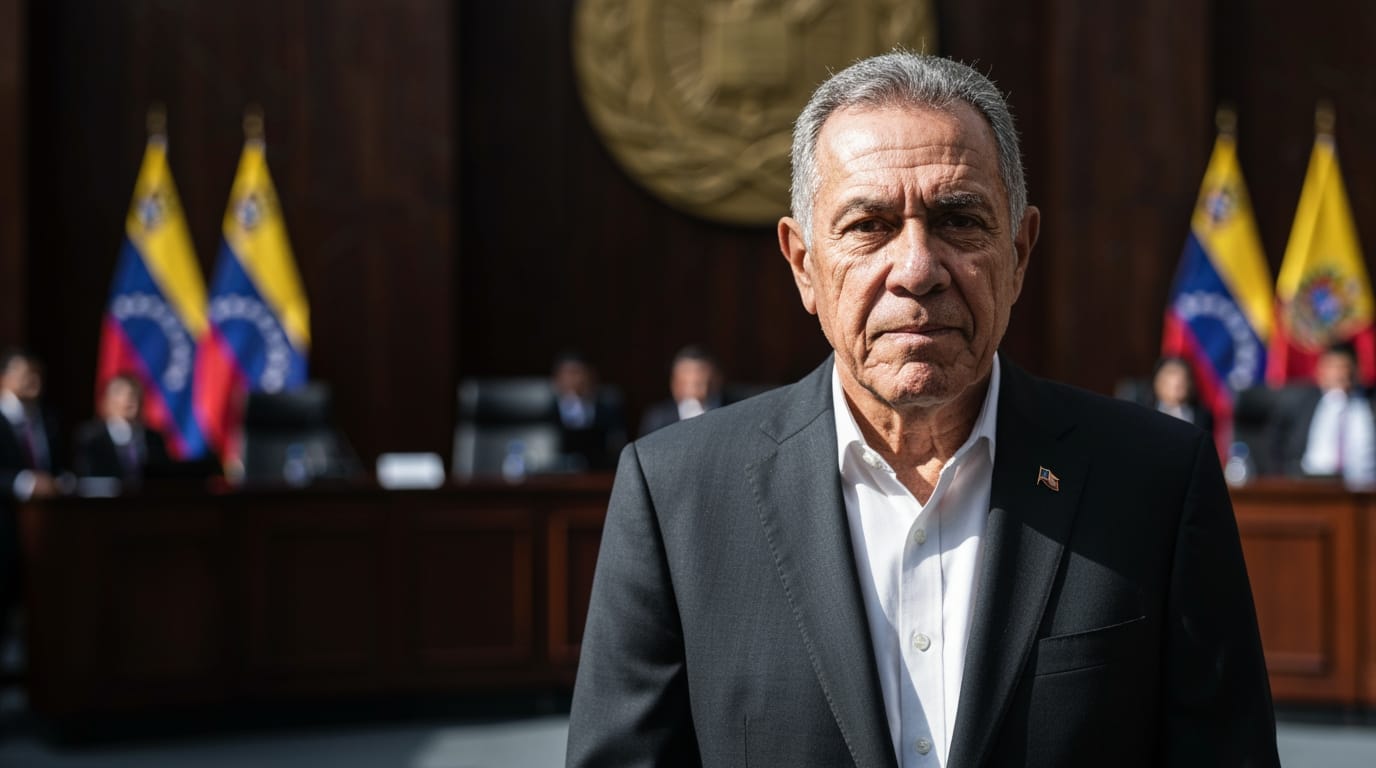
CARACAS, VENEZUELA – In a dramatic turn of events, Venezuela's acting President Delcy Rodríguez announced Friday a comprehensive amnesty bill, signaling a potential shift in the nation's entrenched political landscape. The proposed legislation, unveiled just weeks after what was described as the "brazen seizure" of former President Nicolás Maduro, aims to release hundreds of political prisoners, including opposition leaders, journalists, and human rights activists. This move, long advocated by the U.S.-backed opposition, represents a significant concession from the new administration and includes the symbolic closure of a notorious detention facility, Helicoide prison.
The announcement on January 30, 2026, comes at a pivotal moment, following a period of intense instability and a profound alteration in Venezuela's executive power. Rodríguez, who assumed the role of acting President on January 3, stated that the ruling party-controlled National Assembly would prioritize the bill, emphasizing its potential to "heal the wounds left by the political confrontation." This development marks a stark departure from the previous administration's stance and introduces a new dynamic into the country's protracted crisis.
A New Chapter: Rodríguez's Rise and Reconciliation Efforts
The context surrounding Acting President Delcy Rodríguez's proposal is critical to understanding its potential impact. Her ascent to power on January 3, 2026, occurred in the wake of a U.S. military action that led to the "seizure" of then-President Nicolás Maduro in Caracas. This abrupt and forceful transition has evidently reshaped the political calculus within Venezuela, paving the way for measures previously deemed impossible under Maduro's rule. The amnesty bill is presented as an early hallmark of Rodríguez's administration, suggesting an immediate focus on de-escalation and reconciliation with dissenting voices.
Beyond the release of political prisoners, Rodríguez's announcement included the closure of Helicoide, a prison widely recognized for documented human rights abuses and torture by independent organizations. The facility, a symbol of repression for many Venezuelans, is slated for transformation into a sports, social, and cultural center. This symbolic gesture appears designed to demonstrate a clear break from past practices and to address long-standing grievances regarding the treatment of political opponents. The measure has been described as a direct response to pleas from the United States-backed opposition, which has consistently called for the release of political detainees as a prerequisite for any meaningful dialogue or transition.
Echoes of the Past: Guaidó's 2019 Amnesty Attempt
This is not the first time an amnesty proposal has been put forth in Venezuela as a means to resolve political deadlock. In January 2019, Juan Guaidó, then leader of the opposition-controlled National Assembly, declared himself interim president, garnering recognition from over 50 countries, including the United States. As part of his strategy to challenge Nicolás Maduro's authority, Guaidó backed an amnesty law proposed by the National Assembly on January 22, 2019.
Guaidó's 2019 amnesty was designed to incentivize defections from Maduro's government, specifically targeting military personnel and civilian officials. It promised clemency for politically motivated prosecutions and acts related to the opposition's efforts to restore constitutional order. The intent was to erode Maduro's reliance on military loyalty, which was considered crucial for his grip on power amid escalating street protests and a severe economic crisis. Leaflets explaining the amnesty were distributed to military bases across the country, encouraging soldiers to abandon Maduro's regime and support Guaidó's transitional administration.
However, the 2019 initiative faced significant hurdles. Human rights organizations, including Human Rights Watch, raised concerns that the vague provisions of the bill could grant blanket impunity for serious human rights abuses, potentially violating Venezuela's international obligations and constitutional prohibitions against amnesties for crimes against humanity. Despite its strategic aim, Guaidó's amnesty yielded limited success, with only a handful of high-profile defections recorded. The majority of the armed forces remained loyal to Maduro, who employed countermeasures such as threats of treason trials, which often outweighed the amnesty's appeal for military personnel prioritizing personal and familial security.
Divergent Paths, Shared Aspirations for Reconciliation
The amnesty proposals of 2019 and 2026, while both seeking to address political divisions, emanate from vastly different political contexts and motivations. Guaidó's 2019 bill was a tool of the opposition, an attempt to dismantle an entrenched government by encouraging internal dissent and defection. Its efficacy was largely dependent on the willingness of security forces to switch allegiance, a gamble that ultimately did not achieve its desired widespread effect. The backdrop was a prolonged political stalemate, with Maduro firmly in control despite international pressure and widespread internal protests.
In contrast, Delcy Rodríguez's 2026 amnesty bill appears to be a measure implemented by a newly installed "acting President" following a significant and dramatic power shift. It is presented not as a means to induce change, but as a step towards managing the aftermath of change and initiating a process of national healing and reconciliation. The focus on releasing political prisoners, journalists, and activists, alongside the closure of Helicoide, suggests an effort to address human rights concerns directly and to mend societal fractures from a position of new authority.
Venezuela has long been plagued by a severe human rights crisis, characterized by extrajudicial killings, arbitrary detentions, torture, and widespread repression of dissent. Amnesty International and other human rights organizations have consistently documented these abuses, identifying them as potential crimes against humanity. The persistence of these issues underscores the profound challenges facing any reconciliation effort. While the 2019 amnesty raised ethical questions about accountability for past abuses, the 2026 proposal faces scrutiny over its implementation and whether it will genuinely lead to justice and a cessation of human rights violations.
A Precarious Path Forward
The proposed amnesty bill under Acting President Delcy Rodríguez marks a critical juncture in Venezuela's ongoing political evolution. Its success will depend not only on its legislative passage but also on its transparent implementation and the degree to which it fosters genuine trust and reconciliation among a deeply divided populace. The release of political prisoners and the closure of a notorious detention center could be foundational steps towards addressing years of human rights abuses and political repression.
However, the path to national healing remains precarious. The legacy of profound political polarization, economic devastation, and a pervasive human rights crisis will challenge any administration seeking to unite the country. The international community, which has closely monitored Venezuela's tumultuous trajectory, will undoubtedly watch with keen interest to see if this latest amnesty bill translates into substantive reforms and a lasting commitment to democratic principles and human rights. For a nation weary of conflict, the promise of amnesty offers a glimpse of a different future, yet its full impact will only be determined by the actions that follow this significant legislative overture.


