Water Leak Damages Hundreds of Historic Books at Louvre Museum, Exposing Infrastructure Vulnerabilities
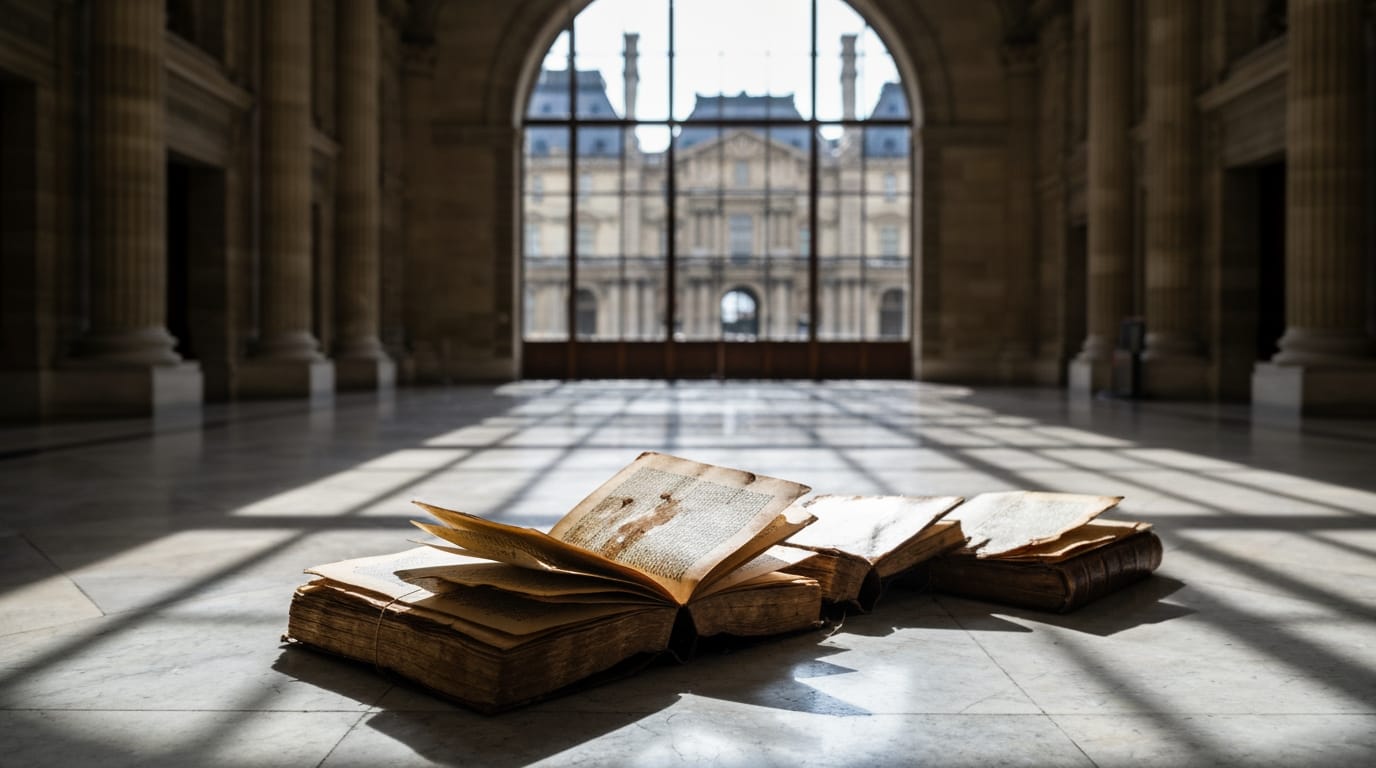
Paris, France – A recent water leak at the world-renowned Louvre Museum in late November has resulted in damage to between 300 and 400 books housed within the library of its Egyptian antiquities department. This incident, discovered on November 26, casts a stark light on the persistent challenges faced by the historic institution concerning its aging infrastructure, particularly following a series of high-profile security and structural issues that have emerged in recent months. The unexpected inundation has intensified concerns about the museum's ability to safeguard its priceless collections amidst growing pressures.
The Deluge in the Mollien Wing
The leak primarily impacted one of the three rooms within the library of the Egyptian antiquities department, located in the Louvre's Mollien wing. The affected materials largely comprise Egyptology journals and various forms of scientific documentation, predominantly dating from the late 19th and early 20th centuries. Francis Steinbock, the Louvre's deputy administrator, clarified that while these books are "extremely useful" for researchers and scholars engaged in the study of Egyptology, they are "by no means unique." He assured the public that "no heritage artefacts have been affected by this damage" and, at this preliminary stage, there are "no irreparable and definitive losses" within these collections.
The root cause of the incident has been traced to the accidental opening of a valve within the museum's heating and ventilation system. This critical system was described as "completely obsolete" and had reportedly been out of service for several months, with a full replacement project not slated until September 2026. Furthermore, reports from specialist outlets like La Tribune de l'Art highlighted deteriorating pipe conditions as a significant contributing factor to the leak. The severity of the incident was compounded by the fact that the penetrating water extended beyond the library, reaching the basement level where it reportedly made contact with an electrical cabinet, thereby creating a risk of a major electrical fire. Immediate action by on-duty staff successfully contained the leak before it could escalate into a more severe catastrophe.
A Troubling Pattern of Infrastructure Vulnerabilities
This latest infrastructure failure arrives at a particularly challenging time for the Louvre, exacerbating existing concerns regarding the museum's operational integrity. Just weeks prior, in October, the institution was rocked by an audacious jewel heist, during which a gang of four individuals brazenly stole an estimated $102 million worth of jewelry in a mere seven minutes. This incident exposed glaring security flaws and prompted a widespread debate about the museum's aging infrastructure. In November, the museum faced further scrutiny when structural weaknesses necessitated the partial closure of a gallery displaying Greek vases, along with several administrative offices.
These successive incidents paint a concerning picture of an institution struggling to keep pace with the maintenance demands of its vast and ancient premises. It has been revealed that the issues concerning the museum's plumbing systems were not unknown; indeed, they had been recognized for years by the administration. Accounts suggest that the Egyptian antiquities department had repeatedly sought financial allocations to protect its collections from the very risks that materialized, including requests for specialized protective furniture and even the relocation of vulnerable materials to more secure storage facilities. These urgent pleas, however, reportedly went unheeded. Further compounding the issue, an October report from France's Cour des Comptes criticized the Louvre for its apparent inability to modernize its infrastructure, implying that substantial expenditures on acquiring new artworks might have inadvertently diverted crucial funds away from essential upkeep and maintenance.
The Intrinsic Value of Research Collections
While the museum has emphasized that the damaged books are not "precious" in the sense of unique historical artifacts or irreplaceable art pieces, their value to scholarly research and the continuity of academic study cannot be overstated. Egyptology journals and scientific documentation form the bedrock of ongoing research, providing critical context and foundational knowledge for experts delving into ancient Egyptian civilization. The loss or prolonged unavailability of such resources, even if ultimately reparable, can disrupt academic work and impede the progress of archaeological and historical understanding. The incident therefore highlights not just the vulnerability of tangible cultural heritage, but also the delicate ecosystem of knowledge that supports it.
The Louvre's immense library houses millions of documents, books, and archives, supporting the work of its curators, conservators, and visiting scholars. Ensuring the physical integrity of these research tools is paramount to the museum's broader mission of scholarship and education. The long-standing neglect of infrastructure, as evidenced by this leak, places a crucial facet of the museum's intellectual capital at risk.
Recovery Efforts and Future Safeguards
In the wake of the leak, the Louvre has outlined its immediate plan for remediation. Mr. Steinbock confirmed that the affected books would undergo a careful drying process, followed by specialized restoration work conducted by a professional bookbinder, before their eventual return to the department's shelves. An internal investigation has also been launched to thoroughly examine the circumstances surrounding the incident, aiming to prevent future recurrences and to identify any systemic failures.
The upcoming replacement of the outdated heating and ventilation system in September 2026 is a critical step towards addressing one of the identified vulnerabilities. However, the recurrence of infrastructure-related incidents suggests that a more holistic and proactive investment strategy in the museum's maintenance and preservation protocols is urgently needed.
It is important to note that the Louvre has previously undertaken significant initiatives to safeguard its collections against environmental threats, particularly flooding from the Seine River, which has historically posed a risk to the museum. Following severe floods in 2016 that necessitated emergency evacuations of artworks from basements, the museum inaugurated a vast conservation center in Liévin, northern France, beginning in 2019. This state-of-the-art facility was meticulously designed with advanced leak detection systems and precise climate control capabilities to protect a substantial portion of the Louvre's collection from both external environmental hazards and internal structural vulnerabilities.
While the Liévin center addresses the broader threat of natural disasters, the recent incident within the Mollien wing underscores that the internal systems of the historic Parisian palace itself remain a crucial area of concern. The commitment to such extensive off-site protection must be mirrored by continuous, substantial investment in the maintenance and modernization of the Louvre's primary historic structure to ensure the long-term safety of all its scholarly resources and artistic masterpieces. The internal investigation and planned repairs will be vital steps in rebuilding confidence in the museum's stewardship of its invaluable holdings for future generations.


