Zelenskyy Arrives in London for Critical Talks with European Leaders Amid Escalating Conflict
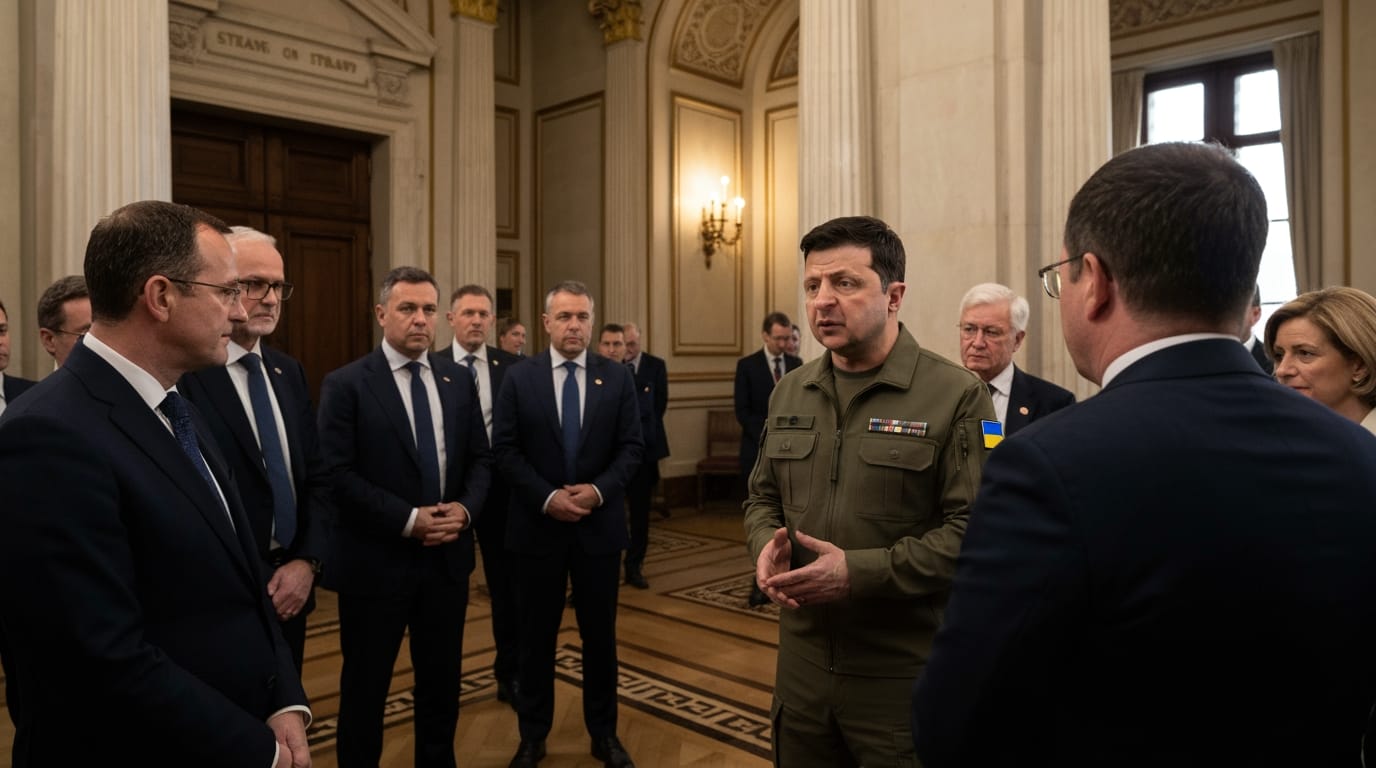
London, UK – Ukrainian President Volodymyr Zelenskyy arrived in London today for urgent discussions with key European leaders, including British Prime Minister Keir Starmer, French President Emmanuel Macron, and German Chancellor Friedrich Merz. The high-stakes meeting, unfolding against a backdrop of intensifying Russian assaults and an impending winter, aims to solidify Kyiv's diplomatic position, secure additional defensive weaponry, and advance discussions on a viable peace proposal.
The visit follows recent talks between Ukrainian and U.S. officials in Florida, where an elusive peace plan was reportedly a central theme. President Zelenskyy's engagement with the so-called "European 3" underscores Ukraine's reliance on sustained international support as the conflict with Russia nears its fourth year.
Diplomatic Offensive Amidst Winter's Shadow
President Zelenskyy's arrival in London marks another critical juncture in Ukraine's diplomatic offensive, seeking to galvanize support and commitment from its most steadfast European allies. The agenda for today's talks is densely packed, focusing on immediate and long-term needs for Ukraine's defense. A primary concern is bolstering Ukraine's air defense capabilities and securing more missiles, crucial as Russia continues its systematic targeting of civilian and energy infrastructure.
The Ukrainian leader’s call for expedited implementation of aid agreements comes as Russia has reportedly launched some 1,600 drone attacks and 1,200 guided aerial bombs against Ukraine over the past week. The urgency of these requests is amplified by the onset of colder weather, which historically exacerbates the humanitarian impact of attacks on energy grids. French President Macron, affirming unwavering support, stated on X that the leaders would "take stock" of peace negotiations, emphasizing the collective efforts to provide more military assistance. British Prime Minister Starmer echoed this sentiment, asserting that Ukraine's security and sovereignty would be "at the heart" of the discussions.
This meeting also serves as a crucial follow-up to earlier gatherings. In October 2025, London hosted President Zelenskyy alongside two dozen European leaders, some joining remotely, to discuss military aid, protecting Ukraine's power grid, and the provision of longer-range missiles capable of striking deep within Russian territory. That summit also addressed the challenges posed by Russia's continued resistance to peace negotiations and the complexities surrounding Washington's future commitments.
Navigating the Complexities of a Peace Proposal
A significant portion of the London talks is dedicated to evaluating a proposed peace plan. These discussions gain particular weight given the preceding negotiations between Ukrainian and U.S. officials in Florida, which reportedly ended with a positive tone but no immediate breakthrough. Reports suggest the U.S. administration has been pressing Kyiv to consider a peace proposal, some iterations of which have been perceived as favoring Russia.
Ukrainian officials, including Secretary of the National Security and Defense Council Rustem Umerov, have been actively engaged in refining these proposals, emphasizing the need for concessions to be contingent on Russia's genuine commitment to de-escalation and ending hostilities. President Zelenskyy has publicly committed Ukraine to "working honestly with the American side to bring about real peace," with future steps and negotiation formats under discussion. European leaders present in London today are expected to assess the progress of these U.S.-mediated peace negotiations, striving to provide Ukraine with the necessary security guarantees for any robust and lasting peace. This intricate diplomatic dance highlights the shared objective of ending the conflict while ensuring Ukraine's long-term sovereignty and security.
European Solidarity and Long-Term Commitments
The steadfast commitment of European nations remains a cornerstone of Ukraine's defense against Russian aggression. Today's meeting is another manifestation of a concerted European effort that has consistently provided Kyiv with substantial military, financial, and humanitarian aid. The European leaders' unified front reinforces the message that Ukraine can rely on their "unwavering support."
Earlier this year, in March 2025, London also convened a broad summit of European leaders, including the heads of state from France, Germany, Italy, Poland, and Nordic and Eastern European countries, along with NATO and EU officials. This gathering, which occurred in the wake of a tumultuous meeting between President Zelenskyy and former U.S. President Trump, aimed to reaffirm European unity and support. Discussions then centered on crucial security guarantees Europe could offer Ukraine in the event of a ceasefire and the formation of a "coalition of the willing" to secure future peace. Plans for this coalition included potential air and naval support and training for Ukrainian forces, rather than direct troop deployment.
These continuous high-level engagements demonstrate Europe's resolve to not only supply immediate military necessities but also to envision and secure Ukraine's post-war future, including its path toward Euro-Atlantic integration. The UK, for instance, has committed significant financial support, including a 2.2 billion pound loan for military aid, partly backed by profits from frozen Russian assets, and a 1.6 billion pound deal for air defense missiles manufactured in the UK.
The Path Ahead: Security, Reconstruction, and Resilience
As the conflict endures, the focus of international support extends beyond immediate military aid to encompass Ukraine's long-term resilience and reconstruction. The London talks are expected to address how Western allies can help fund war-devastated Ukraine and what robust post-war security guarantees can be provided. Efforts also continue to reduce global dependence on Russian energy, aiming to restrict funding for Russia's war machine.
The persistent challenge lies in maintaining a united front among international partners and ensuring the consistent delivery of promised aid, especially in the face of ongoing Russian tactics, such as the weaponization of winter through infrastructure attacks. Ukrainian President Zelenskyy has consistently underscored that while Ukraine undertakes the fighting, robust and continuous international support is indispensable for victory and a lasting peace. The collective commitment of European nations aims to place Ukraine in the strongest possible position to negotiate from strength, preventing a "weak deal" that might only serve as a temporary pause before renewed aggression.
The London meeting today is thus more than a symbolic gesture; it is a vital operational summit aimed at aligning strategies, consolidating commitments, and adapting to the evolving realities of a conflict that profoundly impacts European and global security. The discussions highlight the ongoing imperative for sustained and coordinated action to support Ukraine's sovereignty and secure a stable future for the region.


