White House Confirms "Military Option" in Greenland Acquisition Discussions, Stoking International Alarm
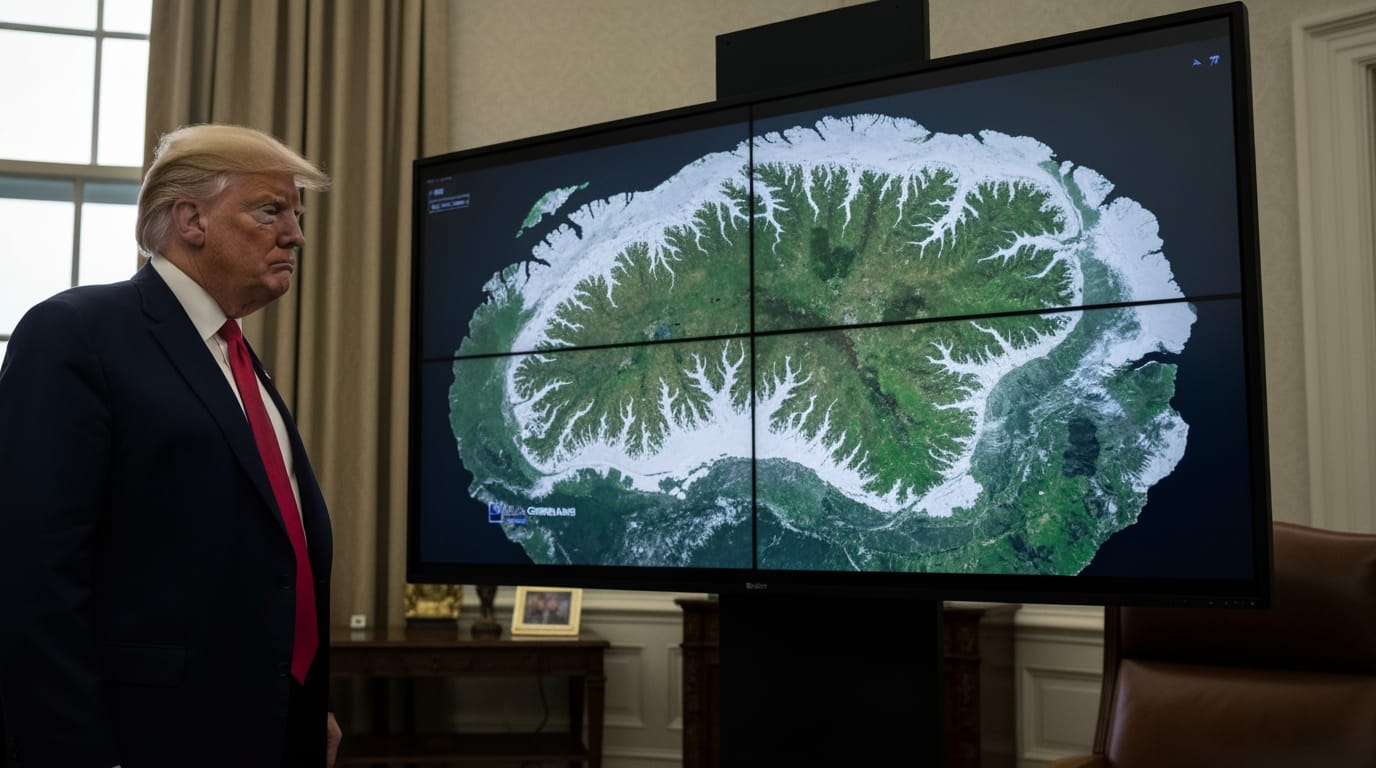
WASHINGTON D.C. — The White House has unequivocally stated that employing the U.S. military remains "always an option" in President Donald Trump's ongoing pursuit to acquire Greenland, a semi-autonomous territory of Denmark. This assertive declaration, made on Tuesday, January 7, 2026, marks a significant escalation in rhetoric surrounding a geopolitical ambition that has previously been met with widespread incredulity and firm rejections from both Greenland and its sovereign nation, Denmark. The explicit mention of military force, even as a last resort, has ignited fresh concerns across diplomatic circles and among NATO allies, underscoring the deep unease generated by Washington's persistent interest in the strategically vital Arctic island.
Escalating Rhetoric: The "Military Option" Emerges
President Trump's administration, reiterating a long-held ambition first voiced in 2019 and renewed following his 2024 re-election, views the acquisition of Greenland as a paramount national security priority for the United States. White House Press Secretary Karoline Leavitt confirmed the administration's stance, stating that the president and his team are actively discussing a range of options to achieve this "important foreign policy goal." In a statement that sent ripples through the international community, Leavitt underscored that "utilizing the U.S. military is always an option at the commander-in-chief's disposal."
This latest pronouncement comes amidst continued assertions from President Trump regarding the necessity of U.S. control over Greenland. He has publicly articulated that the U.S. "needs Greenland from the standpoint of national security," contending that Denmark is unable to adequately protect the vast island, which he claims is "covered with Russian and Chinese ships all over the place." Senior U.S. officials, speaking anonymously to discuss internal deliberations, indicated that various pathways are being considered, including an outright purchase or a Compact of Free Association (COFA) agreement. A COFA deal, while offering financial assistance and defense guarantees, would stop short of full integration into the United States. However, the emphasis on the military option has overshadowed these other considerations, bringing a coercive undertone to the ongoing discussions.
Decades of Desire: A Strategic Arctic Jewel
The United States' interest in Greenland is not a novel concept, tracing back over a century and a half. Historically, the U.S. has made several attempts to purchase the island, with notable discussions occurring in 1867, 1910, and most famously, in 1946 when President Harry S. Truman offered Denmark $100 million in gold for the territory. These past overtures, like the current ones, were largely driven by Greenland's immense strategic value.
Greenland's geographical location—situated between North America, Europe, and the Arctic—makes it a critical asset for military security and control over northern Atlantic movements. Its position is crucial for missile defense, early-warning systems, and monitoring potential threats. The U.S. already maintains a significant military presence on the island at Pituffik Space Base (formerly Thule Air Base), a facility established in the 1940s and operating under a 1951 defense agreement with Denmark. This base plays a fundamental role in homeland security, providing early warnings against ballistic missiles and supporting satellite operations.
Current U.S. concerns are heightened by increasing geopolitical competition in the Arctic, primarily from Russia and China. Both nations have expanded their military activities and investments in the region, creating a new "great game" for influence and resources. Washington views Greenland as essential for deterring these adversaries and preventing them from gaining a lasting foothold in an increasingly accessible Arctic.
Diplomatic Firestorm: Denmark, Greenland, and NATO React
The White House's latest comments have ignited a furious response from Denmark and Greenland, who have consistently and unequivocally rejected any notion of sale or forceful acquisition. Greenland's government and its Prime Minister, Jens-Frederik Nielsen, have firmly stated that the island is "not for sale" and that its future is a matter for the Greenlandic people to decide. Denmark has echoed this sentiment, with Prime Minister Mette Frederiksen previously characterizing Trump's initial interest as "an absurd discussion."
The Danish Prime Minister has also issued stark warnings about the potential implications of any military action. Frederiksen cautioned that a U.S. military move against Greenland, a long-standing NATO ally, would "spell the end of NATO." This strong condemnation highlights the fundamental principles of sovereignty and territorial integrity that underpin the transatlantic alliance. European leaders across the continent have largely rallied in support of Denmark and Greenland, with representatives from the UK, France, Germany, Italy, Poland, and Spain issuing a joint statement emphasizing that "Greenland belongs to its people" and that Arctic security must be pursued collectively through NATO. The consensus among these nations is that respecting national sovereignty is paramount and that any unilateral action would severely damage international norms and alliances.
The Arctic Chessboard: Resources, Routes, and Rivalries
Beyond its military significance, Greenland holds immense economic potential that factors heavily into U.S. calculations. The island is believed to possess vast reserves of natural resources, particularly rare earth elements (REEs), which are crucial for high-tech industries, renewable energy technologies, and advanced military applications. China currently dominates the global supply chain for these critical minerals, and the U.S. sees Greenland as an opportunity to diversify its supply and reduce its dependence on Beijing.
Furthermore, climate change is rapidly transforming the Arctic landscape, leading to melting ice caps and opening up new shipping lanes, such as the Northeast Passage. These new routes offer shorter transit times between Europe and Asia, potentially reshaping global trade and making the Arctic a new frontier for economic competition. Greenland's strategic position along these emerging maritime passages further enhances its value, making it a pivotal point in the evolving geopolitical and economic landscape of the Arctic. The desire to control these future trade arteries and secure access to untapped resources contributes significantly to the persistent U.S. interest in the territory.
A Precarious Future for Arctic Diplomacy
The White House's explicit mention of a "military option" in discussions about Greenland has introduced a concerning element of coercion into international relations, particularly with a key NATO ally. While U.S. officials have reiterated that diplomacy remains the preferred path, the willingness to publicly entertain such a drastic measure has created a diplomatic chasm.
The incident underscores the growing strategic importance of the Arctic, an arena where climate change is rapidly accelerating geopolitical competition. As global powers vie for influence, resources, and control over new trade routes, the delicate balance of international law and sovereign rights is increasingly tested. The unwavering rejections from Denmark and Greenland, backed by broader European solidarity, highlight the immense challenges faced by any attempts to redraw national boundaries through unconventional means. The controversy surrounding Greenland serves as a stark reminder of the precarious future for Arctic diplomacy and the potential for heightened tensions in an increasingly contested region.


