WHO Chief Rallies Support as Ebola Outbreak Grips DRC's Ituri and Spreads to Uganda
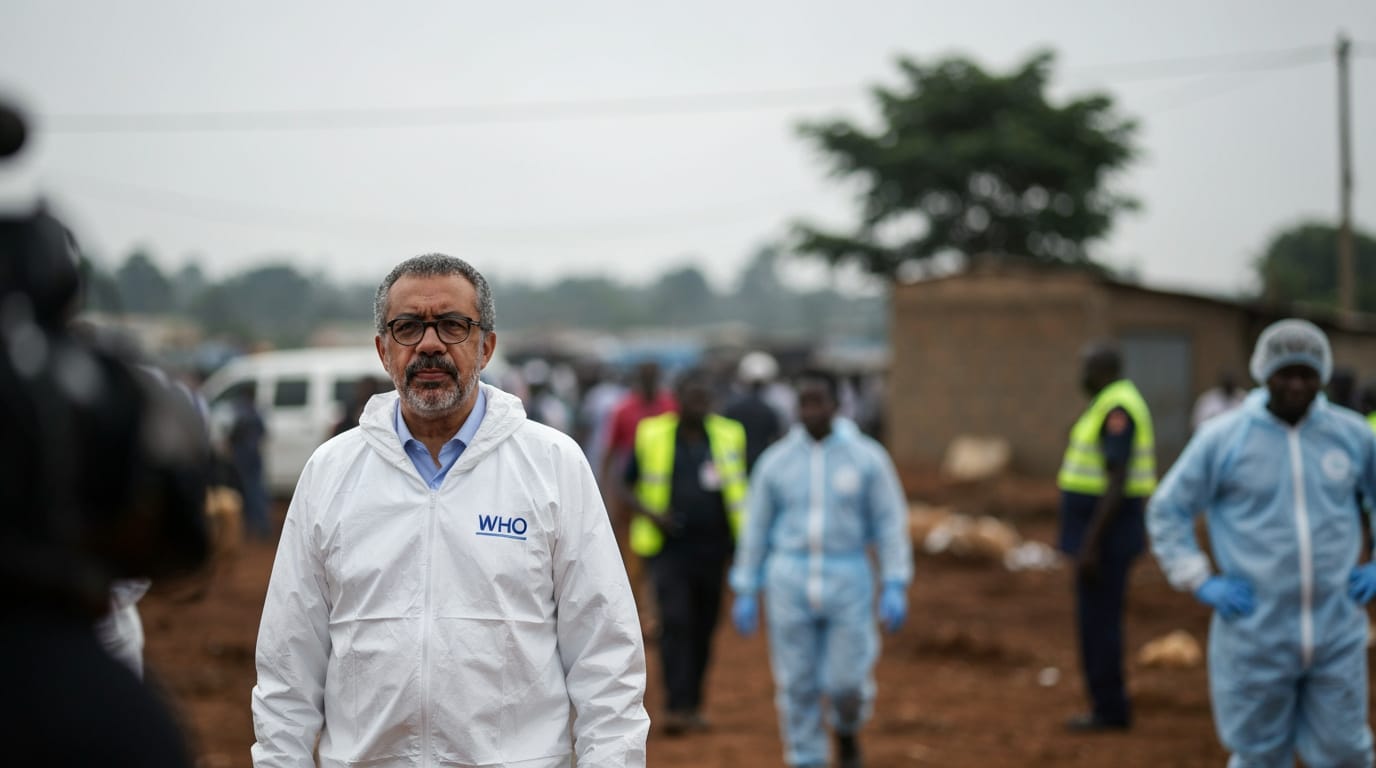
Kampala, Uganda – The latest Ebola outbreak, originating in the Democratic Republic of Congo's volatile Ituri province, has escalated into a critical regional health emergency, prompting an urgent visit by World Health Organization (WHO) Director-General Dr. Tedros Adhanom Ghebreyesus to Uganda. On Monday, June 8, 2026, Dr. Tedros arrived in Uganda, a nation now grappling with confirmed cases stemming from its porous border with the DRC. The visit underscores the international community's heightened concern as the Bundibugyo strain of Ebola, for which no approved vaccine currently exists, spreads across a region already scarred by conflict and displacement.
The current outbreak, the DRC's 17th since the virus was first identified in 1976, was officially declared on May 15, 2026. Within a day, the WHO designated it a Public Health Emergency of International Concern (PHEIC), signifying the severity and potential for widespread transmission. Ituri province remains the epicenter, accounting for 88% of confirmed cases in the DRC, with critical hotspots identified in Bunia, Rwampara, Mongbwalu, and Nyankunde health zones. The pathogen's rapid spread and the lack of a specific approved treatment for the Bundibugyo strain have amplified fears of a more protracted and challenging response.
A Resurgent Threat in a Volatile Region
The 2026 Ebola outbreak marks a concerning return of the Bundibugyo virus, posing distinct challenges compared to previous outbreaks primarily involving the Zaire strain. The outbreak's emergence in Ituri province, a region plagued by decades of armed conflict and significant population displacement, creates a complex environment for containment efforts. As of May 27, 2026, the Democratic Republic of Congo had reported a total of 125 confirmed cases and 17 deaths, alongside a larger number of suspected cases and fatalities. Health authorities warn that the true scale of the outbreak may be considerably larger due to limited access to testing facilities and the virus potentially circulating undetected for weeks.
The proximity of Ituri to Uganda has placed immense pressure on border communities and health systems. Uganda confirmed its first cases linked to this outbreak, with 19 total confirmed infections, including two deaths of individuals who had crossed from the DRC. These developments highlight the inherent risks of cross-border movement, particularly in areas where communities routinely traverse national boundaries for trade, social ties, and in response to insecurity. The potential for the outbreak to be "outpacing the response" has been noted by international health authorities, raising the regional risk assessment to "very high."
Dr. Tedros's Urgent Diplomatic Push
Dr. Tedros Adhanom Ghebreyesus embarked on a series of visits to the affected region, traveling to the DRC on May 28 and subsequently to Uganda on June 8, 2026. His engagements reflect a concerted effort to galvanize international support, strengthen local response capacities, and foster community trust. In the DRC, particularly in Bunia, the capital of Ituri province, he emphasized the importance of community ownership in the response, acknowledging the deep-seated mistrust and misinformation that can hinder efforts. He also appealed for a ceasefire among warring factions to ensure safe access for health workers to affected areas.
Upon his arrival in Uganda, Dr. Tedros lauded the Ugandan government's "prompt and capable response" to the burgeoning crisis. He noted the effectiveness of border screenings in detecting cases arriving from the DRC and praised the country's surveillance, testing, and case management systems. Uganda's proactive measures, including enhanced screening at border points, community engagement, and the deployment of health experts, have been critical in attempting to contain the spread. His visit served not only to assess the immediate situation but also to pledge continued WHO support in mobilizing global and regional resources to bring the outbreak under control.
Navigating Complexities: Conflict, Trust, and Cross-Border Collaboration
The fight against Ebola in eastern DRC and neighboring Uganda is deeply intertwined with a complex web of challenges. Insecurity and ongoing armed conflict in Ituri province severely impede access for health workers and complicate contact tracing and follow-up efforts. Militias and intercommunal violence contribute to massive population displacements, creating further opportunities for the virus to spread undetected. Attacks on health facilities and workers, a grim reality during past outbreaks, continue to undermine public health interventions.
Community mistrust, fueled by misinformation and past experiences, remains a significant barrier. Instances of denial regarding the existence of Ebola and the spread of rumors have historically hindered response activities, leading to delayed reporting and increased community transmission. Addressing these perceptions through robust risk communication and community engagement strategies is paramount. Furthermore, the extensive 800-kilometer border between Uganda and the DRC, much of which is porous, presents a constant challenge for surveillance and containment. Despite Uganda's efforts to implement active screening and quarantine measures, informal crossings remain a concern.
A Coordinated Regional and Global Response
The international community has mobilized rapidly to support the response. The WHO, alongside partners like the Africa Centres for Disease Control and Prevention (Africa CDC), international NGOs, and national governments, is implementing comprehensive public health measures. These include the deployment of rapid response teams, strengthening laboratory confirmation, contact tracing, isolation and treatment of cases, and intensified cross-border coordination. Australia, for instance, has pledged $5 million to support the global response through organizations like the International Federation of the Red Cross and the WHO, while the United Nations Central Emergency Response Fund has released US$60 million for humanitarian needs in the region.
Cross-border coordination meetings, involving health and immigration officials from the DRC and nine neighboring countries, have been convened to enhance surveillance, contact tracing, workforce development, and information sharing to mitigate regional transmission risks. The concerted effort also extends to urgently developing a vaccine for the Bundibugyo virus, with contributions to initiatives like the Coalition for Epidemic Preparedness Innovations. These collaborative frameworks aim to build stronger regional health security and ensure a unified front against a persistent threat.
Outlook: A Fragile Path to Containment
The current Ebola outbreak in the DRC and Uganda represents a formidable public health challenge, compounded by the region's geopolitical complexities and the inherent difficulties of the Bundibugyo strain. While the declaration of a PHEIC and the direct engagement of Dr. Tedros highlight the global commitment to containment, the ultimate success hinges on sustained international support, robust cross-border collaboration, and, crucially, enhanced community trust and participation. The hard work to build preparedness capacities in neighboring countries, a lesson from previous outbreaks, is proving vital in limiting the risk of wider expansion.
As health workers on the frontlines continue their arduous efforts in volatile conditions, the international community remains cautiously optimistic that through coordinated action and unwavering resolve, the spread of this deadly virus can be brought under control. The ongoing response in eastern DRC and Uganda serves as a stark reminder of the continuous vigilance required to combat infectious diseases in an interconnected world.


