World Cup in Peril: FIFA's Standoff with India and China Threatens Global Reach
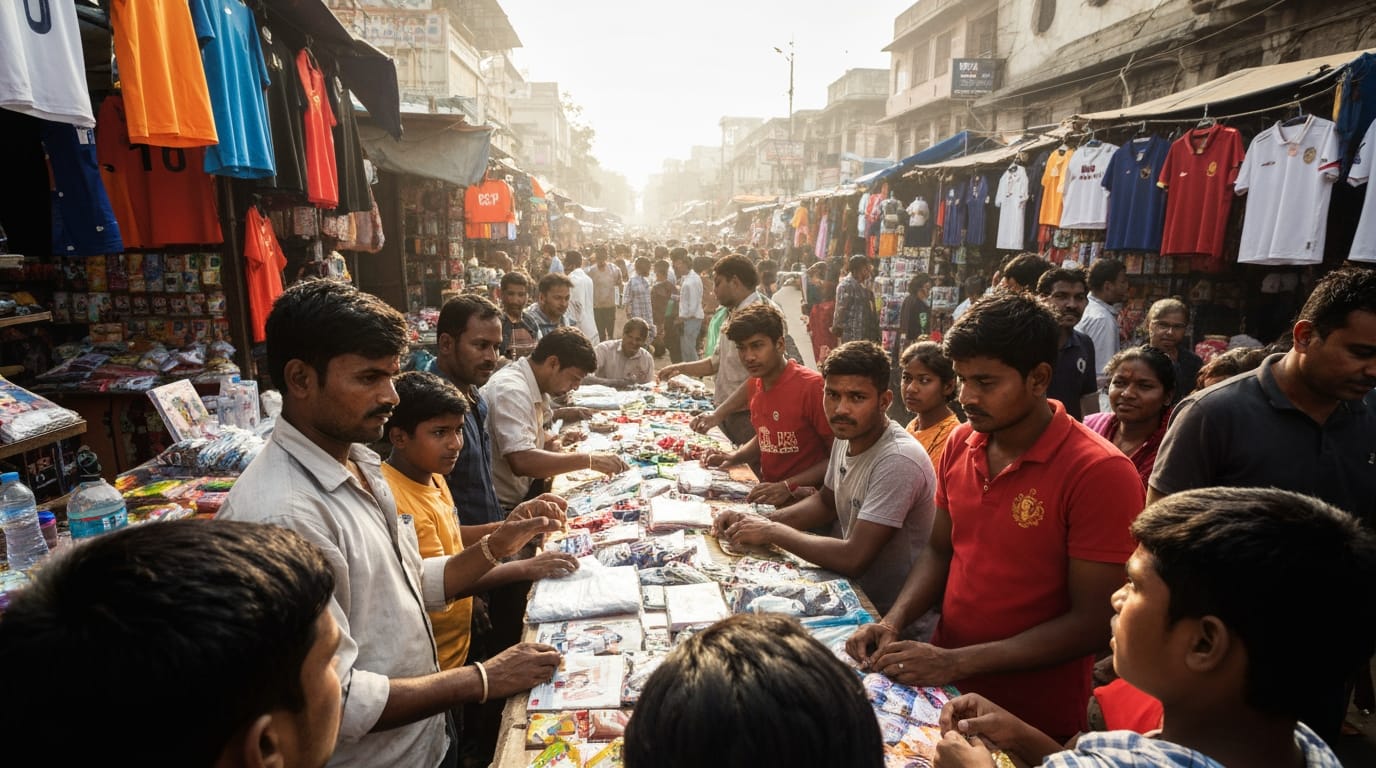
New Delhi, Beijing – With the 2026 FIFA World Cup merely weeks away, the world's governing football body finds itself embroiled in a high-stakes commercial standoff with broadcasters in India and China, two of the globe's most populous nations. The impasse over broadcast rights, fueled by what many industry observers describe as FIFA's ambitious valuation demands, threatens to leave hundreds of millions of fans without legal access to football's premier tournament. The situation has intensified concerns that FIFA's pursuit of maximizing revenue might inadvertently alienate crucial markets and undermine its ambition of truly globalizing the sport.
The absence of confirmed broadcast deals in these territories, just a month before the June 11 kickoff, stands in stark contrast to previous World Cup cycles where agreements were typically finalized months in advance. The dispute highlights a complex interplay of economic realities, shifting consumption habits, and the unique challenges of marketing a global spectacle across diverse cultural landscapes.
The Allure and the Aspiration: Tapping into Billions
For years, FIFA has eyed India and China as pivotal growth markets, recognizing their colossal populations—together accounting for over a third of humanity—as an unparalleled opportunity for expanding football's reach and commercial footprint. The sheer scale of potential viewership in these countries represents a significant prize for any global sporting event. FIFA's decision to expand the World Cup to 48 teams was partly driven by the hope that larger nations, including India and China, would qualify, thereby boosting local interest and viewership exponentially.
Indeed, football's popularity has been on an upward trajectory in both nations. Research from 2019 indicated a growing interest in the sport, with football ranking as the favorite in China (alongside basketball) and the second favorite in India, behind cricket. More recent data from 2024 suggests India alone boasts 138.7 million football fans, positioning it as a promising growth market for sponsors and media. China, with an estimated 200 million football fans, also represents a massive, engaged audience. These figures underscore the considerable appeal and untapped potential that FIFA aims to capitalize on.
The Price of Ambition: "FIFA Got Greedy"
However, FIFA's aggressive pricing strategy for the 2026 World Cup broadcast rights has encountered significant resistance. Initial demands from FIFA were reportedly around $100 million for India and an astonishing $250-$300 million for China. These figures were perceived by local broadcasters as exorbitantly high, leading to a stalemate in negotiations. As a result, many commentators and reports have directly criticized FIFA, often using phrases like "FIFA got greedy" to describe the situation.
Despite FIFA reportedly lowering its asking price—to approximately $35 million for India and between $120-$150 million (and later even $80 million) for China—agreements remain elusive. For instance, India's Reliance-Disney joint venture, JioStar, offered around $20 million, a figure FIFA deemed unacceptable. In China, state broadcaster CCTV, which holds a government-granted monopoly on negotiations, has an internal budget of roughly $60-$80 million, a substantial gap from FIFA's reduced demands. Chinese media outlets have openly questioned FIFA's rationale, suggesting a "double standard" in pricing compared to other regions.
Market Realities and Fan Engagement Challenges
Several factors contribute to the reluctance of Indian and Chinese broadcasters to meet FIFA's price expectations:
- Unfavorable Match Timings: The 2026 World Cup, hosted across the United States, Canada, and Mexico, presents a significant time zone challenge for Asian audiences. Most matches will kick off in the middle of the night or early morning hours in India and China. This drastically reduces prime-time viewership, which in turn diminishes advertising revenue potential for broadcasters, making high rights fees economically unviable. For context, only 14 games will kick off before midnight in India during the 2026 tournament, compared to nearly all games in 2018 and most in 2022.
- Lack of Domestic Team Participation: A crucial dampener for local enthusiasm is the failure of both the Indian and Chinese men's national teams to qualify for the 2026 World Cup. The absence of a national team significantly reduces commercial interest and local audience engagement, making it harder for broadcasters to justify substantial investments in rights.
- Dominance of Cricket in India: In India, cricket remains the undisputed king of sports. Broadcasters consistently prioritize cricket, especially events like the Indian Premier League (IPL) and the Women's T20 World Cup, as they guarantee significantly higher advertising revenues and audience engagement compared to football. The 2022 World Cup saw Viacom18 pay $60 million for broadcast rights but reportedly generate only $30 million in advertising revenue, resulting in heavy losses. This previous experience makes broadcasters wary of overspending.
- Chinese Economic Factors and Monopoly: A slowdown in the Chinese economy has impacted advertising spending by major brands, limiting broadcasters' willingness and ability to pay premium prices. Furthermore, CCTV's monopoly position means FIFA lacks competitive bidding to drive up prices, giving the Chinese broadcaster leverage in negotiations.
- Evolving Viewing Habits: In both markets, particularly among younger demographics, viewing habits are evolving. There's a growing preference for fragmented content consumption—mobile highlights, social media clips, and on-demand streaming—rather than watching full live matches, especially those airing at inconvenient times. This shift further reduces the perceived value of exclusive live broadcast rights for traditional broadcasters.
The Path Forward: Balancing Revenue with Reach
The ongoing deadlock poses a significant dilemma for FIFA. Media rights constitute the largest portion of FIFA's revenue, with approximately $5.3 billion projected from broadcasting income for the 2026-2030 cycle. Not securing deals in India and China, which together contributed nearly half of global digital viewing hours during the 2022 World Cup, is a "massive concern" and could result in estimated direct cash losses of $200 million and sponsor/brand damage approaching $1 billion. Major Chinese sponsors like Mengniu and Hisense, who have collectively invested hundreds of millions, face undermined marketing campaigns without domestic broadcasts.
FIFA has successfully concluded broadcast agreements in over 175 other territories worldwide, but the protracted negotiations with India and China stand out. While FIFA has dispatched a high-ranking delegation to Beijing, indicating a willingness to negotiate further, the situation remains fluid. The challenge for FIFA is to strike a delicate balance: maintaining the commercial value of its flagship tournament while ensuring its accessibility to a global audience, particularly in markets that represent immense long-term growth potential. Holding firm on high prices risks widespread blackouts, potentially encouraging piracy and eroding the very global viewership FIFA seeks to cultivate. Conversely, offering significant discounts could set a precedent for other emerging markets to demand similar concessions, impacting future revenue streams.
The resolution of these negotiations in the coming weeks will not only determine how hundreds of millions of fans in India and China experience the 2026 World Cup but could also set a new precedent for how major international sports organizations engage with crucial emerging markets in the future. The question remains whether FIFA will prioritize its immediate revenue targets or adopt a more flexible approach to ensure the tournament's broader global reach and fan engagement.