World Cup's New Mandatory Hydration Breaks Ignite Fiery Debate
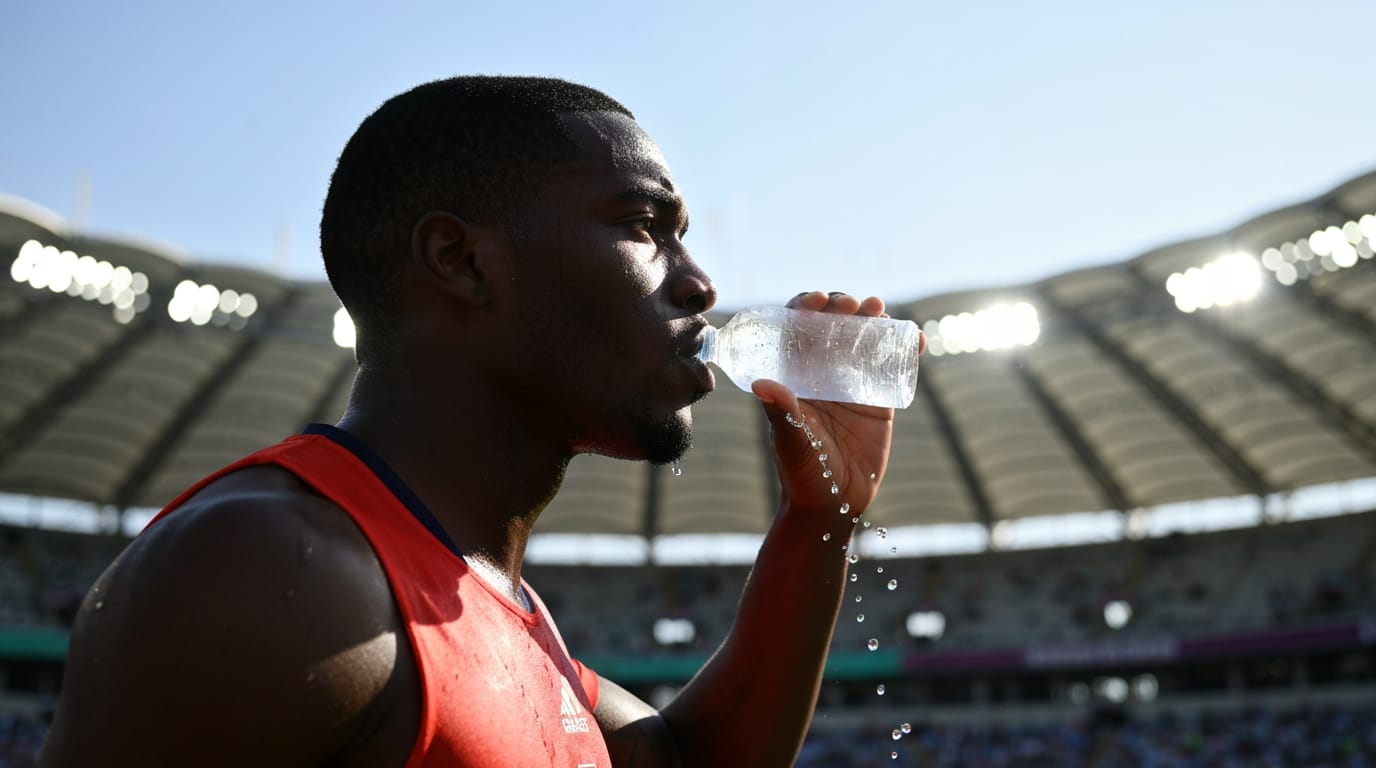
The 2026 FIFA World Cup, spanning across North America, has introduced a significant rule change that has quickly become one of the tournament's most contentious topics: mandatory hydration breaks in every match, regardless of environmental conditions. While ostensibly aimed at player welfare amid potentially record-breaking summer temperatures, this new policy has sparked widespread debate among fans, coaches, players, and pundits, raising questions about game integrity, tactical implications, and commercial interests.
The Evolution of Mid-Match Pauses
Mid-game breaks are not entirely new to the World Cup stage. The concept of "cooling breaks" first emerged at the 2014 World Cup in Brazil, where extreme heat and humidity necessitated stoppages to ensure player safety. These earlier breaks were implemented on a match-by-match basis, triggered only when the Wet-Bulb Globe Temperature (WBGT) – a measure accounting for heat, humidity, wind, and cloud cover – exceeded 32 degrees Celsius (89.6 degrees Fahrenheit). The first official cooling break, lasting three minutes, occurred during the Netherlands versus Mexico match in Fortaleza, Brazil, where temperatures reached 39 degrees Celsius (102 degrees Fahrenheit). This marked a turning point, acknowledging the physical demands on athletes in challenging climates.
FIFA's Bold New Stance for 2026
For the 2026 tournament, FIFA has significantly altered its approach. On December 7, 2025, the governing body confirmed that all 104 matches will feature mandatory three-minute hydration breaks, imposed midway through each half, typically around the 22nd and 67th minute of play. This marks a departure from the condition-dependent breaks of the past, as these stoppages will occur irrespective of the actual weather, stadium design, or whether the venue is climate-controlled. Manolo Zubiria, Chief Tournament Officer for the 2026 World Cup, emphasized this standardization, stating, "For every game, no matter where the games are played, no matter if there's a roof, (or) temperature-wise, there will be a three-minute hydration break. It will be three minutes from whistle to whistle in both halves." FIFA asserts that this blanket policy prioritizes player welfare, aiming to protect athletes from heat stress and ensure equitable conditions across all teams and venues throughout the tournament.
The Disruption Dilemma: Game Flow vs. Tactical Advantage
While player safety is a widely accepted priority, the universal application of hydration breaks has drawn considerable criticism for its impact on the game itself. A primary concern revolves around the disruption of game flow and momentum. Many fans and former players argue that the mandated pauses interrupt the rhythm of play, particularly when a team is building an attack or has just scored. Former England striker Alan Shearer expressed sympathy for teams like Curaçao, who reportedly lost momentum after scoring against Germany, only for a hydration break to immediately follow, leading to a subsequent collapse. Fans at stadiums have reportedly booed the interruptions, viewing them as unnecessary and detrimental to the spectacle.
Beyond the aesthetic impact, coaches are openly using these breaks for tactical adjustments, effectively transforming the traditional 45-minute halves into four quarters. This allows managers to deliver fresh instructions, tweak formations, and rally their teams in ways previously only possible during halftime. Netherlands coach Ronald Koeman acknowledged this, stating, "You can use the break to tell the players what they need to improve or what is good or what they should do better. So you can use it in different ways to your advantage." This tactical manipulation introduces a new dynamic that some argue fundamentally alters the nature of football, traditionally a sport defined by continuous play.
Commercial Interests Under Scrutiny
Perhaps the most significant source of controversy stems from the perception that the mandatory hydration breaks serve commercial rather than purely athletic purposes. Critics allege that these breaks provide lucrative opportunities for broadcasters to insert additional advertising, generating substantial revenue. With 30-second ad slots reportedly costing hundreds of thousands of dollars, the cumulative effect of these three-minute stoppages across 104 matches translates into millions in additional advertising revenue.
FIFA President Gianni Infantino has maintained that the organization gains "absolutely nothing" from these hydration breaks, asserting that all commercial agreements were signed well in advance of the policy decision. However, many observers remain skeptical, suggesting that the opportunity for increased advertising slots was factored into broadcasting rights negotiations. The fact that breaks are implemented even in air-conditioned or cool venues further fuels this suspicion, with some questioning the sincerity of FIFA's player welfare argument in such instances. This has led to accusations of a "cash grab" and a push towards a "four-quarter" model akin to American sports leagues, prioritizing profit over the traditional flow of soccer.
Player Safety: A Genuine Concern
Despite the criticisms, the underlying concern for player safety in an increasingly demanding sport and a warming climate remains valid. Experts note that the World Cup 2026 could be one of the hottest in the tournament's history, justifying proactive measures against heat illness. Three-minute breaks, while perhaps not fully effective for complete rehydration or cooling in extreme conditions, are seen by some medical professionals as a valuable tool to mitigate potential incidents. Joshua L. DeVincenzo of Columbia University's National Center for Disaster Preparedness stated that the breaks are a way to "mitigate anything that could potentially lead to an incident or an emergency." The emphasis on player well-being aligns with a broader trend in sports to protect athletes from the physiological stresses of competition.
A Divisive Future
The debate surrounding hydration breaks highlights a fundamental tension between player welfare, the traditional integrity of the game, and the commercial realities of modern global sports. While FIFA champions the mandatory breaks as a crucial step for athlete health and fairness, a significant portion of the footballing world views them with skepticism, fearing that they compromise the sport's essence for financial gain. The new policy has undoubtedly changed the rhythm and tactical landscape of World Cup matches. As the tournament progresses and the impact of these mandatory pauses becomes more evident, the football community will continue to grapple with whether these breaks truly serve the best interests of the beautiful game, or if they represent a step too far in its commercial evolution.