World Leaders Converge in New Delhi, Urging Guardrails for Accelerating AI Boom
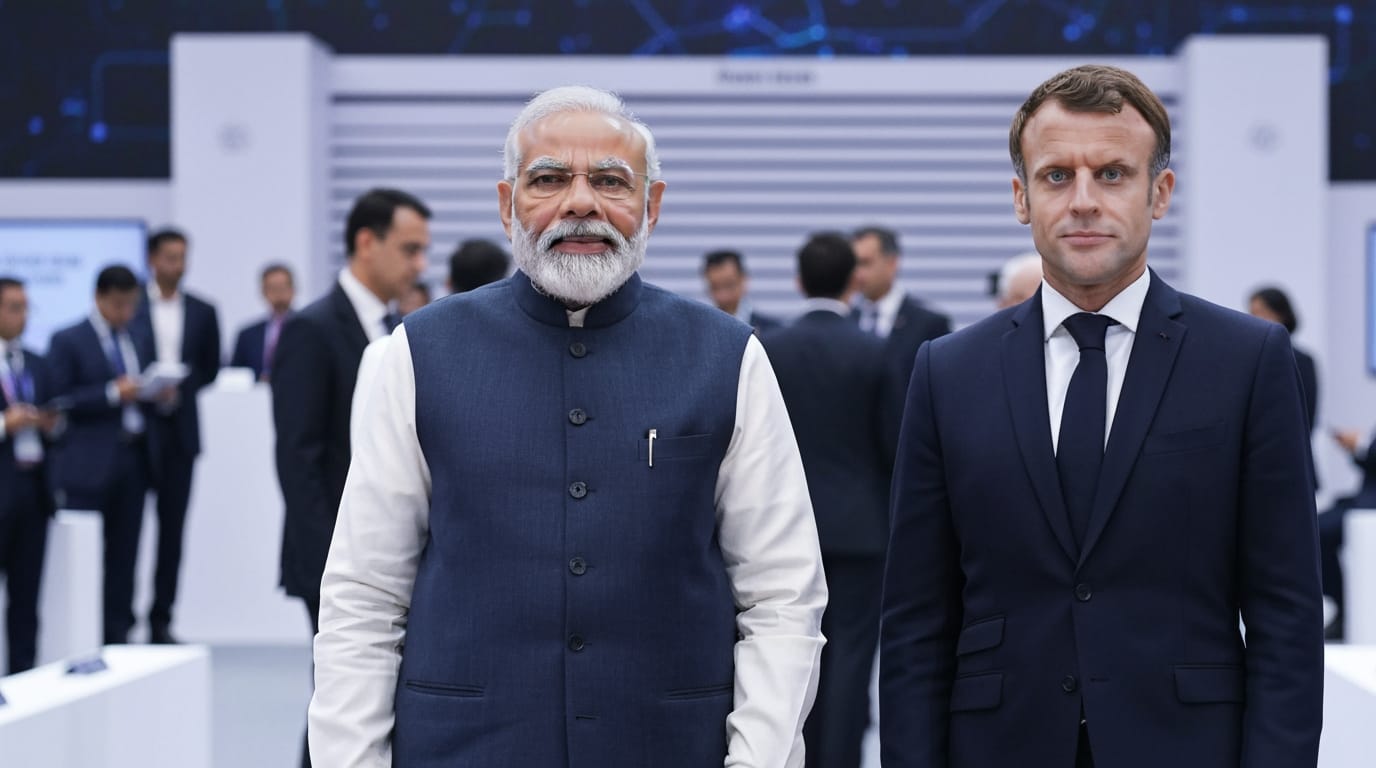
New Delhi, India – In a pivotal moment for the future of artificial intelligence, global leaders gathered in New Delhi for the India AI Impact Summit 2026, where a resounding call for robust guardrails and ethical governance emerged as a central theme. Spearheaded by Indian Prime Minister Narendra Modi and French President Emmanuel Macron, the summit underscored a growing international consensus that the rapid advancement of AI necessitates a concerted effort to ensure its responsible development and deployment for the benefit of all humanity.
The five-day event, hosted at the Bharat Mandapam, brought together an unprecedented assembly of heads of state, government officials, leading tech CEOs, academics, and policymakers from 118 countries. Discussions moved beyond the technological marvels of AI to confront the profound societal implications of this transformative technology, emphasizing the urgent need for a framework that prioritizes human agency, inclusivity, and accountability over unchecked innovation.
A Global Stage for Critical Dialogue
The India AI Impact Summit 2026 marked a significant milestone, being the first major global AI summit hosted in the Global South. From February 16 to 20, New Delhi became the epicenter of a global conversation aimed at translating AI deliberations into actionable development outcomes. The summit's overarching theme, "Sarvajana Hitaya, Sarvajana Sukhaya" (welfare for all, happiness for all), set a clear agenda: to ensure AI serves as a tool for inclusive growth and sustainable development.
Prime Minister Modi inaugurated the main summit on February 19, welcoming an array of international dignitaries, including UN Secretary-General António Guterres, and prominent figures from the tech industry such as Google's Sundar Pichai, OpenAI's Sam Altman, and Nvidia's Jensen Huang. The diverse participation highlighted the universal impact of AI and the shared responsibility to shape its trajectory. The agenda was structured around three foundational 'Sutras' – People, Planet, and Progress – and seven 'Chakras' representing key areas of multilateral cooperation, from human capital and inclusion to safe and trusted AI and democratizing AI resources. This comprehensive approach aimed to foster collaboration across nations and sectors, bridging the gap between technological advancement and societal well-being.
The Urgent Call for Ethical Guardrails
A consistent message echoing throughout the summit was the imperative to establish clear ethical guardrails for AI. Prime Minister Modi articulated a vision where AI must not treat humans merely as "raw material" but as beneficiaries, stressing the non-negotiable principles of democratisation, ethical guardrails, and accountable governance. He advocated for AI to be accessible and inclusive, lawful and verifiable, and function as a multiplier of human potential rather than a monopoly. Modi also called for global standards, watermarking of AI-generated content, and authenticity labels akin to nutrition labels to combat the proliferation of deepfakes, alongside designing AI systems with children's safety embedded from the outset.
French President Emmanuel Macron reinforced these sentiments, emphasizing the importance of sovereign, independent, and collaborative AI development. Macron highlighted France's and Europe's determination to "shape the rules of the game" with allies like India, referencing the European Union's pioneering AI Act. He underscored the need for sustainable energy practices in powering data centers, reflecting concerns about the environmental footprint of large-scale AI operations. Macron's presence at the summit followed a previous AI Action Summit co-chaired by him and Prime Minister Modi in Paris, where significant AI investments were announced, further solidifying the India-France partnership in this critical domain.
UN Secretary-General António Guterres delivered a stark warning, asserting that the future of AI "cannot be decided by a handful of countries or left to the whims of a few billionaires." He pressed for global guardrails to ensure oversight and accountability, and proposed the creation of a $3 billion Global Fund on AI to build basic capacity in developing countries, emphasizing that AI "must belong to everyone." These strong statements from world leaders underscored the perceived risks of unchecked AI development, including deepening inequality, amplifying bias, and potential misuse, while also acknowledging AI's immense potential for good in areas like medicine, education, and climate action.
India's "AI for All" Vision
India's participation in the global AI dialogue is rooted in its comprehensive National Strategy for Artificial Intelligence, developed by NITI Aayog, which positions the country as a leader in AI with a unique focus on inclusive growth and societal transformation. Minister Ashwini Vaishnaw outlined India's five-layer AI strategy, encompassing applications, models, compute infrastructure, talent, and energy. This strategic approach prioritizes democratizing technology and making its benefits accessible to all, aiming to transform India into a trusted global AI hub.
The "AI for All" philosophy is central to India's vision, seeking to leverage AI to drive economic growth and improve social outcomes across critical sectors. Examples include enhancing healthcare access, providing real-time advisory to farmers for improved productivity, facilitating inclusive financial growth, and contributing to smart cities and efficient infrastructure. By focusing on indigenous development of specialized AI models and investing in compute infrastructure, India aims to address its unique challenges and offer scalable solutions applicable to other emerging economies. The potential economic impact is substantial, with projections indicating AI could contribute $500 billion to India's economy by 2025 and boost its annual growth rate by 1.3 percentage points by 2035.
Navigating the Complexities of Global AI Governance
The summit also highlighted the inherent complexities in establishing a universally accepted framework for AI governance. While countries like those in the European Union have progressed with regulatory acts, the global landscape remains fragmented. Challenges include the significant disparity in resources and infrastructure between the Global North and the Global South, which could exacerbate the "digital divide" into an "AI divide" if not addressed equitably. Moreover, the rapid pace of technological innovation often outstrips the slower legislative processes, making it difficult for regulations to keep pace.
The Global Partnership on AI (GPAI), of which India is a founding member, held a meeting on the sidelines of the summit, bringing together representatives from 58 member countries. This collaborative effort aimed to review progress in international cooperation initiatives and strengthen global AI governance principles, underscoring the necessity of a collective approach. Discussions centered on translating theoretical analyses and policy frameworks into practical tools for policymakers, focusing on responsible deployment of AI in public services, skill development, risk management, and ensuring AI contributes to sustainable development.
Conclusion: Charting a Responsible Future
The India AI Impact Summit 2026 served as a critical platform for fostering international collaboration and emphasizing the shared responsibility in navigating the AI revolution. The unified call from leaders like Prime Minister Modi, President Macron, and UN Secretary-General Guterres for ethical guardrails, democratisation, and inclusive access signals a global pivot towards more responsible AI development. The discussions underscored that while AI promises unparalleled opportunities for human progress, realizing this potential requires vigilant oversight, robust international cooperation, and a steadfast commitment to human-centric values. The challenge now lies in transforming these high-level commitments into concrete, universally adopted frameworks that can guide AI's evolution, ensuring it remains a force for good in an increasingly interconnected world.


