Xi Jinping Embarks on Rare North Korea Visit, Cementing Alliance Amidst Geopolitical Shifts
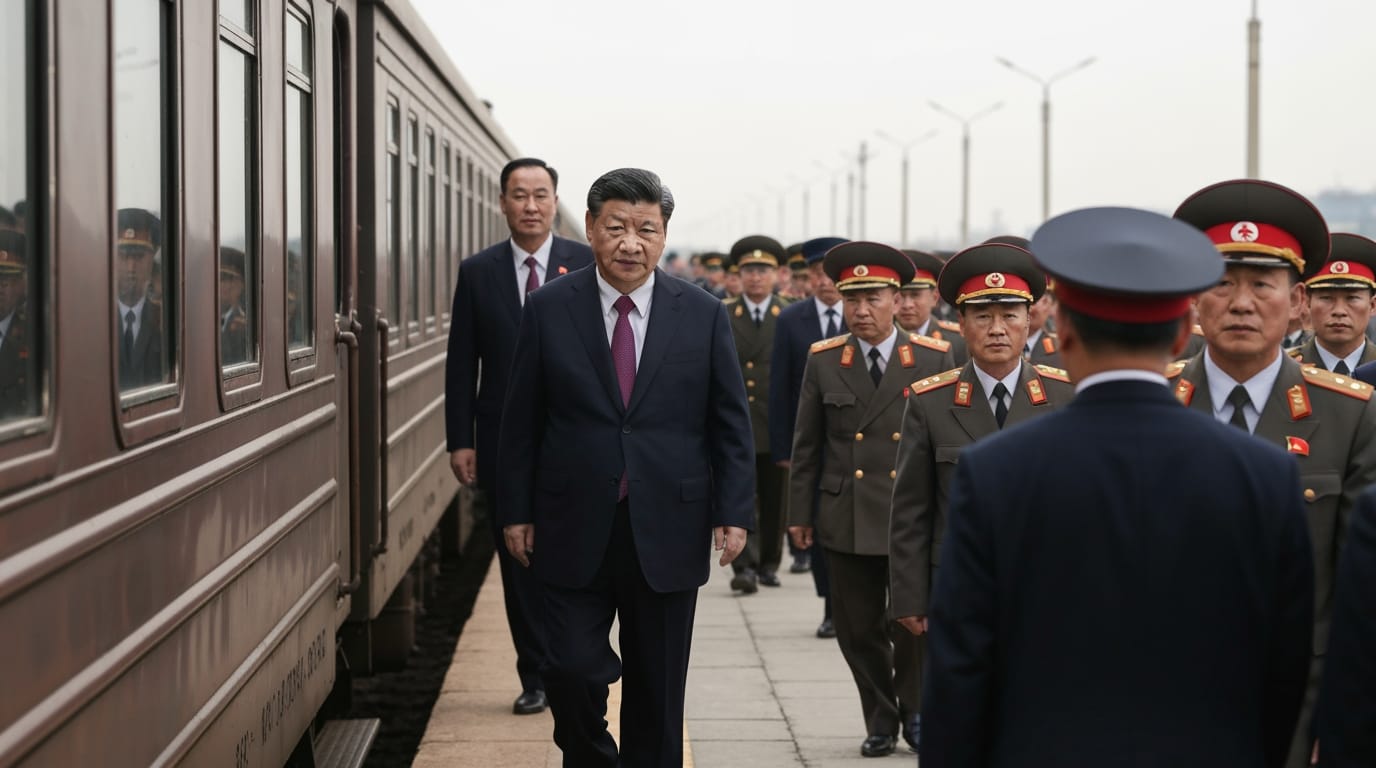
PYONGYANG – Chinese President Xi Jinping arrived in Pyongyang on Monday, June 8, 2026, for a highly anticipated two-day state visit, marking his first trip to North Korea in seven years and his inaugural overseas journey of the year. The rare high-level engagement underscores Beijing's renewed efforts to bolster its traditional alliance with Pyongyang amidst an increasingly complex global landscape characterized by shifting geopolitical alliances and intensified rivalries. The visit, which includes a meeting with North Korean leader Kim Jong Un, is seen as a strategic maneuver by China to reassert its influence over its nuclear-armed neighbor, especially as Pyongyang continues to deepen its ties with Moscow.
A Resumption of High-Level Diplomacy
President Xi's presence in Pyongyang, accompanied by his wife Peng Liyuan, Foreign Minister Wang Yi, and top Communist Party official Cai Qi, carries significant symbolic weight. This visit is the first by a Chinese head of state since 2019 and follows a period where Xi has notably reduced his foreign travel, making it a pivotal moment for both nations. Historically, visits by Chinese presidents to North Korea have been infrequent, with a 14-year gap between President Hu Jintao's visit in 2005 and Xi's last trip in 2019.
The timing of this visit is particularly noteworthy as it coincides with the 65th anniversary of the 1961 Treaty of Friendship, Cooperation, and Mutual Assistance between China and North Korea, their only formal defense pact. This anniversary provides a potent backdrop for both leaders to reaffirm their "invincible friendship" and strengthen their bilateral ties, which have been officially described as a "traditional friendly and cooperative relationship" despite periods of strain.
The welcome extended to President Xi in Pyongyang was nothing short of elaborate, consistent with the grand receptions of previous high-level visits. Upon his arrival at Pyongyang Sunan International Airport, Xi was greeted by Kim Jong Un and his wife, Ri Sol Ju, along with a full military honors ceremony, including a 21-gun salute, a march-past by the Supreme Guard Command Honor Guard Battalion, and the Central Military Band of the Korean People's Army. Streets were adorned with Chinese and North Korean flags and banners proclaiming "Long live the invincible friendship and unity between the peoples of the two countries," while enthusiastic crowds reportedly lined the routes to welcome the Chinese delegation. This lavish display is intended to highlight the importance Pyongyang places on its relationship with Beijing and elevate Kim's domestic prestige on the international stage.
Realigning Alliances in a Fragmented World
President Xi's visit unfolds against a backdrop of complex geopolitical dynamics, where Beijing seeks to rebalance its influence on the Korean Peninsula. North Korea has notably strengthened military and economic cooperation with Russia, particularly since the 2024 signing of a Comprehensive Strategic Partnership Treaty that includes mutual defense commitments. This burgeoning Pyongyang-Moscow axis has spurred Beijing to reassert its role as Pyongyang's primary patron and diplomatic backer.
For China, reinforcing its unique influence over North Korea offers potential leverage in its ongoing dealings with the United States. The visit follows Xi's recent separate summits in Beijing with both U.S. President Donald Trump and Russian President Vladimir Putin, positioning China as a key player in regional and global diplomacy. Chinese state media reports have indicated that the leaders would "exchange views on bilateral relations and issues of common concern," aiming to "make greater contributions to regional and even world peace." In an article published in North Korea's official Rodong Sinmun, Xi emphasized that China and North Korea must boost strategic cooperation and work together to oppose "hegemonism and coercive politics," a clear, albeit indirect, reference to the United States.
From North Korea's perspective, the visit offers crucial diplomatic validation and the prospect of much-needed economic aid. Analysts suggest that Xi is likely to offer economic packages, including shipments of rice and fertilizers, the resumption of Chinese group tourism, and joint economic projects. These benefits are vital for North Korea, which has been under heavy international sanctions and is implementing a five-year development plan focused on economic growth, including expanding its tourism industry. The visit also allows Kim Jong Un to balance his country's relationships between its two powerful neighbors, China and Russia, preventing over-reliance on either. Pyongyang also appears to be using the occasion to press for tacit Chinese acceptance of its status as a nuclear-armed state, a stance North Korea has increasingly emphasized as "irreversible" and a "line of no retreat."
The Agenda: Friendship, Economy, and the Nuclear Question
While both nations have publicly celebrated their "traditional socialist solidarity," the detailed agenda of the summit likely covers a range of complex issues. Economic cooperation is a primary focus, with North Korea looking to China, its largest trading partner, for support as it gradually reopens after years of pandemic-related isolation. Passenger train services between the two countries resumed in March, and Air China has restarted direct flights, indicating a thaw in economic exchanges.
However, the issue of denuclearization remains a delicate point of divergence. China officially maintains its long-term goal of denuclearization on the Korean Peninsula. Yet, in the lead-up to the summit, North Korean state media, including Kim Jong Un's sister Kim Yo Jong, reiterated Pyongyang's firm stance that its nuclear weapons program is non-negotiable and "cannot be changed at all." Chinese officials have shown a reluctance to publicly press on denuclearization, particularly during recent high-level meetings, suggesting a potential shift towards acknowledging North Korea's nuclear status, at least implicitly, to maintain regional stability.
Security cooperation, enshrined in their 1961 treaty, is also a key component of the discussions. Xi's article in Rodong Sinmun called for strengthening communication and exchanges across party, government, and military levels. Analysts suggest the summit could also see a discussion on broader regional security issues, potentially including stances on Japan's increasing defense capabilities and the sensitive issue of Taiwan, aligning with China's broader regional strategy. North Korea, in a strategic move before Xi's arrival, demonstrated greater support for Beijing's positions on Taiwan and Japan, signaling a coordinated foreign policy approach.
Strategic Alignment in a Shifting Landscape
President Xi Jinping's rare visit to North Korea marks a significant moment for both countries, signaling a mutual commitment to strengthening their alliance in a world undergoing rapid geopolitical transformation. For China, the visit aims to reinforce its strategic influence over North Korea, counter the deepening Pyongyang-Moscow ties, and use its sway as leverage in international diplomacy, particularly with the United States. For North Korea, it provides crucial diplomatic support, the promise of economic assistance, and potentially a tacit acknowledgement of its nuclear status from its most important ally.
As the two leaders engage in closely watched talks, the outcome will have profound implications for regional stability and the intricate balance of power in Northeast Asia. The emphasis on an "invincible friendship" and opposition to "hegemonism" highlights a desire for strategic alignment in the face of perceived external pressures. While direct outcomes on denuclearization may remain ambiguous, the visit firmly re-establishes the centrality of the China-DPRK relationship in shaping the future dynamics of the Korean Peninsula and the broader international stage.


