Yemen's Southern Front Simmers: Separatists Yield Territory to Saudi-Backed Forces Amid Deepening Rifts
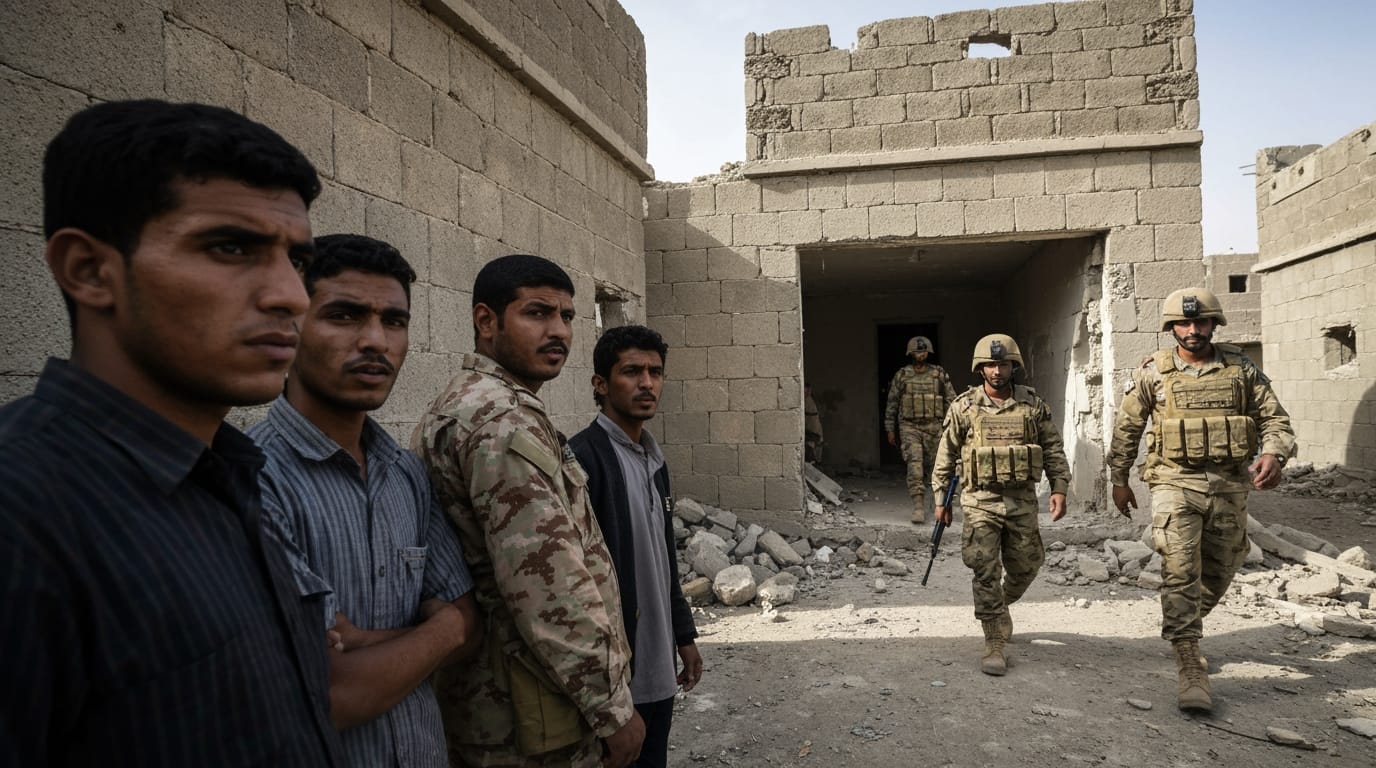
ADEN, Yemen – In a complex and volatile turn of events within Yemen's protracted conflict, separatists from the UAE-backed Southern Transitional Council (STC) announced Thursday they would permit Saudi-aligned government forces to deploy in areas recently seized through a rapid offensive. This development, while appearing to be a concession, unfolds against a backdrop of escalating tensions between key regional allies, Saudi Arabia and the United Arab Emirates, further fragmenting the anti-Houthi coalition and imperiling already fragile peace prospects. The move signals a precarious step in the intricate power dynamics of southern Yemen, where the pursuit of autonomy clashes with the imperative for a unified front against the Iran-aligned Houthi rebels.
The STC's decision to allow Riyadh-backed National Shield forces into the resource-rich Hadramawt and Mahra provinces follows a decisive military campaign in December 2025 that saw the separatists consolidate control over significant swathes of southern and eastern Yemen. While the STC stated a brigade of the National Shield would be deployed in these areas "as agreed," this arrangement falls short of Saudi Arabia's repeated demands for a full withdrawal. Sources close to the Saudi government indicate that Riyadh's security needs would only be genuinely met if the STC completely evacitates from Hadramawt and Mahra, suggesting the current agreement may be viewed as insufficient. The STC, which has long advocated for an independent South Yemen, asserts its recent advances are a response to calls from the "southern people" and are aimed at countering terrorist threats and disrupting Houthi supply lines.
The recent offensive and the subsequent, reluctant partial handover have laid bare a deepening chasm between Saudi Arabia and the UAE, ostensibly allies in the broader conflict against the Houthis. For years, both nations have supported the internationally recognized Yemeni government but have also cultivated their own proxies, leading to conflicting interests. The STC, heavily backed by Abu Dhabi, has emerged as the dominant force in southern Yemen, seeking to restore an independent South Yemen that existed until 1990. The tensions reached a critical point when the Saudi-led coalition conducted an airstrike on what it described as a shipment of Emirati weapons destined for the separatists in the port of Mukalla. Abu Dhabi vehemently denied the claim, but the incident underscored the alarming level of discord within the coalition. This friction highlights a dangerous new phase in the Yemeni crisis, where internal rivalries among those opposed to the Houthis now threaten to unravel the fragile political landscape.
In response to the STC's territorial gains and the growing regional rift, Yemen's Presidential Leadership Council (PLC), the internationally recognized government, declared a 90-day state of emergency. The PLC, led by Rashad al-Alimi, further announced the cancellation of its joint defense agreement with the United Arab Emirates and issued a stark demand for Emirati forces to withdraw from Yemeni territory within 24 hours. Al-Alimi publicly denounced the STC's advance as an "unacceptable rebellion" and explicitly ordered the separatists to surrender all newly seized territories to Saudi-backed forces. The chairman of the PLC welcomed Riyadh's calls for stability, indicating a clear alignment with Saudi concerns over the STC's unilateral actions. These pronouncements from the Yemeni government underscore the perceived threat the STC's expansion poses to the unity and authority of the state, even as it fights a common enemy in the Houthis.
The current escalation follows a history of uneasy alliances and power-sharing attempts in Yemen's south. The 2019 Riyadh Agreement, brokered by Saudi Arabia, sought to integrate the STC into the internationally recognized government, aiming to unify efforts against the Houthis. However, the implementation of this agreement has repeatedly stalled, punctuated by periods of renewed infighting. The STC even declared self-rule in its controlled areas in April 2020, though it later rescinded this declaration following an "acceleration mechanism" agreement. This history illustrates the deep-seated aspirations for self-determination in the south, complicating any unified national vision for Yemen's future. The southern grievances, stemming from the 1990 unification of North and South Yemen, have remained a potent force throughout the civil war, often overshadowing the conflict with the Houthis.
The latest surge in internal hostilities among anti-Houthi factions carries significant implications for the broader Yemeni conflict and regional stability. The renewed strife risks dismantling the already fractured Yemeni government, which has struggled to assert authority across a country ravaged by years of war. Furthermore, it complicates ongoing, slow-moving peace negotiations with the Houthi rebels, who control the capital Sanaa and much of northern Yemen. Any hope for a comprehensive political settlement hinges on a relatively unified anti-Houthi front, a prospect that now appears increasingly distant. The fragmentation also exacerbates the world's worst humanitarian crisis, as internal conflicts divert attention and resources, further jeopardizing millions of Yemenis who rely on international aid for survival.
As Yemen enters another uncertain phase, the immediate future appears fraught with challenges. While the STC's conditional agreement to allow Saudi-aligned forces into seized areas may temporarily de-escalate direct confrontations between these factions, it fails to address the underlying tensions and competing visions for Yemen's future. The deep mistrust between regional powers and their proxies, coupled with the persistent push for southern independence, means the path toward a stable and unified Yemen remains exceptionally arduous. The international community watches closely, aware that continued fragmentation only prolongs suffering and creates further opportunities for instability in an already volatile region.


