Zambia Navigates Mineral Riches and Job Demands Ahead of Pivotal 2026 Election
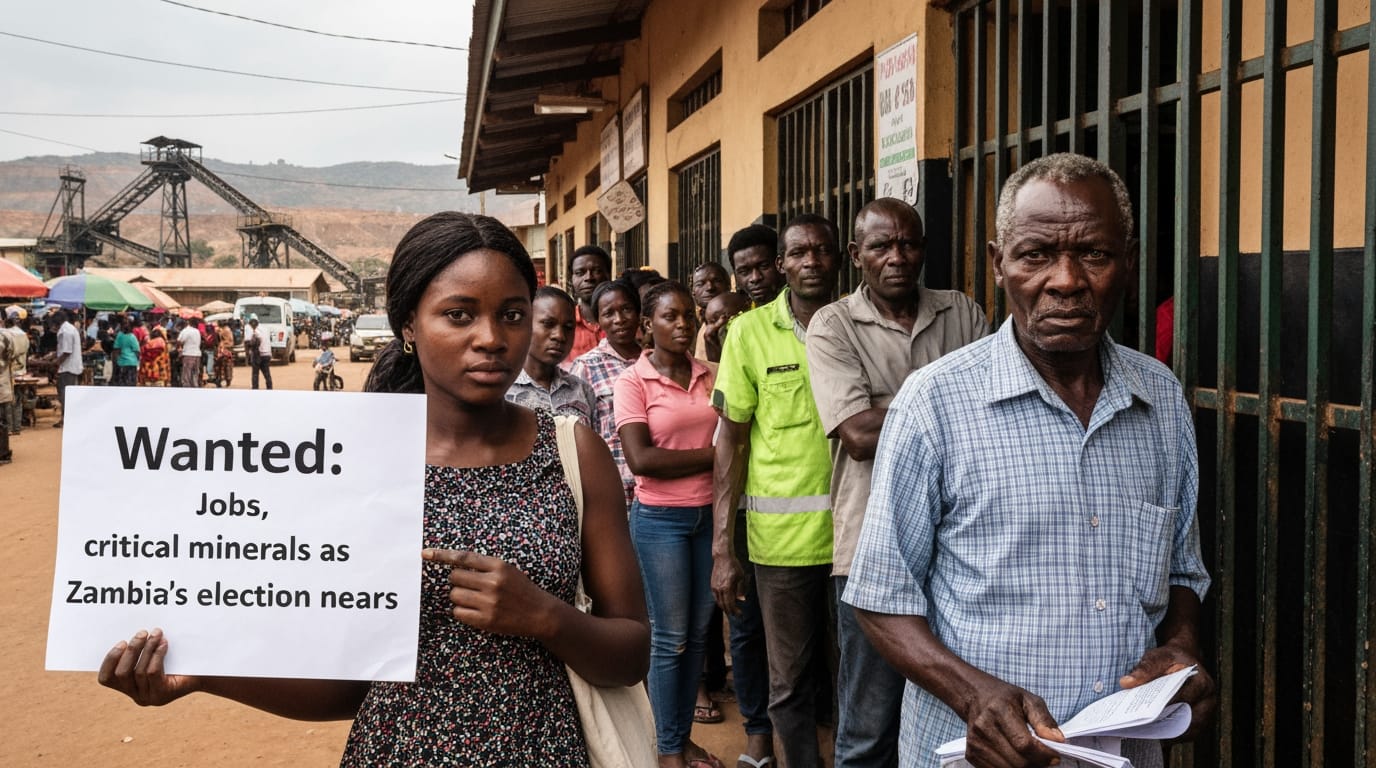
LUSAKA, Zambia — As Zambia approaches its crucial 2026 general election, the nation finds itself at a critical juncture, balancing the immense promise of its vast critical mineral reserves with the pressing need to create widespread employment and improve living standards for its youthful population. The global race for resources vital to the clean energy transition has thrust Zambia onto the international stage, transforming its copper-rich soil into a geopolitical chessboard. Yet, beneath the surface of soaring mineral prices and ambitious production targets, the daily struggles of job scarcity and persistent poverty remain central to the political discourse, shaping the electoral landscape for President Hakainde Hichilema and his administration.
The Lure of the Earth: Zambia's Critical Mineral Goldmine
Zambia is strategically positioned to play a central role in Africa's energy transition, leveraging its abundant critical mineral resources, which include significant deposits of copper, cobalt, manganese, iron, and nickel. These minerals are indispensable for electric vehicle batteries, renewable energy technologies, and other industrial applications, making Zambia a vital link in global clean energy supply chains. The government has articulated a comprehensive National Critical Minerals Strategy aimed at maximizing socio-economic benefits from this mineral wealth.
A cornerstone of this strategy is the emphasis on local beneficiation and value addition. Instead of merely exporting raw materials, Zambia seeks to process minerals within its borders, thereby capturing more value and fostering industrial growth. Key policy reforms include reviewing the Mines and Minerals Development Act, establishing a Special Purpose Vehicle (SPV) to hold at least a 30% stake in new critical mineral projects, promoting local content requirements for procurement in the sector, and formalizing artisanal and small-scale mining operations. President Hichilema's administration has also revived dormant mines and attracted significant investment, aiming to triple copper production to three million metric tonnes annually by 2031, a substantial increase from 821,000 metric tonnes in 2024.
The Jobs Conundrum: Wealth Below, Poverty Above
Despite the immense potential of its mining sector, Zambia grapples with a complex employment challenge that looms large over the upcoming election. While official statistics from the Zambia Statistics Agency reported a decline in the unemployment rate to 9.9% in 2025, down from 12.9% in 2021, this figure, derived from the International Labour Organization's standard definition, often masks a deeper crisis of underemployment and working poverty. A staggering 76.3% of employed persons were informally engaged in 2022, highlighting that many jobs do not provide adequate income or security. Poverty remains widespread, with the World Bank estimating that 64.2% of the population lived on less than $2.15 per day in 2022.
Youth unemployment is particularly acute, estimated at 24.7%, more than double the headline rate. The mining sector, historically employing around 70,000 people, is expected to see increases from new projects, but it remains unclear if this growth will translate into broad-based formal employment opportunities that significantly impact the high poverty rates. The government's focus on training geoscience personnel and supporting research and development in mining technologies aims to build local capacity and ensure Zambians benefit from the sector. However, the challenge lies in translating this mineral wealth into a robust, diversified economy that creates sustainable jobs across various sectors, moving beyond mere resource extraction.
Political Stakes and Presidential Promises
President Hakainde Hichilema, who came to power in 2021 on a platform of economic reform and democratic renewal, faces a critical test in the 2026 election. His "new dawn" government inherited a period of economic mismanagement and mounting debt. Hichilema has prioritized attracting foreign investment back into the mining sector by resolving protracted disputes with private companies and creating a more stable regulatory environment. These reforms have led to substantial investments, with over $12 billion reportedly invested since 2021, primarily in upgrading existing mines.
The President's confidence in his reforms is evident in his commitment to fostering local content, giving opportunities to small and medium local suppliers and contractors in mining. However, the path to economic recovery has been complex, with slow debt renegotiation and persistent high inflation. While economic growth is projected to rebound from 2025, driven by mining and other sectors, it is not yet generating the formal-sector employment Zambians desire. As the election draws closer, the Hichilema administration's ability to demonstrate tangible improvements in job creation and poverty reduction, beyond promising statistics, will be crucial for its re-election prospects.
Geopolitical Chessboard and Local Impact
Zambia's critical minerals have made it a focal point in global geopolitics, attracting interest from major powers seeking to secure stable supply chains. The nation is carefully navigating partnerships with China, Gulf States, the European Union, and the United States. A significant development is the expansion of a $491 million U.S.-backed agricultural grant to support infrastructure for the critical minerals sector, particularly along the strategic Lobito Corridor. This corridor, connecting Zambia and the Democratic Republic of Congo to Angola's Lobito port, is seen as vital for exporting critical minerals to Western markets, offering an alternative to dominant supply chains. The realignment of funds underscores a pragmatic partnership aiming for commercial and developmental returns, enhancing road networks in mining-rich provinces to benefit both agriculture and mineral exports.
However, these international engagements are not without complexities. Zambia has, for instance, openly accused the United States of attempting to tie a $2 billion health assistance deal to preferential access to its critical minerals, raising concerns about national sovereignty and privacy. Domestically, the rapid expansion of mining, including artisanal operations, has raised environmental concerns and led to social conflicts in some areas. Recognizing this, the government's strategy emphasizes obtaining a social license to operate, stressing the importance of community acceptance and ensuring that the benefits of mineral exploitation reach underserved communities. Organizations like Oxfam are also working to mobilize communities along the Lobito Corridor to protect human and environmental rights amidst major infrastructure and mining projects.
Conclusion: A Nation on the Cusp
As Zambia looks towards its 2026 election, the interplay between its critical mineral wealth and the urgent demand for jobs will undoubtedly dominate the political discourse. The Hichilema administration is betting on its strategic mining policies, increased production, and diversified international partnerships to spur economic growth and generate employment. Yet, the deep-seated challenges of informal labor, high youth unemployment, and persistent poverty require more than just resource extraction; they demand inclusive growth that ensures the benefits of Zambia's mineral boom are broadly shared among its citizens. The balancing act between leveraging geopolitical interest, safeguarding national interests, ensuring environmental sustainability, and critically, creating tangible job opportunities for a rapidly growing population, will define Zambia's trajectory and the mandate of its next leadership.


