Zelenskyy Seeks Critical Summit with President Trump Amid Accelerated Peace Talks
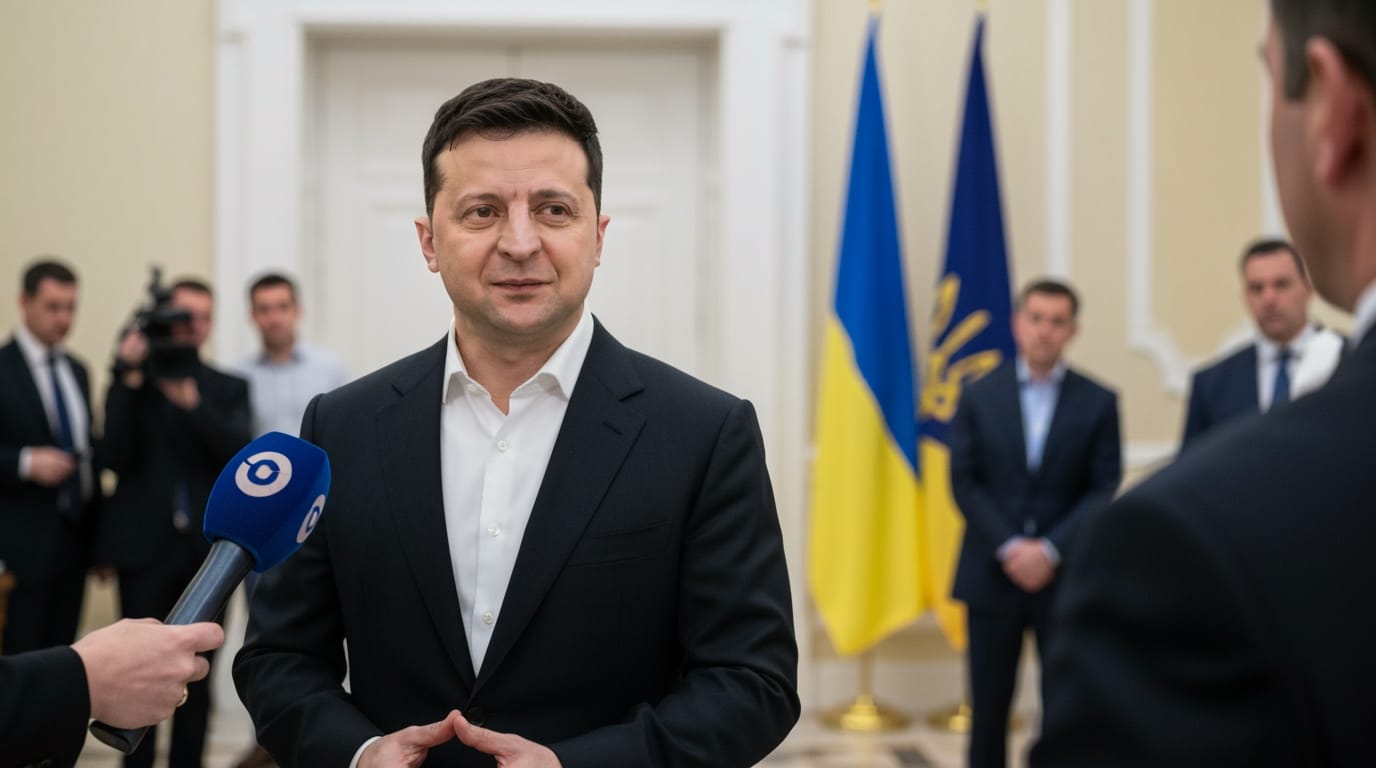
KYIV, UKRAINE – Ukrainian President Volodymyr Zelenskyy announced today his intention to hold a high-level meeting with U.S. President Donald Trump in the near future, signaling an urgent diplomatic push to accelerate peace negotiations in the nearly four-year-long conflict with Russia. Zelenskyy's statement, made via social media, highlighted the critical nature of the impending talks, with hopes that substantial decisions could be reached before the New Year. The announcement follows intensive discussions between Ukrainian officials and special envoys from the Trump administration, underlining a period of heightened diplomatic activity aimed at charting a path toward a lasting resolution.
Diplomatic Momentum Builds for a Path to Peace
President Zelenskyy's declaration of a planned summit with President Trump underscores the intensifying efforts by both nations to explore a framework for peace. "We are not losing a single day," Zelenskyy posted, indicating the urgency driving these diplomatic maneuvers. "We have agreed on a meeting at the highest level – with President Trump in the near future. A lot can be decided before the New Year." This proactive approach comes after Ukrainian negotiator Rustem Umerov reported on recent contacts with American counterparts.
Earlier this week, Zelenskyy engaged in what he described as "good conversation" with President Trump's special envoy, Steve Witkoff, and son-in-law, Jared Kushner. These discussions focused on "new ideas" for achieving lasting peace, including potential formats, meeting schedules, and timelines. During these talks, Ukraine presented a refined 20-point draft peace plan, a version that evolved from an earlier 28-point proposal. Zelenskyy has emphasized that a direct meeting with President Trump is essential to address and resolve the "most sensitive issues" contained within this peace plan, suggesting that some of the most intricate and contentious aspects of a potential settlement require direct engagement at the highest level.
A Troubled Past: The February 2025 Oval Office Encounter
The anticipation surrounding this upcoming meeting is set against a backdrop of a tumultuous encounter between the two leaders earlier this year. On February 28, 2025, a scheduled meeting in the Oval Office between President Trump, Vice President JD Vance, and President Zelenskyy devolved into a highly public and contentious confrontation. Reports from that day described an "unprecedented public confrontation" where President Trump and Vice President Vance reportedly criticized Zelenskyy, at times "drowning out his voice."
During that heated exchange, President Trump allegedly warned Zelenskyy to "make a deal or we're out," with Vance accusing the Ukrainian leader of being "disrespectful." The meeting abruptly concluded without the signing of an anticipated economic and minerals agreement, and high-level administration sources subsequently indicated that the future of U.S. military aid to Ukraine was in question. This incident sparked widespread criticism from U.S. allies and international figures, many of whom voiced support for Zelenskyy and appeared to rebuke Trump's confrontational approach. Zelenskyy himself later described the February encounter as a "kind of spat" that was "not good for both sides," though he expressed interest in repairing the relationship.
Trump's Evolving Stance on Ukraine Aid and Peace
Since taking office in January 2025, the Trump administration has adopted a significantly different approach to military assistance and diplomatic efforts concerning Ukraine compared to its predecessor. Initially, the administration paused U.S. military aid to Ukraine, citing a review to "ensure that it is contributing to a solution" and to pressure Kyiv towards peace negotiations. This pause, confirmed in early March, came after the February Oval Office confrontation and led to concerns about the availability of crucial weaponry, including longer-range missiles and Patriot air defense systems.
The U.S. has historically been Ukraine's largest military backer, providing over $180 billion in assistance since Russia's full-scale invasion, including more than $66.5 billion in military aid. Washington's contributions, though about 20% of Ukraine's total military supplies, included some of the most lethal and important equipment. The initial suspension prompted fears of a major blow to Ukraine's defense capabilities and an increased reliance on European allies to fill the gap.
However, the Trump administration's policy on aid has shown fluctuations throughout 2025. Military aid was temporarily paused, then partially resumed, then increased further, often in response to Russia's perceived intransigence in ceasefire negotiations or through new mechanisms. For instance, a $300 million military aid package was approved in July using Presidential Drawdown Authority, marking a shift in policy and potentially including Patriot missile interceptors and GMLRS rocket systems. Later in 2025, a new plan for military assistance, the Prioritised Ukraine Requirements List (PURL) mechanism, was announced, though it stipulated that NATO allies, rather than the U.S. directly, would fund this new assistance. This pattern suggests a strategic shift towards greater burden-sharing by allies and a consistent emphasis from the White House on reaching a negotiated peace agreement.
High Stakes for Kyiv
For Ukraine, the upcoming meeting with President Trump holds immense significance. The nation remains locked in a brutal conflict, with Russia continuing its aggression. Zelenskyy's stated need to resolve "sensitive issues" with Trump directly highlights the complex and potentially intractable points within any proposed peace settlement. These could include territorial questions, security guarantees, and the timeline for any cessation of hostilities—issues that have been central to Ukraine's stance throughout the war. The potential for Kyiv to secure continued, reliable military and financial assistance from the United States under the current administration also hangs in the balance.
The previous contentious meeting in February led to a halt in military aid and exposed fundamental differences in how the two leaders view the conflict's resolution, with Trump pressing for a ceasefire and a deal, and Zelenskyy emphasizing the need for strong security guarantees against future Russian aggression. The outcomes of this anticipated summit will likely shape Ukraine's strategic options, influence the dynamics of the war, and potentially redefine the landscape of international support for Kyiv in the coming year.
Conclusion: A Pivotal Moment for Ukraine's Future
President Zelenskyy's pursuit of a direct meeting with U.S. President Donald Trump before the year's end marks a pivotal moment in the ongoing conflict in Ukraine. Amidst a fluctuating U.S. aid policy and the complex backdrop of past diplomatic friction, this summit carries profound implications for the future of peace negotiations. With both leaders aiming for critical decisions, the world watches to see if this high-stakes engagement can forge a pathway to a lasting resolution, or if the deep-seated disagreements will once again overshadow the urgent need for stability in Eastern Europe. The outcome promises to significantly influence not only Ukraine's sovereignty but also the broader geopolitical balance heading into the new year.


