A Continent in Flux: Coups and Crises Threaten Africa's Democratic Future
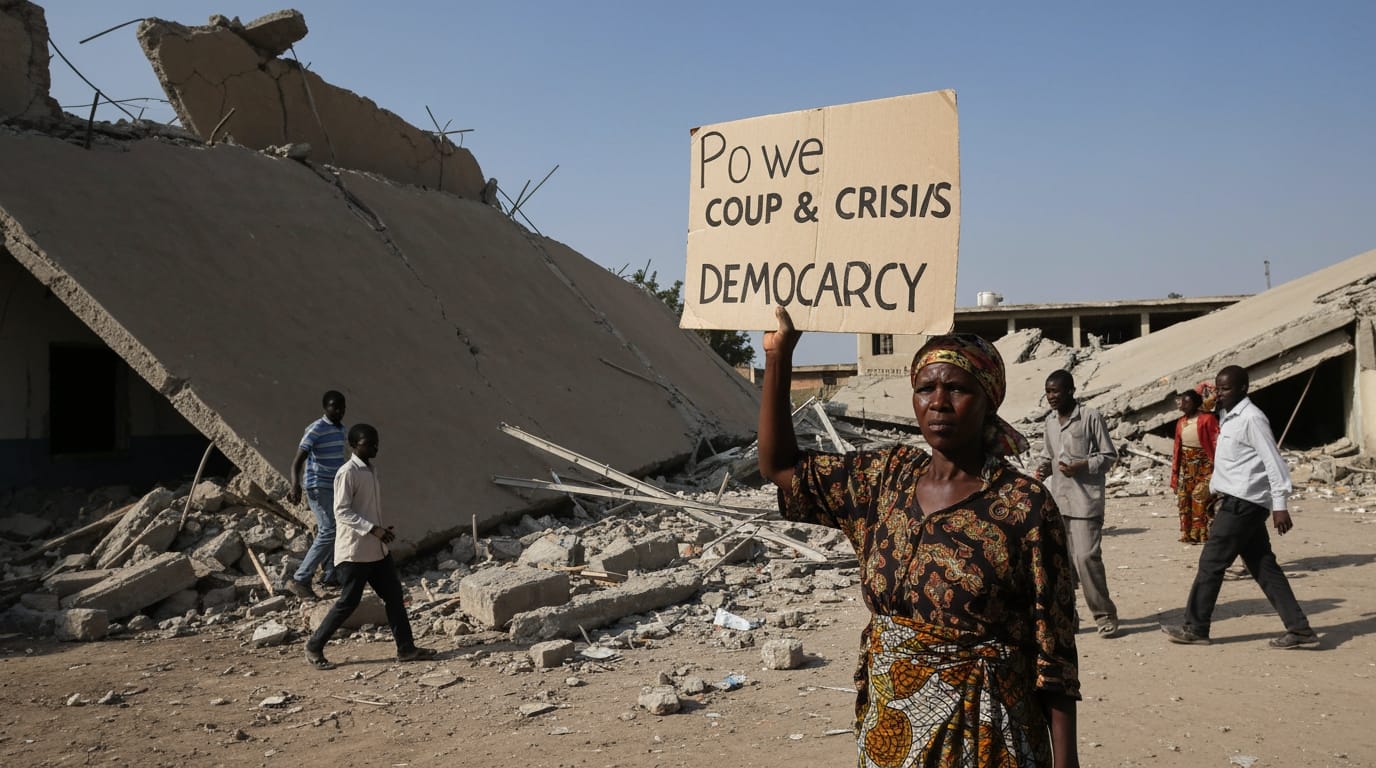
Africa is grappling with an alarming resurgence of military takeovers, threatening to unravel decades of democratic progress and plunging several nations into deeper political and humanitarian crises. Since 2020, a "coup belt" has emerged across West and Central Africa, where military juntas have seized power, citing government failures to address insecurity, corruption, and economic hardship. This wave of instability has not only rolled back constitutional rule but also introduced new geopolitical complexities and exacerbated human suffering, demanding urgent attention from regional and international actors.
A Wave of Instability: The "Coup Belt" Emerges
Since August 2020, a disturbing pattern of successful military coups has swept across parts of Africa, concentrating primarily in the Sahel region and extending into West and Central Africa, a phenomenon now frequently referred to as the "coup belt". This period has seen democratically elected governments overthrown in quick succession. Mali experienced two coups in just nine months, first in August 2020, and again in May 2021, with Colonel Assimi Goita eventually consolidating power. Guinea followed in September 2021, when Lieutenant-Colonel Mamady Doumbouya ousted President Alpha Condé. Later that year, in October 2021, Sudan's military, led by General Abdel Fattah al-Burhan, staged a coup, derailing a fragile transition to civilian rule.
The year 2022 witnessed two coups in Burkina Faso: one in January led by Lieutenant-Colonel Paul-Henri Sandaogo Damiba, who was himself overthrown by Captain Ibrahim Traoré in September of the same year. In July 2023, members of Niger's presidential guard overthrew President Mohamed Bazoum, installing General Abdourahamane Tiani as the new leader. This was closely followed by a coup in Gabon in August 2023, where army officers removed President Ali Bongo Ondimba just hours after he was declared the winner of a disputed election. The sheer number and geographical concentration of these events underscore a profound challenge to constitutional governance in a region already contending with complex security and development issues.
The Roots of Discontent: Why Democracies Fail
The military leaders seizing power often justify their actions by pointing to a litany of public grievances that civilian governments allegedly failed to address. Predominant among these are pervasive poor governance, rampant corruption, and a marked lack of accountability. Many citizens express deep dissatisfaction with the inability of democratic processes to deliver tangible improvements in their daily lives. Economic hardships, including high rates of poverty, unemployment, and socio-economic inequality, fuel widespread discontent and political unrest, particularly among the large youth population.
Crucially, the escalating insecurity in the Sahel region, driven by jihadist insurgencies, has been a significant catalyst. Military leaders in Mali, Burkina Faso, and Niger have explicitly cited the failure of civilian governments to contain this violence as a primary reason for their interventions. Additionally, some constitutional amendments designed to allow leaders to extend their terms in office have been seen as undermining democratic principles, further eroding public trust and creating fertile ground for military discontent. External interference and historical factors, such as the hasty departure of colonial powers and weak civil-military relations, also contribute to the fragility of political environments in some nations.
Regional Responses and Geopolitical Shifts
The surge in coups has put regional and continental bodies like the Economic Community of West African States (ECOWAS) and the African Union (AU) under immense pressure to uphold democratic norms. Both organizations have consistently condemned these unconstitutional changes of government, often imposing immediate suspensions and economic or travel sanctions on the affected nations. ECOWAS, in particular, has taken a strong stance, even threatening military intervention in Niger after the 2023 coup, although this has been challenging to enforce due to internal divisions and resistance from other junta-led states.
However, the effectiveness of these responses has been limited, with many juntas showing little inclination to return to civilian rule within the prescribed timelines. The vacuum created by the withdrawal or diminished influence of traditional Western partners, such as France, has paved the way for new geopolitical actors. Russia, often through the Wagner Group, has rapidly expanded its influence in several coup-affected countries, offering military support, arms, and diplomatic backing in exchange for resources and opportunities to challenge Western hegemony. This shift introduces a complex layer to regional security dynamics, as these new alliances further complicate efforts to restore democracy and stability.
The Heavy Toll: Undermining Progress and Human Lives
The consequences of these coups are far-reaching and deeply detrimental to both democratic progress and human well-being. Economically, military takeovers lead to immediate disruptions and uncertainty, with studies showing a sharp drop in GDP growth in sub-Saharan African countries following a coup. Regimes established after coups tend to perform worse economically than democracies, hindering long-term development and exacerbating existing poverty.
Democratically, the coups dismantle nascent electoral mechanisms, suppress opposition voices, and undermine the rule of law, representing a significant setback for the continent's democratic journey. Human rights violations often increase under military rule, including arbitrary arrests and extrajudicial killings, particularly in the context of counter-terrorism operations. Furthermore, the political instability directly fuels humanitarian crises. The Sahel region, already fragile, faces unprecedented needs due to armed conflict, food insecurity, and displacement, with millions requiring life-saving assistance. The chaos can also trigger significant migration waves, as people flee insecurity and economic despair.
A Critical Juncture for African Democracy
The recent wave of coups and political crises has brought Africa to a critical juncture, challenging the continent's commitment to constitutional governance and stability. While the reasons for these military interventions are complex and varied, often rooted in legitimate public frustration with failed civilian leadership, the evidence overwhelmingly suggests that military rule is not a viable solution. Instead, coups tend to exacerbate existing problems, leading to economic decline, increased insecurity, and a deterioration of human rights.
Reversing this trend requires a concerted and multifaceted approach. Regional bodies like ECOWAS and the AU must find ways to strengthen their enforcement mechanisms and address the underlying causes of popular discontent that make coups appealing. International partners must recalibrate their engagement to genuinely support good governance, inclusive economic development, and robust security strategies that prioritize civilian protection. Ultimately, the future of African democracy hinges on the ability of its leaders and institutions to respond effectively to the aspirations of their citizens, ensuring that power is gained and exercised through legitimate means, and that the promise of democratic dividends is finally realized.


