A Half-Century of Influence: Tracing U.S. Interventions in Latin America from Guatemala to Panama
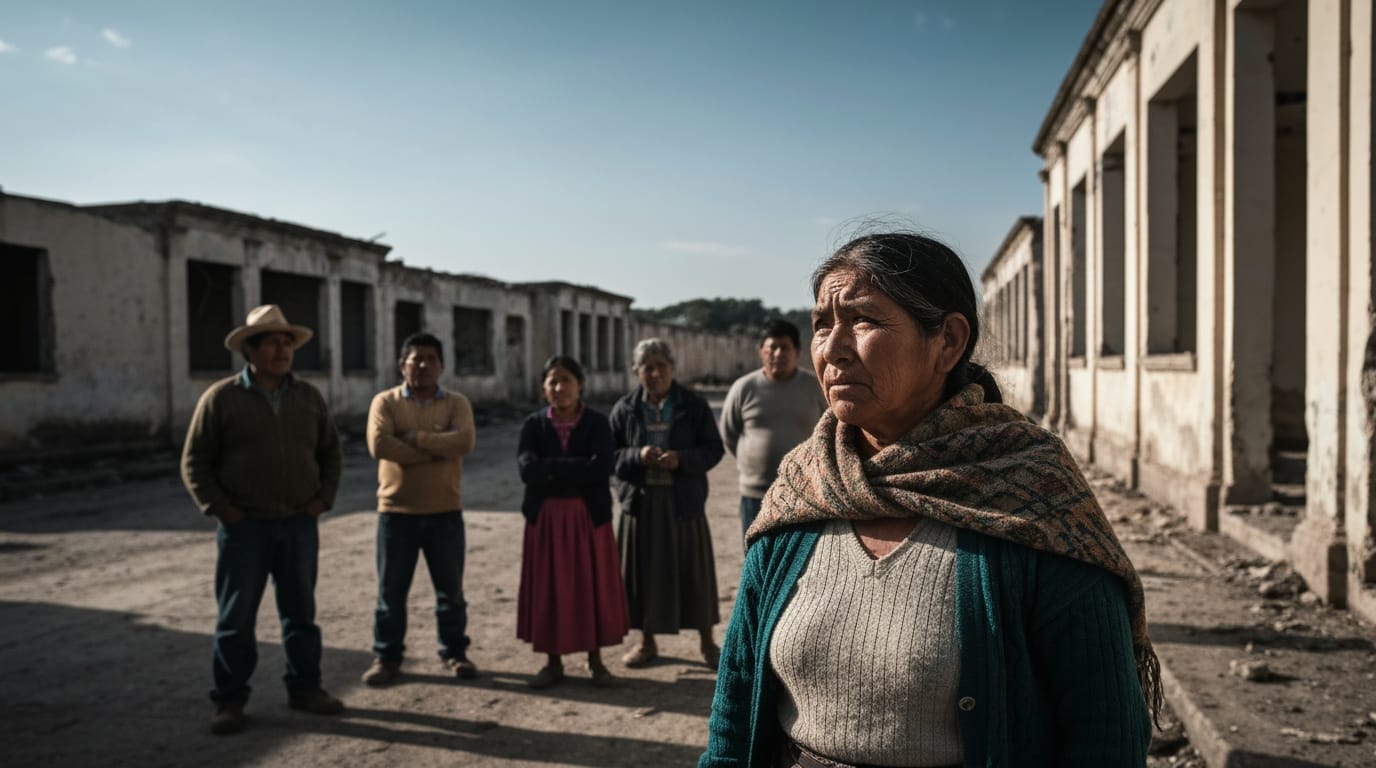
The period spanning from the mid-20th century to its close witnessed a recurring pattern of United States intervention in the sovereign affairs of Latin American nations. Driven largely by Cold War anxieties and the perceived imperative to safeguard American economic and political interests, these interventions, ranging from covert operations to overt military actions, fundamentally reshaped the political landscape of the region. From the jungles of Guatemala to the streets of Panama City, Washington’s actions during this era left an indelible mark, fostering a complex legacy of distrust and instability that continues to resonate across the hemisphere.
Guatemala, 1954: The Shadow of the United Fruit Company
One of the earliest and most consequential interventions of this period occurred in Guatemala in 1954. The democratically elected government of President Jacobo Arbenz Guzmán initiated land reforms, including Decree 900, which aimed to redistribute undeveloped land from large property owners to landless farmers. This initiative directly threatened the significant holdings of the United Fruit Company (UFC), a powerful American corporation with deep ties to the U.S. government. Alarmed by Arbenz's policies and perceiving a growing communist influence, particularly given that Arbenz allowed the Guatemalan Communist Party to operate openly, the Eisenhower administration authorized the Central Intelligence Agency (CIA) to execute Operation PBSuccess.
This covert operation, launched on June 18, 1954, involved arming, funding, and training a rebel force led by Colonel Carlos Castillo Armas. Despite the rebel force numbering only in the hundreds, the CIA employed extensive psychological warfare, including propaganda broadcasts via "Radio Liberation" and jamming Guatemalan radio transmissions, to create the illusion of a massive invasion and undermine the Arbenz government's authority. American pilots also conducted bombings in Guatemala City. Facing a demoralized military and overwhelming pressure, Arbenz resigned on June 27, 1954. Castillo Armas subsequently became president, ushering in a series of U.S.-backed authoritarian regimes and a protracted civil war that lasted until 1996, resulting in over 200,000 deaths, many of them indigenous civilians. The Guatemalan coup set a significant precedent for future U.S. interventions in the region.
Cuba, 1961: The Bay of Pigs Fiasco
Following Fidel Castro's successful overthrow of the U.S.-backed dictator Fulgencio Batista in 1959 and the establishment of a socialist government, U.S. concern about communism intensified dramatically. The Eisenhower administration began contemplating ways to remove Castro, and the CIA developed a plan to train Cuban exiles for an invasion. This plan culminated in the ill-fated Bay of Pigs Invasion in April 1961, approved by President John F. Kennedy.
The operation aimed to land a CIA-trained brigade of Cuban exiles at the Bay of Pigs (Playa Girón) on Cuba's southwestern coast, intending to spark a popular uprising against Castro's regime. However, the invasion was plagued by poor intelligence, a lack of local support, and critical decisions, including Kennedy's choice to withhold crucial U.S. air support for the invaders. Landing on April 17, 1961, the approximately 1,400 Cuban exiles faced immediate and overwhelming resistance from Castro's military. Within three days, the invading force was defeated, with many exiles killed or captured. The Bay of Pigs invasion proved to be a major embarrassment for the U.S. government, highlighting perceived aggression and incompetence in American foreign policy. It significantly strengthened Castro's position in Cuba and pushed the country into an even closer alliance with the Soviet Union, intensifying Cold War tensions and directly contributing to the Cuban Missile Crisis the following year.
Dominican Republic, 1965: Preventing "Another Cuba"
The fear of "another Cuba" heavily influenced U.S. policy in the Dominican Republic in 1965. In April of that year, a civil war erupted following the overthrow of the democratically elected President Juan Bosch. Bosch, who had introduced progressive reforms, was ousted by a military faction, leading to widespread unrest. President Lyndon B. Johnson, concerned about the potential for a communist takeover, authorized the deployment of over 22,000 U.S. troops to the Dominican Republic on April 28, 1965.
The official rationale for the intervention was to protect American lives and help stabilize the country. However, a primary underlying goal was to prevent a communist regime from emerging. U.S. forces backed the Loyalist faction against the Constitutionalists who sought to restore Bosch. Despite some domestic and international criticism, the intervention eventually led to a political compromise and subsequent elections in 1966. These elections, reportedly marred by allegations of fraud, resulted in the victory of Joaquín Balaguer, a candidate favored by U.S. interests. The 1965 intervention underscored the U.S.'s willingness to use military force to shape political outcomes in the Caribbean and Central America during the Cold War, despite a stated commitment to the "Good Neighbor Policy."
Nicaragua, 1980s: The Contra War
During the 1980s, Nicaragua became a central theater in the Cold War's proxy conflicts. After the Sandinista National Liberation Front (FSLN) overthrew the U.S.-backed Somoza dictatorship in 1979, establishing a Marxist-Leninist government, the U.S. under President Ronald Reagan viewed the new regime as a threat. Reagan's administration swiftly ceased economic aid to Nicaragua and accused the Sandinistas of supporting Salvadoran rebels.
The U.S. then began to support and organize various anti-Sandinista rebel groups, collectively known as the Contras (short for "contra-revolución"). Many initial Contras were former members of Somoza's National Guard. The CIA was instrumental in training and funding these forces, despite a 1982 congressional prohibition (the Boland Amendment) on U.S. support for the Contras aiming to overthrow the Nicaraguan government. The U.S. government circumvented this restriction through covert means, including the infamous Iran-Contra affair, where weapons were sold to Iran, and the proceeds were illegally routed to the Contras. The Contra War, which lasted from approximately 1981 to 1988, involved significant human rights abuses by the Contras, including assassinations, torture, and attacks on civilians. The conflict devastated Nicaragua's economy and contributed to widespread instability. A ceasefire was reached in 1988, followed by internationally monitored elections in 1990, where the Sandinistas were defeated.
Panama, 1989: Operation Just Cause
The final major U.S. military intervention of this period was Operation Just Cause, the invasion of Panama in December 1989. For years, General Manuel Noriega, Panama's de facto ruler, had been a complex figure in U.S. foreign policy, initially cooperating with the CIA. However, his relationship with the U.S. deteriorated due to his alleged involvement in drug trafficking, money laundering, and human rights abuses. In 1988, Noriega was indicted on drug charges by a U.S. grand jury. Tensions escalated further when Noriega annulled the results of the 1989 Panamanian presidential election, which appeared to have been won by opposition candidate Guillermo Endara, and increased harassment of U.S. personnel in Panama.
On December 20, 1989, President George H.W. Bush ordered the invasion of Panama. The stated objectives of Operation Just Cause were to safeguard the lives of U.S. citizens, defend democracy and human rights, combat drug trafficking, and protect the integrity of the Panama Canal Treaty. The operation involved over 27,000 U.S. troops, making it the largest U.S. military operation since the Vietnam War at the time. The invasion quickly overwhelmed the Panamanian Defense Forces (PDF). Noriega sought refuge in the Vatican embassy but surrendered on January 3, 1990, and was subsequently taken to the U.S. to face drug charges. Guillermo Endara was sworn in as president. Operation Just Cause marked a significant, albeit controversial, use of military force for regime change, drawing criticism from many Latin American nations for its unilateral nature.
A Complex Legacy
The arc of U.S. interventions from Guatemala to Panama illustrates a recurring theme in American foreign policy during the Cold War: the prioritization of perceived national security interests, particularly anti-communism, over the sovereignty of Latin American nations. These actions often had profound and lasting consequences, contributing to political instability, economic hardship, and human rights abuses in the affected countries. While often justified by Washington as necessary to counter external threats or promote democracy, many of these interventions generated deep-seated resentment and complicated U.S.-Latin American relations for decades. The legacy of this era continues to inform discussions about international relations, interventionism, and the complex interplay between superpower interests and regional autonomy.