Ghanaian Artist Ibrahim Mahama Ascends to Apex of Global Art Influence
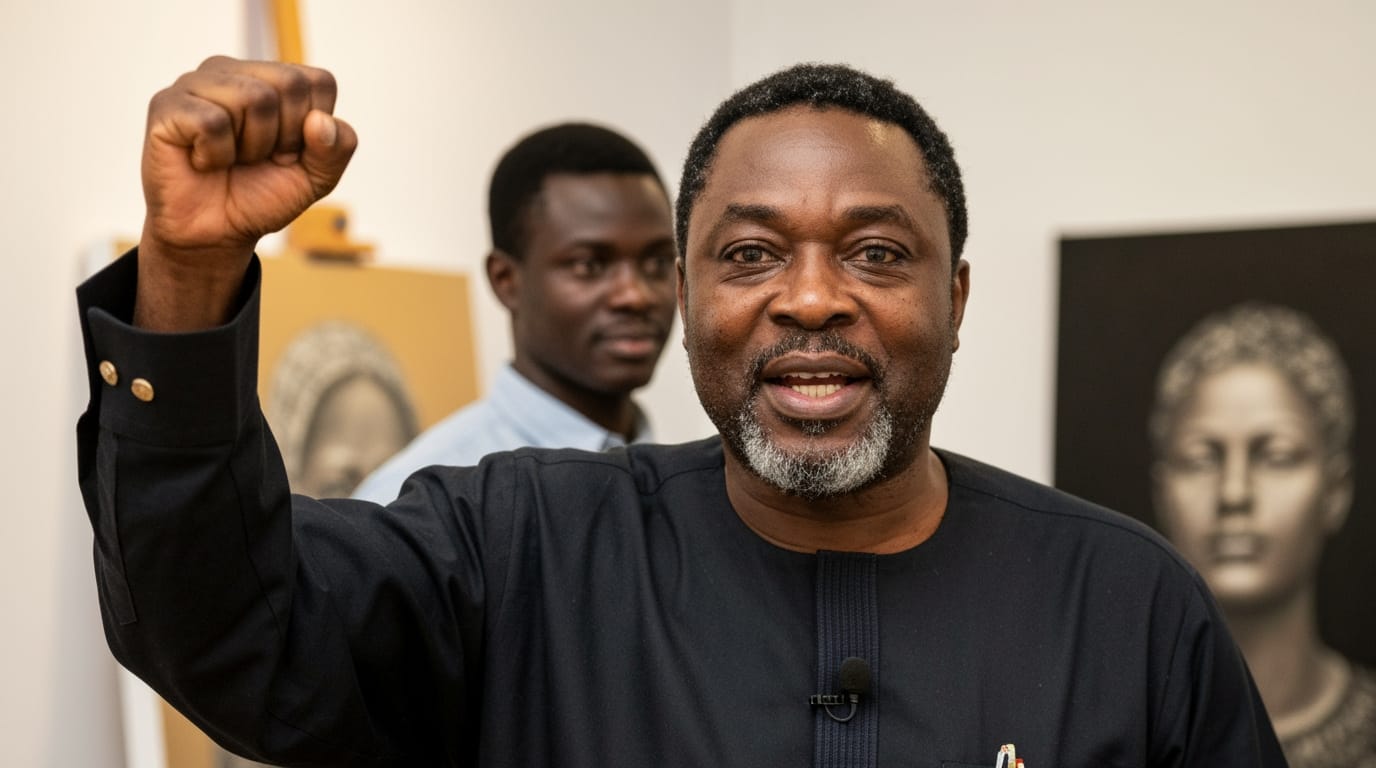
In a landmark moment for contemporary art, Ghanaian artist Ibrahim Mahama has been named the most influential figure in the art world, topping ArtReview magazine's prestigious annual Power 100 list for 2025. This historic recognition marks the first time an African artist has claimed the top spot, signaling a significant shift in the global art landscape and affirming Africa's growing impact on international cultural discourse. Mahama's ascent to this premier position underscores not only his individual artistic vision but also his profound commitment to fostering cultural infrastructure within his home country, redefining the parameters of influence in the 21st century art ecosystem.
The Materiality of Memory: Jute Sacks as Narratives
Born in Tamale, Ghana, in 1987, Ibrahim Mahama has carved a distinctive path through the art world with his monumental installations that utilize repurposed industrial materials. His signature medium consists predominantly of jute sacks, the rough, utilitarian fabrics once used extensively for transporting commodities such as cocoa, coffee, and coal within Ghana and across global trade routes. These sacks are more than mere objects in Mahama's practice; they are imbued with layers of history, labor, and economic realities. Each tear, stitch, and faded stamp—often bearing marks like "PRODUCT OF GHANA"—tells a story of migration, exploitation, and the complex networks of global commerce.
Mahama's artistic process is inherently collaborative, reflecting the collective histories embedded in his chosen materials. He works with local laborers and artisans in Ghana to collect, stitch, and assemble the countless jute sacks, a process that not only facilitates the creation of his large-scale works but also provides economic opportunities within his community. These monumental textile pieces are frequently draped over significant architectural structures, transforming buildings into canvases that prompt viewers to consider the hidden narratives of the spaces they inhabit. The contrast between the weathered, humble materials and the often grand, imposing architecture serves to highlight the dissonance between the history, form, and function of these structures, often referencing post-colonial legacies and the imposition of Western knowledge systems.
Beyond Aesthetics: Art as Socio-Economic Commentary
The conceptual depth of Mahama's work extends far beyond its visual impact. His installations serve as powerful critiques of contemporary socio-economic conditions, addressing themes of labor, globalization, commodity exchange, migration, and the enduring legacies of colonialism. By utilizing materials that have played a direct role in the exploitation of resources and labor in African markets, Mahama brings to the forefront uncomfortable truths about supply and demand in a globalized world. For example, the jute sacks, often manufactured in South Asia and imported to Ghana for cocoa transport, represent a tangible link in a chain of global economic transactions where the benefits are often unequally distributed.
His work frequently challenges the traditional perception of art as a luxury commodity, instead positioning it as a tool for social commentary and an agent for change. Mahama's unique interventions, such as wrapping the Barbican Centre in London with brightly colored fabric or his acclaimed installation at the 56th Venice Biennale titled "Out of Bounds," have garnered international attention for their ability to spark dialogue about complex global issues. In these public displays, the ordinary, often overlooked materials are elevated, demanding recognition for the human stories and economic systems they embody.
A Global Presence and Critical Acclaim
Over the past decade, Ibrahim Mahama's distinctive artistic practice has earned him widespread critical recognition and a significant presence on the international stage. His works have been showcased in some of the world's most prestigious art venues and events, solidifying his reputation as a leading voice in contemporary art. Notable exhibitions include his participation in the 56th Venice Biennale in 2015, where his installation of stitched jute sacks draped across the walls of the Arsenale brought him considerable international acclaim. He also featured prominently in Documenta 14 in Athens and Kassel in 2017, and contributed to Ghana's first national pavilion at the 58th Venice Biennale in 2019.
Beyond these major biennials, Mahama's art has been exhibited at institutions worldwide, including the Barbican Centre in London, the Fruitmarket Gallery in Edinburgh, the Manchester International Festival, the U-M Museum of Art in the United States, and the Norval Foundation in Cape Town. His works are held in public collections globally, including the Centre Pompidou, the Los Angeles County Museum of Art (LACMA), and the National Gallery of Art in Washington, D.C. Represented by influential galleries such as Apalazzo Gallery and White Cube, Mahama has also received a number of significant awards, including the Sam Gilliam Award in 2024, the Pino Pascali Award in 2021, and the Prince Claus Award in 2020. This extensive record of exhibitions and accolades underscores the widespread impact and resonance of his artistic vision.
Building Foundations: Cultivating a Local Art Ecosystem
Perhaps as significant as his artistic output is Mahama's profound commitment to reinvesting his success into the development of a thriving art ecosystem in northern Ghana. He has channeled his commercial success into establishing and sustaining independent cultural spaces in his hometown of Tamale, directly influencing a new generation of artists and thinkers. These initiatives include the Savannah Centre for Contemporary Art (SCCA), the Red Clay Studio, and Nkrumah Volini, a former grain silo ingeniously converted into an art space and bat sanctuary.
These institutions are designed to be more than just exhibition venues; they function as dynamic cultural hubs offering exhibition spaces, libraries, residency programs for artists and writers, archives, and educational initiatives. The Red Clay Studio, for instance, is a sprawling, 200-acre complex built with locally sourced red clay bricks, offering studios, workshops, and exhibition areas, some even incorporating repurposed airplanes and trains. The aim is to create an inclusive environment where artists can work, showcase their creations, and engage in critical discourse, bridging local and international artistic dialogues. Notably, entrance to the Red Clay Studio is free, welcoming local communities and encouraging schoolchildren to interact directly with art, fostering a deep connection between the arts and everyday life in Tamale. Mahama's vision extends to training local youth as tour guides, further embedding the arts within the community and empowering future generations. This dedication to community building and institutional development positions Mahama not just as an artist, but as a pivotal figure transforming the landscape of contemporary art from the ground up.
Conclusion
Ibrahim Mahama's unprecedented achievement of topping ArtReview's Power 100 list is a testament to the power of art to transcend boundaries and reshape global perceptions. His practice, rooted in the evocative use of everyday materials like jute sacks, thoughtfully engages with complex socio-economic narratives of labor, trade, and post-colonial identity. By transforming these materials into monumental installations, Mahama compels viewers to confront difficult histories and consider their own place within global systems. Beyond his celebrated artistic output, his visionary efforts in establishing vital cultural institutions in Ghana underscore a belief in art as a catalyst for community development and intellectual exchange. Mahama's influence is a beacon for artists globally, demonstrating that the most profound impact can arise from a deep connection to local realities, translated into a universal language of inquiry and transformation. His journey signifies a powerful realignment in the art world, where authenticity, social engagement, and grassroots institution-building are increasingly recognized as central pillars of influence.