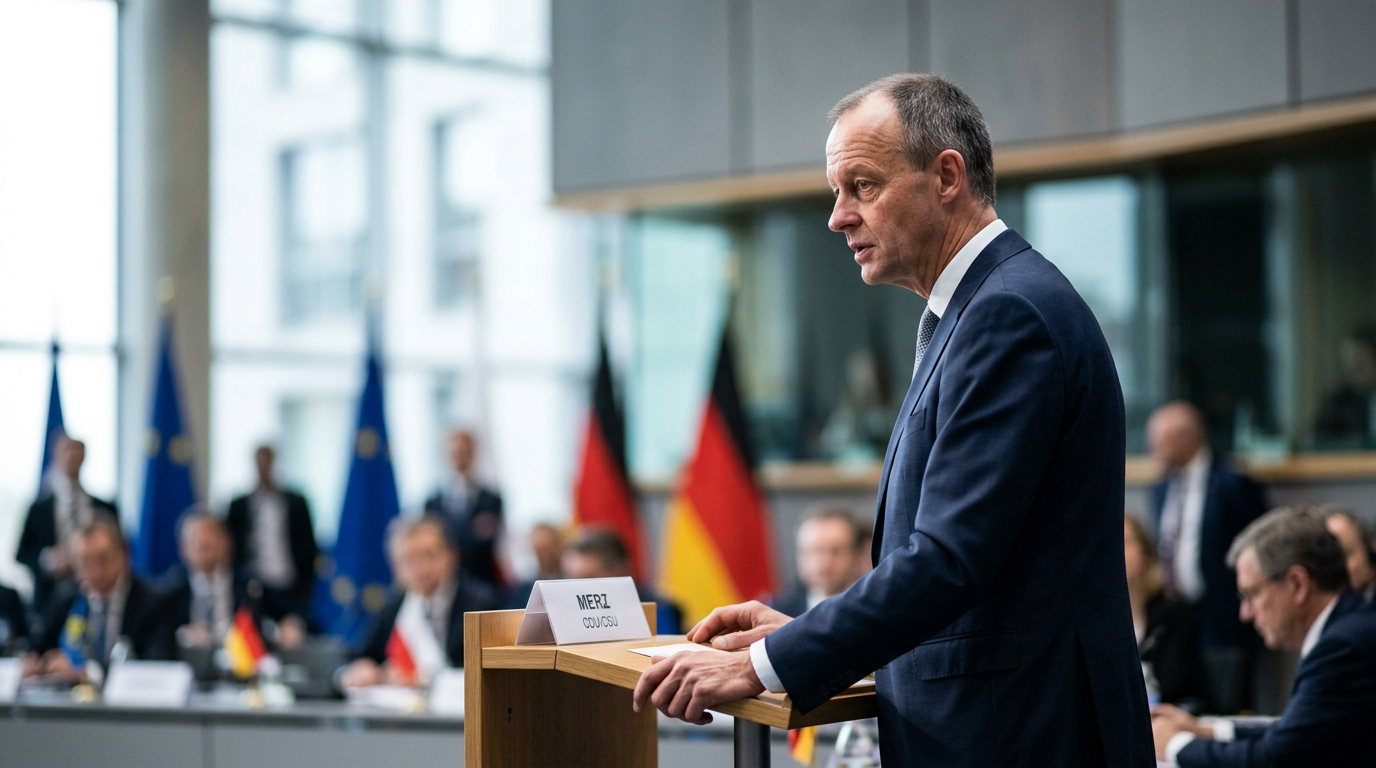
Abelardo de la Espriella Assumes Colombian Presidency, Signaling Hardline Shift and Closer U.S. Ties

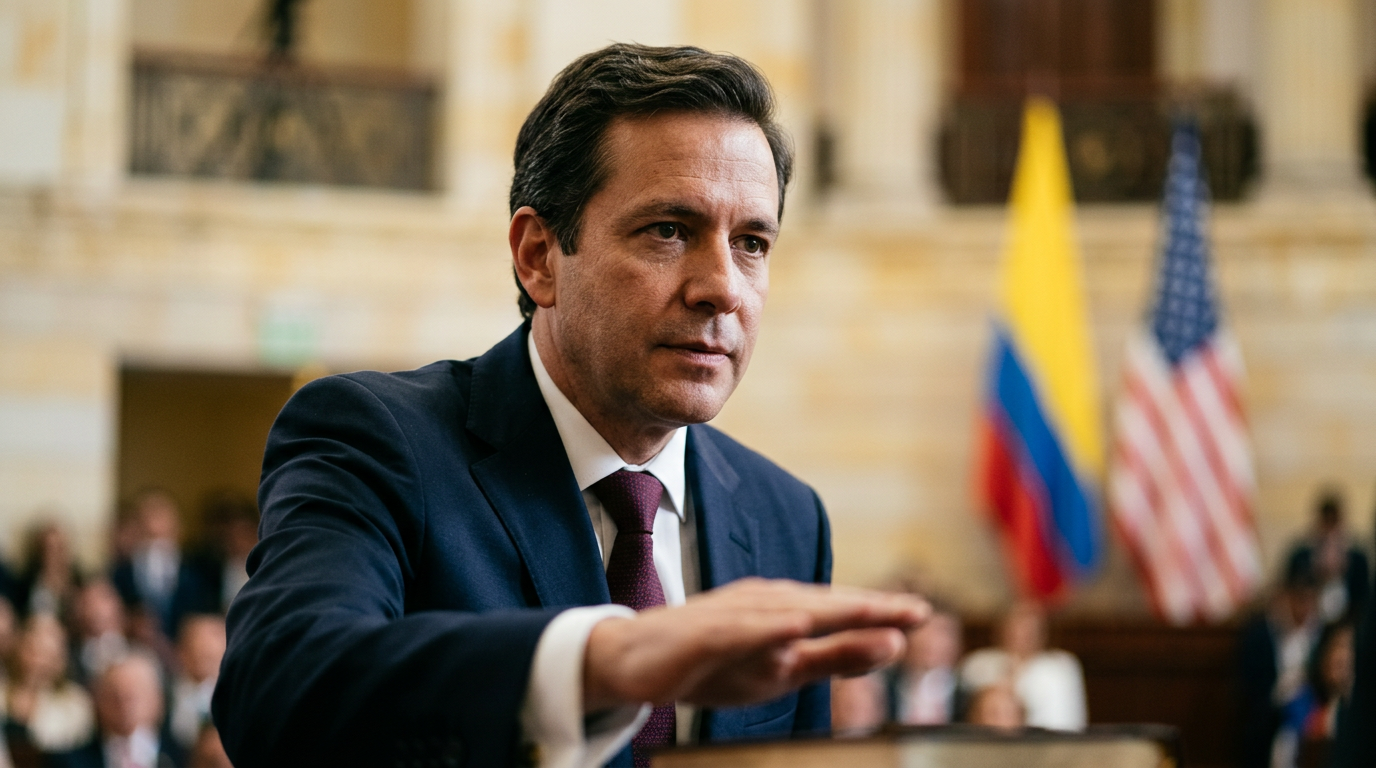
Cali, Colombia – Abelardo de la Espriella, a 48-year-old right-wing lawyer and staunch ally of former U.S. President Donald Trump, was sworn in as Colombia's president on Friday, August 7, 2026, ushering in a dramatic political shift for the Andean nation. Breaking with decades of tradition, the inauguration ceremony was held in the southwestern city of Cali rather than the capital, Bogotá, a move intended to underscore his administration's uncompromising stance against illegal armed groups plaguing the region. De la Espriella's ascension to power concludes the tenure of Gustavo Petro, Colombia's first leftist leader, and marks a significant turn toward conservative governance and heightened engagement with the United States.
De la Espriella, often referred to as "El Tigre" (The Tiger), delivered a forceful address outlining his priorities: an intensified war on drug trafficking, the dismantling of guerrilla strongholds, and the implementation of ambitious economic reforms. His agenda includes plans to bomb cocaine labs, construct "mega prisons," and drastically reduce the size of the state by as much as 40%. The flamboyant former lawyer, who has never held elected office prior to this presidency, has promised to scrap ongoing peace talks with armed groups, opting instead for a tougher military response. His inauguration was attended by a host of international dignitaries, including Spain's King Felipe VI and several Latin American presidents, reflecting the regional and global interest in Colombia's new political direction.
A New Era of "Iron Fist" Governance
President De la Espriella's administration is expected to pursue a robust security policy, a core tenet of his campaign that resonated with voters concerned by rising crime and persistent violence. His vision includes a comprehensive strategy to combat drug-running guerrillas and cartels, which he contends have expanded their influence under previous administrations. The decision to hold the inauguration in Cali, a city historically affected by armed conflict, was a symbolic gesture signaling his direct challenge to these groups. He aims to boost the morale of the armed forces and has warned illegal organizations that they must surrender or face being declared "military targets."
Economically, De la Espriella has pledged to revive Colombia's oil and gas sector, signaling a departure from more environmentally focused policies championed by his predecessor. This move is anticipated to be a central component of his strategy to boost economic growth and attract foreign investment. The new president's platform also includes a significant reduction in government spending and bureaucracy, mirroring approaches seen in other right-leaning governments across the continent. Such sweeping reforms will require considerable political capital and skillful negotiation within a potentially divided congress, as his party currently holds only a small bloc of lawmakers.
The Trump Connection: Reinforcing a Strategic Alliance
A defining characteristic of President De la Espriella's rise has been his explicit alignment with former U.S. President Donald Trump. A dual Colombian-American citizen, De la Espriella openly stated he voted for Trump in 2024 and has been vocal about his loyalty. Trump, in turn, offered his "complete and total endorsement" for De la Espriella during the presidential campaign, even claiming credit for the Colombian's victory. This unprecedented level of U.S. presidential involvement in a Latin American election highlights the strategic importance of Colombia in regional geopolitical dynamics.
De la Espriella has expressed a strong desire to forge closer ties with the United States, envisioning a renewed partnership that goes beyond traditional diplomatic relations. He has proposed launching joint military operations and even hosting U.S. troops on Colombian soil, echoing sentiments of a "Plan Colombia 2" – a reference to the U.S. aid package of the early 2000s that aimed to combat drug trafficking and guerrilla groups. Furthermore, he plans to align Colombia with the "Shield of the Americas," a U.S.-led regional coalition designed to fight drug trafficking. This stance contrasts sharply with the often strained relations between the U.S. and the previous Petro administration. Beyond U.S. ties, De la Espriella has also announced intentions to restore diplomatic relations with Israel while severing them with Cuba and Nicaragua, which he characterizes as "tyrannies."
A Contentious Path to the Presidency
Abelardo de la Espriella's political trajectory has been marked by controversy and an outsider status. Despite his prominent career as a lawyer, representing high-profile right-wing figures and even individuals linked to paramilitarism, he had no prior experience in elected public office before his presidential bid. His campaign capitalized on public disillusionment with the incumbent leftist government and a desire for stronger leadership in the face of escalating internal conflicts. He secured his victory in a tight runoff election on June 21, narrowly defeating Senator Iván Cepeda, an ally of outgoing President Gustavo Petro.
The election was fiercely contested, with De la Espriella's rhetoric often characterized by aggressive attacks on the political left. Outgoing President Petro has publicly rejected the election results, calling for protests and raising concerns about potential social unrest. Critics have pointed to De la Espriella's past associations with paramilitary commanders, accusing him of having close links to organized crime. These allegations stem from his work as an advisor during the demobilization process of the United Self-Defence Forces of Colombia (AUC), the country's main paramilitary federation. The Supreme Court of Justice even noted in 2011 that a foundation he established, FIPAZ, appeared to politically promote self-defense groups rather than genuinely promote peace.
Regional Implications and the Future of Latin American Politics
De la Espriella's election is not an isolated event but rather part of a broader rightward shift observed across Latin America. Over the past few years, countries like Argentina, Ecuador, Chile, and Peru have also seen the rise of conservative or far-right leaders, often fueled by voter anxieties over crime, immigration, and economic instability. Analysts suggest that this trend reflects a regional rejection of left-leaning policies and a growing appeal for strong, populist figures who promise decisive action.
His presidency positions Colombia as a key player in a consolidating bloc of conservative governments in South America, potentially further isolating the dwindling number of left-wing administrations, such as Brazil's. The international attendance at his inauguration, including several leaders from these conservative-leaning nations, underscores this regional realignment. However, De la Espriella faces significant challenges from the outset, including navigating a fractured political landscape, addressing deep social divisions, and delivering on his ambitious promises for security and economic revitalization amidst a defiant opposition. The coming months will determine the extent to which "El Tigre" can reshape Colombia's destiny and its standing on the global stage.
Related Articles

Ratko Mladić, "Butcher of Bosnia" and Convicted War Criminal, Dies at 84
THE HAGUE, Netherlands – Ratko Mladić, the former Bosnian Serb military commander known as the "Butcher of Bosnia" and convicted of genocide, war crimes, and crimes against humanity, has died at the age of 84. Serbian...

Long-Awaited 9/11 Mastermind Trial Set for 2028, Decades After Attacks
GUANTANAMO BAY, Cuba – Nearly a quarter-century after the devastating terror attacks of September 11, 2001, a military judge has finally set a trial date for Khalid Sheikh Mohammed, the alleged mastermind behind the...