Afghan Women's Labor Participation Plummets to 5% Under Taliban Rule, ILO Reports

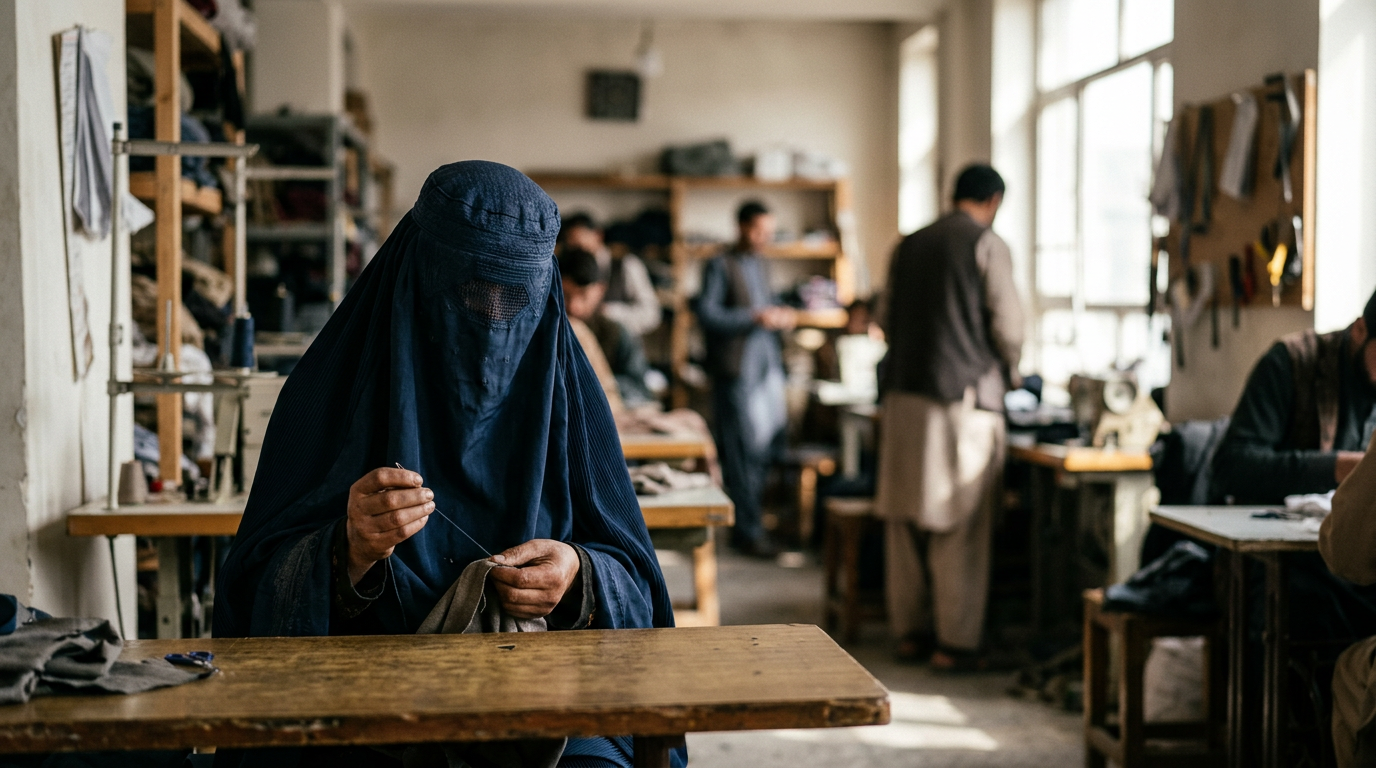
KABUL, AFGHANISTAN – Five years after the Taliban's resurgence, women's participation in Afghanistan's workforce has dramatically fallen to a mere 5.1%, a staggering decline from pre-2021 levels and a stark indicator of the severe exclusion facing half the population, according to recent findings by the International Labour Organization (ILO). This precipitous drop underscores a systematic rollback of women's rights and economic opportunities, transforming Afghanistan into one of the most challenging places globally for women to work.
The ILO's latest assessment, released this week, highlights a concerning trend where female labor force participation has shrunk to less than a third of its previous level, falling from 16.5% in 2020 to 5.1% by 2026. This contrasts sharply with the rapid expansion observed in male employment during the same period. Afghanistan now holds the unenviable position of having the second-lowest female employment rate worldwide, trailing only Yemen, a dire reflection of policies that have systematically dismantled two decades of progress in women's integration into public life. While overall employment in Afghanistan saw an increase of 14% from a low in 2022, reaching 8.5 million in 2026, this growth has not kept pace with the rapid population increase or the large-scale return of Afghans from neighboring countries, leaving women disproportionately affected by the economic contraction.
The Architecture of Exclusion: Taliban Decrees and Policies
The severe reduction in women's economic activity is not an accidental byproduct of economic instability but rather the direct result of a calculated and institutionalized system of restrictions imposed by the Taliban. Since regaining power in August 2021, the de facto authorities have issued more than 100 decrees specifically targeting women and girls, systematically stripping them of fundamental rights and actively excluding them from public life. These edicts cover a wide array of sectors, making formal employment for women "nearly impossible."
Among the most impactful measures are the outright bans on women working in government offices, for national and international non-governmental organizations (NGOs), and even for United Nations (UN) agencies. While some limited exceptions exist in critical sectors like health and education, even these roles come with stringent conditions. For example, women in these professions are often required to be accompanied by a male guardian, known as a "mahram," a barrier that significantly impedes access to paid work, particularly for unmarried women. Furthermore, strict dress codes, the enforcement of full veils in public, and rules prohibiting women's voices from being heard publicly further restrict their movement and interaction in professional spaces. The group's "morality police" actively harass and detain women found working in public spaces, creating an environment of fear and suppression. The replacement of the Ministry of Women's Affairs with the Ministry of Propagation of Virtue and Prevention of Vice in September 2021 symbolized the shift towards a policy of control rather than empowerment.
Beyond employment, the ban on girls' education past the sixth grade and the prohibition of women from attending universities have devastating long-term implications for the future workforce and leadership within the country. This directly undermines the development of skills and human capital essential for any nation's progress, especially for women who, before the Taliban takeover, comprised 17% of the labor force in 2020 and 21% of civil servants.
Devastating Economic and Social Repercussions
The exclusion of women from the labor market has inflicted severe economic and social damage on Afghanistan, a country already grappling with deep-seated poverty and humanitarian crises. The United Nations Development Programme (UNDP) estimates the annual economic cost of banning women from employment to be approximately USD 1 billion, representing 5% of Afghanistan's Gross Domestic Product (GDP). This economic drain exacerbates an already dire situation where nearly universal poverty is reported across the country, pushing more families into extreme destitution.
Women's income is particularly vital for household stability in Afghanistan, with studies indicating that women typically use about 90% of their earnings to support their families. The abrupt removal of this income stream has forced countless families deeper into debt or to sell off assets merely to survive. While the overall employment figures for men have shown some recovery, the loss of women's earnings contributes significantly to the fact that 28.3 million people, two-thirds of Afghanistan's population, are in urgent need of emergency assistance.
In a challenging display of resilience, many Afghan women have attempted to circumvent these restrictions by initiating small, often home-based, businesses focused on handicrafts or food production. This surge in women-led businesses, some reporting a tenfold increase since the takeover, underscores their determination to contribute to their households despite overwhelming obstacles. However, these endeavors often operate in precarious conditions, with women working "almost secretly" and facing ongoing threats and an intensified mental health crisis due to the cumulative stress of lost rights and economic hardship. Accessing healthcare has also become increasingly difficult for Afghan women, with restrictions on movement and a lack of female healthcare providers contributing to a public health crisis.
International Alarm and Future Outlook
The international community has largely condemned the Taliban's policies, with various UN agencies and human rights organizations consistently calling for a reversal of the restrictions. Tite Habiyakare, senior coordinator and head of the ILO Office for Afghanistan, unequivocally stated that "Afghanistan cannot build a resilient labour market while such a large share of its population remains excluded from economic activity." The consistent exclusion has also made donor nations hesitant to provide aid, further impacting the country's economic and humanitarian situation.
Human rights groups and UN experts have increasingly characterized the systematic oppression of women and girls in Afghanistan as "gender apartheid," highlighting the institutionalized nature of discrimination that has no parallel in the modern world. This term reflects the deliberate and comprehensive efforts to erase women from public life, impacting every aspect of their existence from education and work to freedom of movement and expression.
The long-term consequences of these policies are projected to be devastating, not only for the current generation of Afghan women but also for future generations. The loss of educated and skilled women will impede the country's development for decades, leading to continued poverty, higher rates of maternal mortality, child marriage, and gender-based violence. As the situation shows no signs of improvement, the urgent need for international pressure and support for Afghan women remains paramount, with calls for the world not to normalize this unparalleled crisis of rights and human dignity.
Related Articles

Ratko Mladić, "Butcher of Bosnia" and Convicted War Criminal, Dies at 84
THE HAGUE, Netherlands – Ratko Mladić, the former Bosnian Serb military commander known as the "Butcher of Bosnia" and convicted of genocide, war crimes, and crimes against humanity, has died at the age of 84. Serbian...

Long-Awaited 9/11 Mastermind Trial Set for 2028, Decades After Attacks
GUANTANAMO BAY, Cuba – Nearly a quarter-century after the devastating terror attacks of September 11, 2001, a military judge has finally set a trial date for Khalid Sheikh Mohammed, the alleged mastermind behind the...