Africa's Nuclear Ambition: A High-Stakes Quest for Power Amid Formidable Obstacles
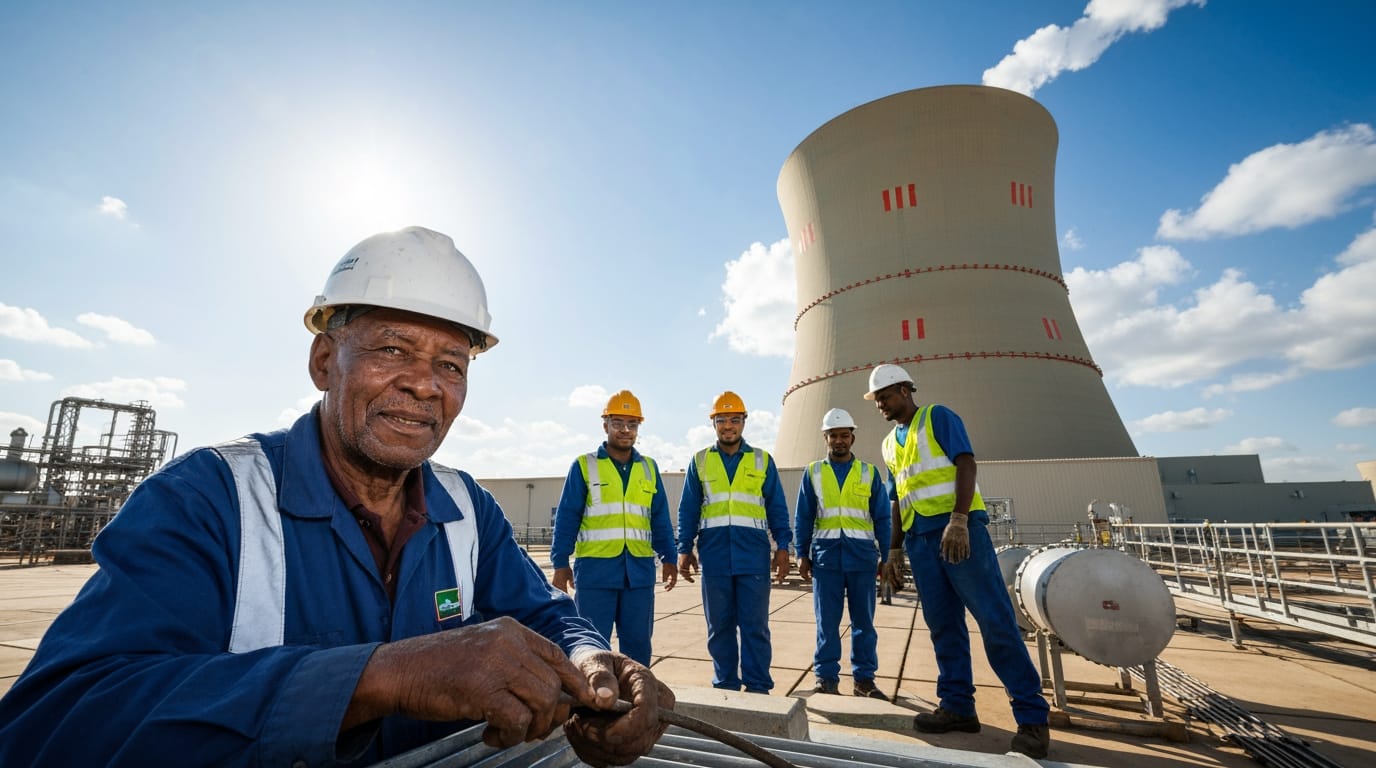
Africa stands at a pivotal juncture in its energy evolution, grappling with a burgeoning population and a profound electricity deficit that stifles industrialization and development. With over 600 million people lacking access to reliable electricity, the continent's energy demand is projected to double by 2040. In response, a growing number of African nations are turning to nuclear power, envisioning it as a critical engine for economic growth, long-term energy security, and a pathway to meet ambitious climate goals. This strategic shift, however, is met with monumental hurdles, from exorbitant capital costs and inadequate infrastructure to complex regulatory demands and a scarcity of specialized expertise, painting a picture of big dreams confronting even bigger challenges.
The Pressing Need for Power: Africa's Energy Imperative
The drive towards nuclear energy on the African continent is fundamentally rooted in a dire need for stable, baseload power. Despite accounting for 19% of the global population, Africa consumes only 3.1% of the world's electricity. This energy poverty impedes everything from healthcare and education to industrial expansion, with per capita electricity consumption in sub-Saharan Africa (excluding South Africa) at a mere 180 kWh, drastically lower than global averages. While renewable energy sources like solar and wind offer significant potential and are rapidly expanding, their intermittent nature presents limitations for providing the consistent, large-scale power necessary for heavy industry and national grids. Nuclear power, with its capacity for continuous, high-output generation, is seen as a viable solution to bridge this gap, offering a low-carbon alternative to the fossil fuels (primarily gas and coal) that currently dominate Africa's energy mix. Projections suggest the continent could add up to 15,000 MW of nuclear capacity by 2035, representing a potential market of $105 billion.
Nuclear Aspirations Take Root: Nations and Global Partners
Across Africa, nations are at various stages of exploring or committing to nuclear energy programs. South Africa currently holds the distinction of operating the continent's sole commercial nuclear power plant, Koeberg, which has safely delivered power for 40 years. The country plans to expand its nuclear capacity by an additional 2,500 MW. Egypt is leading the next wave, with Russia's Rosatom constructing the four-unit El Dabaa Nuclear Power Plant, aiming to deploy 4,800 MW by 2028. This project alone carries an estimated cost of $28.75 billion, with Russia financing 85% through a state loan.
Other nations are also making significant strides. Ghana, Uganda, Kenya, and Rwanda have set ambitious targets, with plans to construct 1,000 MW nuclear power plants as part of their long-term energy strategies. Kenya, for instance, intends to begin construction by 2034. Nigeria also harbors ambitions for 4,800 MW of nuclear capacity and continues to engage with international partners, despite past project delays. Beyond these frontrunners, more than 20 other African countries, including Tanzania, Senegal, Zimbabwe, Morocco, and the Democratic Republic of Congo, are exploring nuclear energy's potential, often in collaboration with global nuclear technology providers such as Russia, China, France, and the United States.
A particularly promising development is the growing interest in Small Modular Reactors (SMRs). These advanced reactors, typically generating up to 300 MW, offer lower upfront costs, modular scalability, and quicker construction times compared to conventional large-scale reactors. SMRs are considered ideal for African countries with smaller grids or remote areas where extensive grid expansion is impractical. Rwanda, Ghana, and Morocco are actively pursuing feasibility studies and partnerships for SMR deployment, with Rwanda focusing on micro reactors that could potentially meet its entire energy needs. Some SMR designs even offer the advantage of not requiring water for cooling, a crucial factor in water-scarce regions.
The Herculean Hurdles: Finance, Infrastructure, and Expertise
Despite the compelling need and burgeoning interest, the path to nuclear power in Africa is fraught with significant challenges. Foremost among these is the immense capital cost. Building large nuclear power plants can run into tens of billions of dollars, a financial burden that often exceeds the annual GDP of many African nations. For example, South Africa's proposed 2,500 MW expansion is estimated to cost more than its entire annual public capital budget. Securing this colossal financing remains a major obstacle, though recent shifts by international financial institutions like the World Bank to reconsider funding for nuclear projects offer a glimmer of hope.
Beyond the financial aspect, many African countries face substantial grid infrastructure limitations. An average large nuclear reactor generates around 1,000 MW (1 GW), yet many African national grids, like Kenya's 3.3 GW or Rwanda's 300 MW, are simply too small to accommodate such a large, centralized power source without risking grid instability. This is where SMRs are particularly advantageous, offering a more flexible and adaptable solution for smaller or less developed grids.
Another critical hurdle is the lack of a skilled workforce and robust regulatory frameworks. Developing a nuclear energy sector demands highly specialized personnel across all stages, from planning and construction to operation and regulation. African countries embarking on nuclear programs often need to build this talent base from scratch, a process that requires significant investment in education and training. The International Atomic Energy Agency (IAEA) is actively supporting these efforts, including launching "SMR Schools" to inform governments and industry stakeholders. Furthermore, establishing independent and stringent regulatory bodies compliant with international safety standards for nuclear security, waste management, and environmental protection is a complex and time-consuming undertaking.
Beyond the Blueprint: Safety, Geopolitics, and the Energy Mix
The journey towards nuclear power also necessitates addressing inherent safety concerns, public perception, and geopolitical dynamics. While modern nuclear reactors feature advanced passive safety systems, public distrust, often fueled by historical incidents like Chernobyl and Fukushima, remains a challenge. However, proponents argue that nuclear energy boasts one of the lowest death rates per kWh among major energy sources. The long-term management of nuclear waste is another significant consideration, though ongoing innovations in reactor design and disposal systems are offering safer options.
Geopolitically, many African nations' reliance on foreign technology, financing, and expertise, particularly from countries like Russia and China, introduces elements of dependence. This can have implications for national sovereignty and energy policy, prompting some observers to view these partnerships through a lens of geopolitical competition. Additionally, the broader energy landscape involves a crucial debate about nuclear versus renewables. While renewables are often faster and more cost-effective for meeting immediate energy access needs, nuclear provides the reliable baseload that complements intermittent renewable sources, ensuring grid stability and supporting industrialization. Experts emphasize that a balanced energy mix, where nuclear and renewables work in tandem, is essential for Africa's sustainable development.
A Long Road Ahead for Africa's Nuclear Future
Africa's pursuit of nuclear power represents a bold vision to transform its energy landscape and propel economic development. The immense need for reliable electricity, coupled with the desire for clean energy solutions, makes nuclear an attractive, albeit challenging, option. While pioneering projects in Egypt and the continued operation in South Africa demonstrate the continent's potential, the hurdles of high capital costs, limited grid capacity, a nascent regulatory environment, and a shortage of skilled labor are formidable. The emergence of Small Modular Reactors offers a potentially more accessible pathway, promising lower entry costs and greater flexibility. Overcoming these obstacles will require concerted efforts in innovative financing, robust international collaboration, strategic infrastructure development, and dedicated human capital investment. For Africa's nuclear dreams to transition from aspiration to reality, a clear-eyed, long-term commitment to careful planning, stringent governance, and sustainable execution will be paramount.


