Nigeria Secures Landmark UK Funding to Modernize Critical Seaports, Igniting Debate Over Economic Priorities
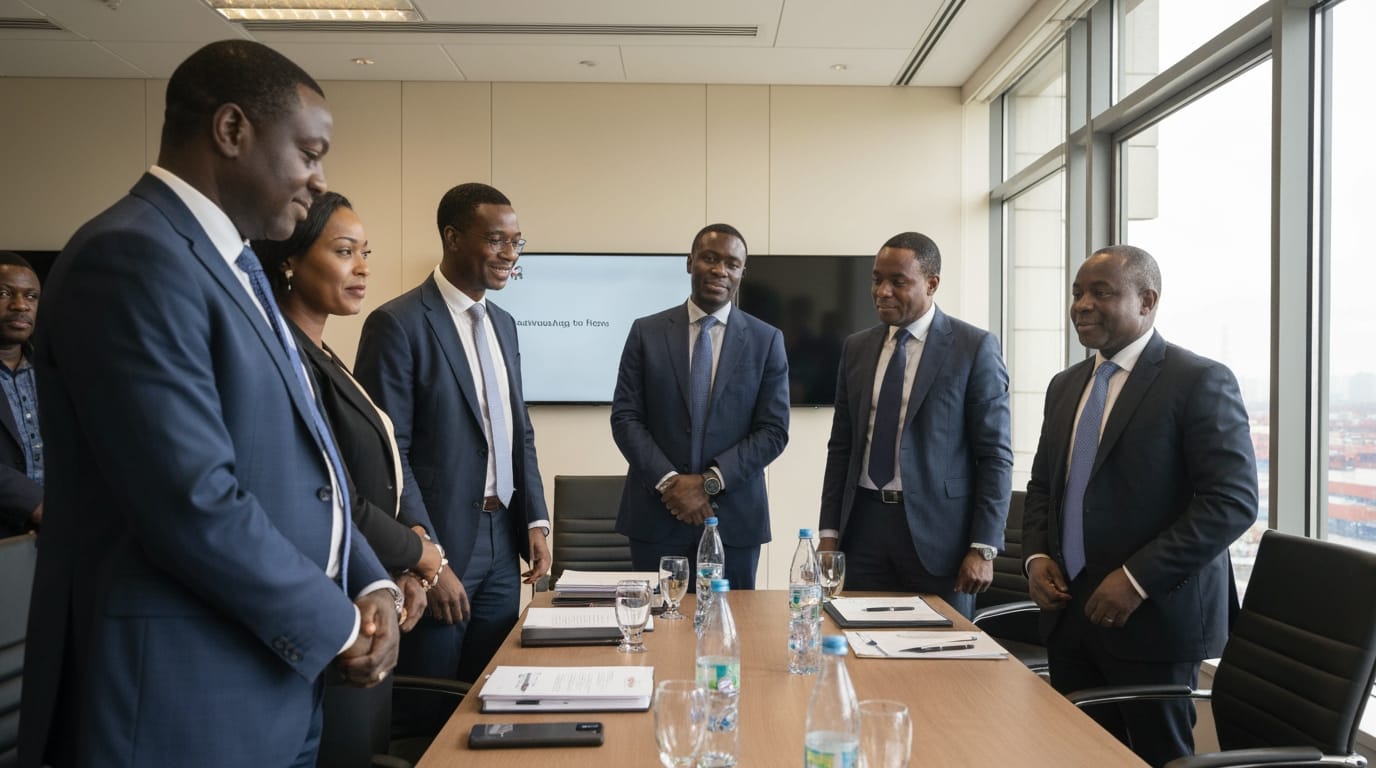
Lagos, Nigeria – Nigeria has cemented a pivotal £746 million financing agreement with the United Kingdom, a deal poised to overhaul two of its most vital maritime gateways, the Lagos Port Complex (Apapa Quays) and the Tin Can Island Port Complex. Signed during President Bola Tinubu's recent state visit to the UK, the agreement aims to dramatically enhance Nigeria's trade capabilities, boost its economic diversification efforts, and solidify its position as a regional maritime hub, though the terms of the deal have sparked discussion among economic analysts.
The landmark accord, representing the first state visit by a Nigerian leader to the UK in nearly four decades, underscores a renewed push for deeper bilateral economic cooperation. While Nigerian officials hail the investment as a strategic move to unlock the nation's immense maritime potential, some experts are scrutinizing the arrangement, particularly its implications for national debt and the equitable distribution of economic benefits between the two nations.
The Imperative for Port Modernization
Nigeria's ports are the lifeblood of its economy, processing over 70% of the nation's imports and exports. However, these critical arteries have long grappled with systemic inefficiencies, including prolonged vessel turnaround times and cargo dwell periods that significantly inflate logistics costs. The Apapa Port, established during British colonial rule in the early 1920s, and the Tin Can Island Port, operational since 1977, have seen their infrastructure deteriorate over decades, leading to chronic congestion and an undesirable diversion of cargo to more efficient ports in neighboring West African countries like Cotonou, Lomé, and Tema.
The £746 million financing, facilitated through UK Export Finance's (UKEF) Buyer Credit Facility and coordinated by Citibank N.A., London Branch, is designated to address these long-standing issues. The planned modernization encompasses a comprehensive overhaul of port infrastructure, the introduction of advanced digital systems, and a modernization of operational procedures. Nigerian Minister of Marine and Blue Economy, Adegboyega Oyetola, emphasized that these upgrades are crucial for reducing vessel turnaround times, cutting cargo dwell periods, lowering logistics costs, and ultimately boosting revenue, aligning with the government's "Renewed Hope Agenda" to stimulate economic activity, create jobs, and alleviate poverty.
UK's Strategic Role and Economic Gains
The agreement is not merely a financial transaction but a strategic partnership designed to yield substantial benefits for both the UK and Nigeria. For the UK, the deal is touted as a significant boost to its trade relations with Nigeria and a gateway for British exporters into the wider West African market. A substantial portion of the loan, at least £236 million, is earmarked for British firms as supplier contracts.
A notable beneficiary is British Steel, which secured a record £70 million contract to supply 120,000 tonnes of steel billets for the port projects. This contract has been highlighted by UK's Secretary of State for Business and Trade, Peter Kyle, as a "major win" for British industry, reinforcing its expertise and supporting jobs, particularly at its Scunthorpe plant. This element of the agreement, while beneficial to the UK's industrial sector, has drawn considerable attention from observers scrutinizing the deal's overall economic impact on Nigeria.
Navigating the "Tied Funding" Debate
While the Nigerian government frames the agreement as a vital step towards economic revitalization, a critical debate has emerged regarding the nature of the financing. Experts have described the £746 million facility as "tied funding," a form of export credit that mandates the recipient country to procure a significant portion of goods and services from the lending nation. In this instance, Nigeria is contractually obligated to spend at least £236 million on British goods and services.
Critics argue that this structure effectively means Nigeria is borrowing to stimulate the UK's industrial base, raising concerns about limited domestic value retention and potential foreign exchange risks for Nigeria. Some analysts point to the £70 million steel contract awarded to British Steel, a company owned by China's Jingye Group and supported by UK industrial policy, as an example of Nigeria's funds being used to bolster another country's industries. Questions have also been raised about the transparency of the financing terms, as specific details on interest rates and repayment timelines were not publicly disclosed in government announcements.
This model contrasts with alternative financing approaches previously adopted in Nigeria, such as the Lekki Deep Sea Port. The Lekki port, a $1.5 billion project, was developed through a public-private partnership primarily financed by foreign investors under a concession model, rather than sovereign debt. Given that Nigeria's Apapa and Tin Can ports are significant revenue generators, collectively bringing in over N1 trillion in Q1 2025, some suggest they could have attracted direct private investment or revised concession agreements to fund upgrades without increasing national debt. The country's rising debt profile, with debt servicing consuming a significant portion of its revenues, makes such considerations particularly pertinent.
Broader Economic Engagement and Future Outlook
Beyond the port deal, the recent state visit highlighted a broader strengthening of economic ties between the UK and Nigeria. The UK currently stands as Nigeria's top investment partner, contributing $3.43 billion between January and September 2024, within an annual bilateral trade volume estimated at £8 billion.
Nigerian companies are also actively investing in the UK, creating hundreds of jobs, particularly within the burgeoning fintech and banking sectors. Companies like Zenith Bank, LemFi, Moniepoint, Kuda Bank, and Fidelity Bank are expanding their UK operations, signaling a growing trend of Nigerian businesses establishing a stronger international footprint. This reciprocal investment activity aims to deepen cooperation across various sectors including infrastructure, finance, energy, and technology under the Enhanced Trade and Investment Partnership (ETIP).
In conclusion, the £746 million port deal between Nigeria and the UK represents a critical juncture for Nigeria's economic future. While it promises much-needed modernization for its vital maritime infrastructure and reinforces bilateral ties, it also invites scrutiny regarding financing models and national economic priorities. The success of this ambitious project will ultimately depend on transparent execution, effective risk management, and Nigeria's ability to leverage the investment for broad-based industrial development rather than simply bolstering foreign industries. The long-term implications of this "strategic but sensitive" engagement will shape not only Nigeria's trade landscape but also its economic sovereignty in an increasingly interconnected global economy.


