Ahr Valley's Vigil: Five Years After Deadly Deluge, A Community Prepares for an Uncertain Future
Five years after devastating floods ripped through Germany's picturesque Ahr Valley in July 2021, claiming more than 130 lives and laying waste to homes and infrastructure, the region remains a poignant symbol of both catastrophic loss and tenacious recovery. As reconstruction efforts continue, residents and authorities are now locked in a race against time, implementing ambitious new flood protection measures and re-evaluating traditional living patterns, acutely aware that the "next one" is not a matter of if, but when. The valley's transformation into a living laboratory for climate adaptation underscores a national and global imperative to build resilience in an era of escalating extreme weather events.
The Scars of Memory: A Night of Unprecedented Devastation
The night of July 14, 2021, remains seared into the collective memory of the Ahr Valley. A quasi-stationary low-pressure system named "Bernd" unleashed intense, continuous rainfall onto already saturated soils across parts of Germany, Belgium, and the Netherlands. In the Ahr Valley, this meteorological event transformed the usually tranquil Ahr River into a raging torrent. The river, typically small and meandering through a constricted valley, rapidly swelled to unprecedented levels, its waters carrying immense destructive force. Contributing factors included the valley's narrow topography, the ground's inability to absorb excessive water, and the swift accumulation of runoff.
The scale of the disaster was immense. More than 130 people perished in the Ahr Valley alone. Approximately 42,000 residents were directly impacted, with around 8,800 buildings suffering damage. The economic toll in the Ahr Valley exceeded €1.4 billion, as homes, businesses, roads, railways, and bridges were swept away or rendered unusable. Beyond the physical destruction, the psychological scars run deep. Many residents continue to grapple with post-traumatic stress, finding everyday weather phenomena like heavy rain or hail deeply triggering. Memories of the flood night, such as the terrifying silence that descended as the water stabilized at four meters, persist vividly.
A critical failure point during the 2021 event was the early warning system. Despite existing mechanisms, the warnings issued were often insufficient, delayed, or lacked clarity on necessary actions, including evacuation procedures. A post-event survey indicated that only 17.5% of affected individuals received specific evacuation instructions, and many residents were tragically unaware of the severe flood risk they faced. This catastrophic lapse highlighted an urgent need for comprehensive overhauls in disaster communication and preparedness.
Reconstruction's Complex Current: Rebuilding and Redefining Resilience
In the immediate aftermath, the German federal and state governments pledged substantial support, making €30 billion available nationwide for flood damage repair, with Rhineland-Palatinate, home to the Ahr Valley, receiving €15 billion. However, the path to reconstruction has been fraught with challenges. Much of the rebuilding effort initially focused on simply restoring destroyed infrastructure to its previous state, rather than seizing the opportunity for climate-resilient and carbon-neutral transformation.
Infrastructure projects, including critical roads and bridges, remain unfinished in many areas. Residents have faced protracted disputes with insurance companies and, in some cases, family tensions over rebuilding decisions. The Ahr Valley's economy, heavily reliant on tourism, has struggled to fully recover, partly due to persistent accessibility issues caused by damaged transportation networks.
Critics point to missed opportunities for truly transformative reconstruction. While federal and state governments had promised a sustainable model region, progress in areas like the energy transition has lagged. Efforts to establish climate-friendly heating systems, for instance, faced hurdles because funding regulations primarily favored the restoration of pre-existing infrastructure. This bureaucratic inertia, coupled with a perceived lack of a unified strategy among different governmental levels, has hampered the vision of a climate-neutral Ahr Valley. As a result, even newly established municipal heating networks struggle with limited adoption, with only about half of households opting to connect.
Fortifying Against the Future: A Multi-Layered Defense
Learning from the bitter lessons of 2021, significant strides are being made to fortify the Ahr Valley against future deluges. A primary focus has been on dramatically improving early warning systems. The region now boasts enhanced sensor networks, more sophisticated data analysis, and clearer operational procedures. New warning technologies include cell broadcast services, which deliver emergency messages directly to mobile phones in danger zones, and modernized sirens capable of transmitting detailed announcements. Simulations suggest that timely warnings and effective evacuation could reduce potential fatalities by up to 80% in a comparable flood event.
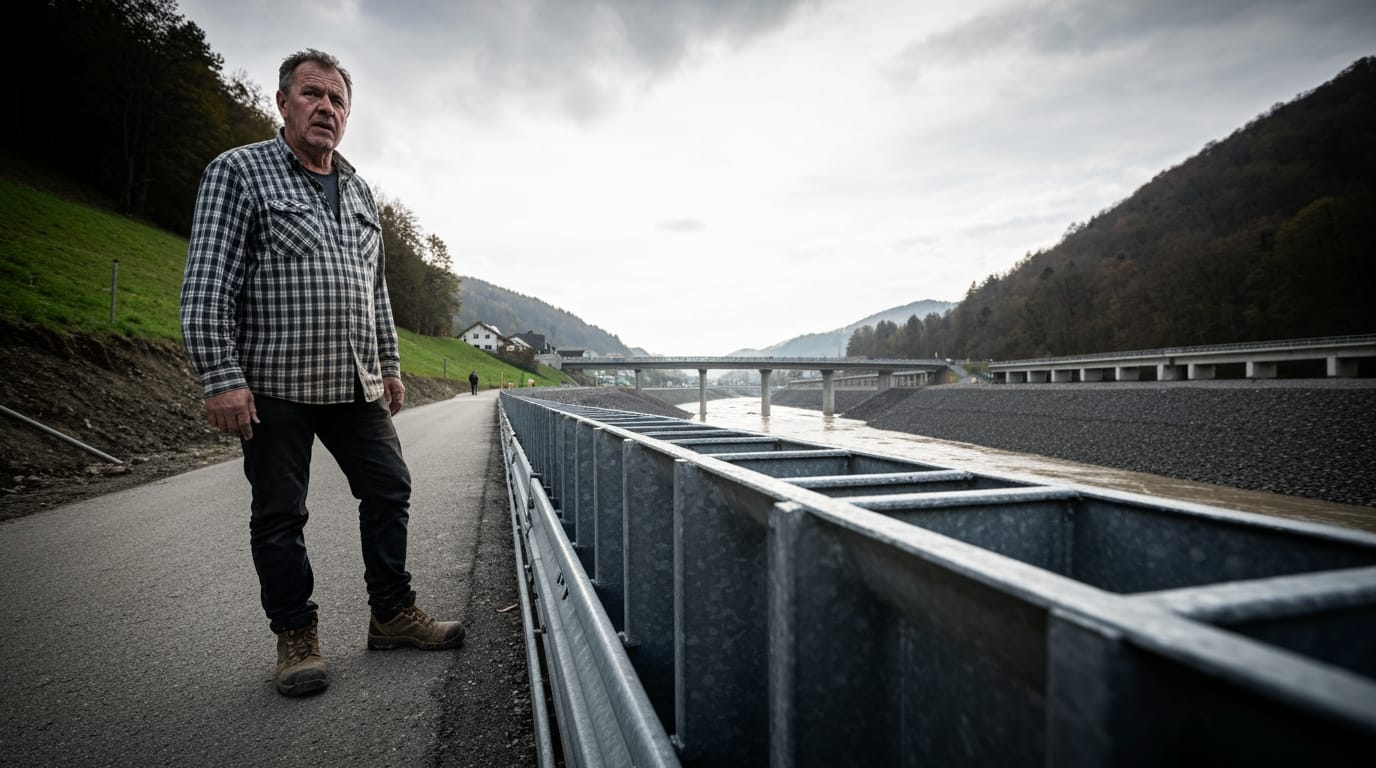
Physical infrastructure is also being re-engineered for resilience. New bridges are being constructed without intermediate piers, a design choice intended to prevent debris accumulation that can create dangerous blockages during floods. Where possible, bridges are now being rebuilt with clearances at least one meter above the highest recorded flood levels. The restoration of the popular Ahr Cycle Path, an important tourist and local amenity, incorporates high flood protection standards, reflecting the new imperative for resilient design.
Beyond physical structures, urban planners and environmental experts are advocating for more holistic, nature-based solutions. Discussions are underway regarding the implementation of "sponge city" concepts, which involve designing urban landscapes to absorb and manage water naturally, minimizing its damaging impact on infrastructure. The previously narrow riverbed, now widened in many areas by the flood's force, necessitates a re-evaluation of traditional settlement patterns. While historic village centers, often located riverside, will be preserved, there is consideration for relocating residential areas to higher ground at the valley's margins. The construction of flood retention basins is also identified as a crucial, though still pending, measure to reduce the violent force of extreme floodwaters.
Crucially, there is a renewed emphasis on public awareness and education. Authorities recognize that even the most advanced systems are ineffective without an informed populace. Efforts are underway to raise awareness, facilitate community training, and ensure transparent communication channels so that residents understand risks and appropriate responses.
A Community Transformed: Living with the Enduring Threat
Life in the Ahr Valley has undeniably been transformed. The commitment to rebuild stronger and more resilient is evident throughout the community. However, the healing process is ongoing. The initial outpouring of solidarity that followed the disaster has matured into a determined, yet often weary, pragmatism. Residents and experts alike now operate under the explicit understanding that extreme weather events are not isolated incidents but rather an escalating consequence of climate change. Scientists warn that every degree of global warming enables the atmosphere to hold approximately 7% more water vapor, leading to more intense and violent rainfall. Furthermore, a weakening jet stream is observed to cause weather systems to stall for longer periods, exacerbating localized rainfall events.
Urban planner Guido Wallraven aptly summarizes the prevailing mindset: "The next flood is coming, and we must prepare accordingly". This vigilance permeates daily life, from redesigned building codes to improved communication protocols. The Ahr Valley has, in essence, become a crucible for climate adaptation, offering invaluable lessons for other regions confronting similar environmental threats.
Conclusion: A Legacy of Resilience and Continuous Adaptation
Five years after the cataclysmic floods, the Ahr Valley stands as a testament to both profound human tragedy and remarkable resilience. While physical reconstruction continues, the deeper work involves not just rebuilding structures but fundamentally re-imagining a community's relationship with its environment. The blend of technological advancements in early warning, strategic infrastructure improvements, and a growing embrace of nature-based solutions paints a picture of determined adaptation.
However, the journey is far from over. The ongoing challenges of funding, bureaucratic complexities, and the continuous psychological toll underscore that building true resilience is a sustained, dynamic process requiring persistent investment, coordinated planning, and active community engagement. The Ahr Valley's experience serves as a stark reminder and a vital blueprint for a world increasingly confronting the undeniable realities of a changing climate, where preparedness is not merely a policy goal but a daily necessity.