Albanian Haven: The MEK's Shifting Role in Iran's Protests
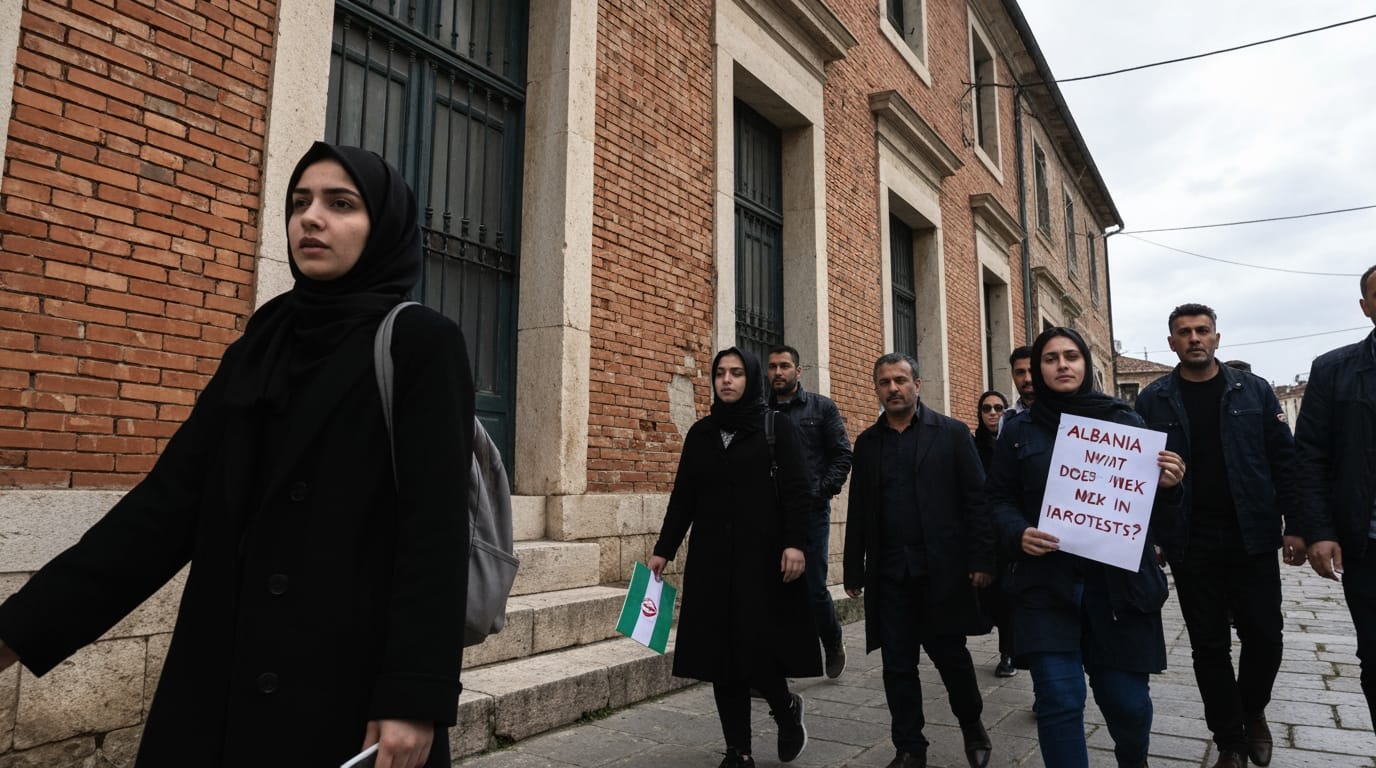
Tirana, Albania – Far from the tumultuous streets of Tehran, a controversial Iranian dissident group known as the People's Mojahedin Organization of Iran (MEK), or Mujahedin-e Khalq, has found an unlikely sanctuary in Albania. This Western Balkan nation has become home to thousands of MEK members, establishing a significant operational base that Iranian authorities claim plays a direct role in fueling and organizing ongoing protests within Iran. The MEK's presence in Albania, facilitated by international efforts, has strained diplomatic relations between Tirana and Tehran, raising complex questions about sovereignty, international obligations, and the future of Iranian opposition movements.
The Unlikely Relocation to Albanian Shores
The journey of the MEK to Albania commenced in phases between 2013 and 2016, following years of the group's encampment in Iraq. Formerly based in Camp Ashraf and later Camp Liberty in Iraq, MEK members faced increasing threats and humanitarian concerns after the 2003 Iraq War. With mediation from the United States and the United Nations High Commissioner for Refugees (UNHCR), Albania agreed to host the Iranian dissidents. Approximately 3,000 to 5,000 MEK members were subsequently relocated to Albania, establishing a heavily fortified compound known as Camp Ashraf-3 near the town of Manëz, outside the capital, Tirana.
Albania's decision to accept the MEK was largely influenced by its close alliance with the United States. US Secretary of State John Kerry confirmed in 2016 the successful transfer of all MEK members to Albania, acknowledging the cooperative role of several European nations. While some Albanian officials initially indicated the group would be hosted temporarily, increased US aid solidified Albania's role as their long-term host. This move, however, was not without internal debate, with some Albanian media, security analysts, and historians expressing concerns about the implications for national security and sovereignty, suggesting the MEK was "imposed" on the country.
A Legacy of Opposition and Controversy
The People's Mojahedin Organization of Iran boasts a long and often contentious history of opposition to successive Iranian regimes. Founded in the 1960s with a blend of Marxist and Islamist ideologies, the group actively participated in the 1979 Iranian Revolution that overthrew the Shah. However, a rapid fallout with Ayatollah Ruhollah Khomeini's new Islamic Republic led to a brutal crackdown on MEK members, forcing many into exile. The group subsequently aligned with Saddam Hussein during the Iran-Iraq War, a decision that severely damaged its credibility among many Iranians.
Over the decades, the MEK has been listed as a terrorist organization by various entities, including the United States, which maintained the designation until 2012. Critics have often described the organization as exhibiting characteristics of a "personality cult," with allegations of abuses against its members, including imposing harsh restrictions and psychological manipulation. Despite these criticisms, the MEK and its political arm, the National Council of Resistance of Iran (NCRI), present themselves as a viable democratic alternative to the current Iranian government, advocating for a secular, democratic, and non-nuclear Iran. The group notably gained international attention in 2002 for revealing the existence of Iran's secret nuclear facilities.
The Digital Front: MEK's Alleged Role in Iran Protests
From their base in Albania, the MEK claims to play an active and organized role in supporting protests and dissent within Iran through a network known as "Resistance Units." These units, according to the MEK, operate covertly inside Iran, engaging in activities such as organizing demonstrations, breaking state censorship, disseminating information, and confronting symbols of the Iranian regime. The MEK asserts that these units have carried out tens of thousands of acts of defiance across Iran, significantly contributing to the endurance and spread of anti-government protests.
Iranian officials consistently acknowledge the MEK's alleged involvement, albeit framing it as "organized networks," "guided unrest," and "coordinated sabotage" perpetrated by a terrorist entity. The Iranian Foreign Ministry has repeatedly accused the MEK of instigating violence and threatening the security of both Iran and its host nation, Albania. Tehran views the MEK as a persistent threat and has engaged in extensive efforts to counter its activities and demonize the group internationally.
Albania Caught in the Crosscurrents
The MEK's presence has placed Albania at the center of the ongoing geopolitical friction between Iran and its adversaries. Tensions escalated significantly in September 2022 when Albania severed diplomatic relations with Iran, accusing Tehran of orchestrating a major cyberattack against Albanian government infrastructure. While Iran denied these accusations, it simultaneously welcomed Albania's actions against the MEK, reiterating its view that the group is a terrorist organization and a threat to any host country.
More recently, Albanian police raided Camp Ashraf-3 in June 2023, citing concerns over "unsanctioned political activities," cyberattacks against Iran, and mass online trolling of opponents. The raid resulted in clashes, injuries, and the death of one MEK member, further escalating tensions. Albanian authorities defended the operation as a lawful enforcement action, while the MEK accused Albania of succumbing to pressure from the Iranian regime. The US government, while having facilitated the MEK's relocation, has also distanced itself from the group in recent years, stating it does not consider the MEK a "viable democratic opposition movement" and expressing concerns about alleged abuses against its members. Some analysts speculate that Albania's recent actions against the MEK could be linked to broader diplomatic maneuvers, potentially involving US-Iran nuclear negotiations.
Conclusion: A Complex Equation of Exile and Influence
The MEK's establishment in Albania highlights the intricate dynamics of exile politics and international relations. While providing a safe haven, Albania has also found itself grappling with the geopolitical fallout and domestic security concerns associated with hosting a highly active and controversial opposition group. The MEK, from its Albanian base, continues to assert its role in the internal affairs of Iran, a claim echoed by the Iranian regime's accusations of organized subversion. As Iran faces ongoing internal challenges, the activities of the MEK in Albania remain a critical, albeit contested, factor in the complex equation of Iranian dissent and the international response to it. The future trajectory of Iran's protests and Albania's relationship with the MEK will continue to be closely watched by regional and international observers.


