Altman Testifies: Musk Demanded Absolute Control of OpenAI, Even for His Children
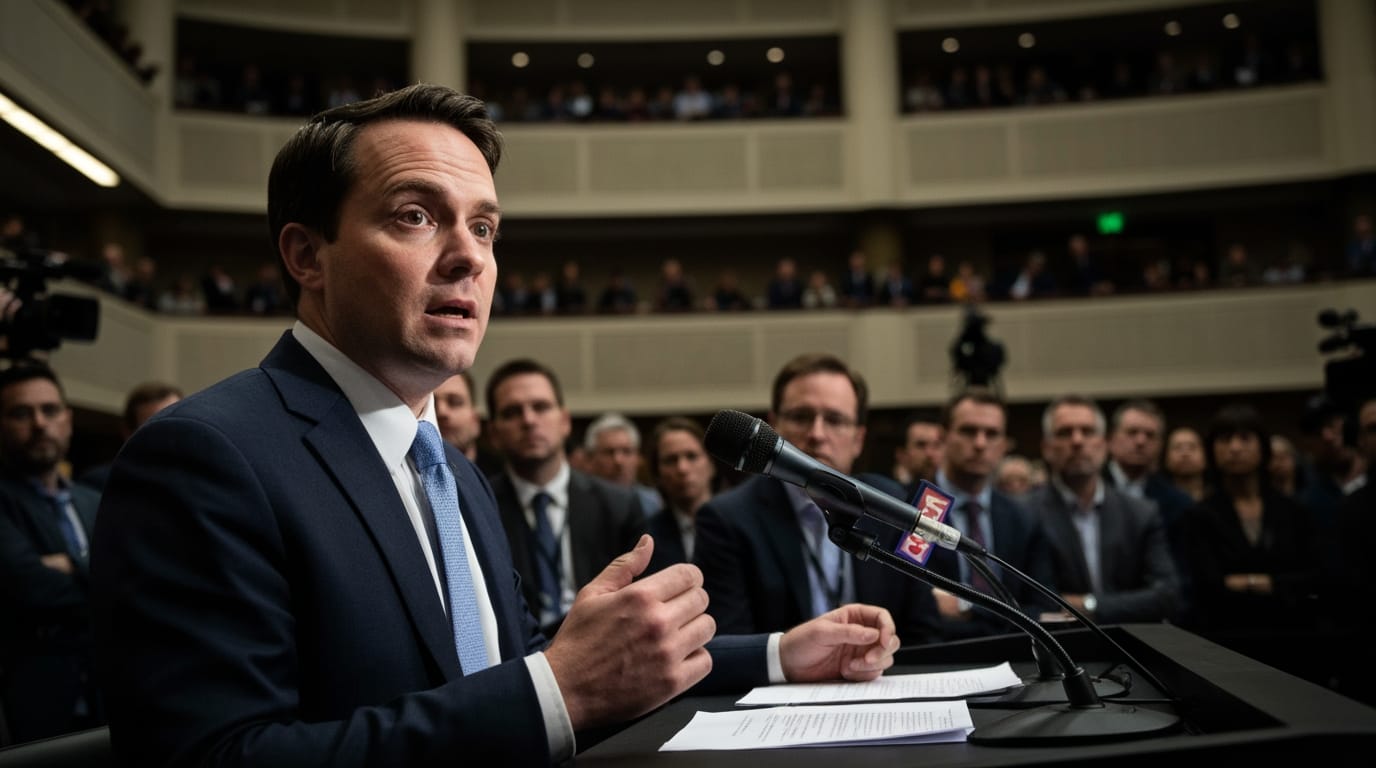
Oakland, CA – In a dramatic courtroom revelation, OpenAI CEO Sam Altman testified this week that co-founder Elon Musk insisted on "total control" of the burgeoning artificial intelligence company, even suggesting its dominion could pass to his children upon his death. This testimony forms a critical juncture in the high-stakes legal battle where Musk accuses Altman and OpenAI of betraying the company's foundational non-profit mission by prioritizing profit. The outcome of the ongoing trial in a federal courtroom in Oakland, California, could profoundly reshape the trajectory of one of the world's leading AI organizations and reverberate throughout the rapidly evolving AI industry.
The Visionary Beginnings: A Mission for Humanity
OpenAI was established in December 2015 by a group of prominent figures in technology, including Elon Musk, Sam Altman, Greg Brockman, and Ilya Sutskever. The organization's stated mission was to advance artificial general intelligence (AGI) in a manner that would benefit all of humanity, emphasizing open collaboration, safety research, and broad accessibility. The founders pledged a substantial $1 billion to kickstart the venture, driven by concerns about AI safety and the desire to create a counterbalance to the AI development efforts of tech giants like Google. While substantial funds were pledged, Musk's actual financial contributions to the non-profit were between $38 million and $45 million.
Early in its formation, discussions emerged about the immense financial resources required to pursue cutting-edge AI research and attract top talent. This led to considerations about the necessity of a for-profit entity to sustain such ambitious endeavors. The founding vision underscored the importance of preventing the concentration of AI power in a few hands, a principle that would later become a flashpoint in the ongoing dispute between its co-founders.
The Growing Chasm: Control and Departure
Altman's testimony centered on what he described as a "particularly hair-raising moment" from nearly a decade ago, where Musk's demands for control became starkly apparent. According to Altman, as the co-founders debated the structure of a potential for-profit arm, Musk insisted on having "total control" over it. When pressed on the succession of control should he die, Musk reportedly suggested that it "should pass to my children," a proposal Altman found deeply unsettling.
Furthermore, Altman testified that Musk harbored intentions of merging OpenAI directly into Tesla, his electric vehicle company. These demands for singular authority clashed with the collective belief among other co-founders that artificial general intelligence should not be under the dominion of any one individual, regardless of their capabilities. Altman further claimed that Musk, upon being denied absolute control, dismissed OpenAI's prospects, stating the company had a "0% chance of success."
Musk ultimately resigned from OpenAI's board in 2018, citing a potential conflict of interest with Tesla's burgeoning AI initiatives. However, OpenAI's current leadership contends that his departure stemmed from the rejection of his demands for control. Following his exit, Musk became a vocal critic of OpenAI, alleging that the organization had deviated from its original non-profit ethos.
The For-Profit Pivot and Legal Showdown
In 2019, OpenAI initiated a significant structural shift, creating a "capped-profit" subsidiary to facilitate greater investment and attract leading AI researchers. This evolution continued, culminating in a 2025 restructuring that converted the for-profit entity into a Public Benefit Corporation (PBC), which is partially controlled by the non-profit OpenAI Foundation. This move was deemed essential to secure the billions of dollars needed for advanced AI development. Microsoft became a key partner and investor, injecting over $13 billion and securing a roughly 27% stake in the PBC.
Elon Musk's lawsuit, filed in February 2024, asserts that OpenAI, Altman, and Microsoft have fundamentally breached the company's founding agreement by prioritizing profit over its initial humanitarian mission. He seeks to reverse the corporate restructuring, remove Altman from his leadership role, and recover significant damages. Musk's legal team has argued that he was misled into funding a non-profit that ultimately transformed into a profit-driven enterprise.
OpenAI, in turn, has vehemently rejected these claims, characterizing Musk's lawsuit as being driven by "sour grapes," jealousy, and an attempt to undermine a competitor, particularly given his launch of the rival AI company, xAI, in 2023. Altman has maintained that Musk was fully aware of, and initially supported, the strategic necessity of a for-profit component to fund OpenAI's ambitious goals.
Broader Implications for AI Governance
The courtroom confrontation between these two technology titans extends beyond a personal feud; it represents a critical debate over the fundamental principles guiding the development and control of artificial intelligence. Questions surrounding who should govern AGI, for whose ultimate benefit, and the delicate balance between innovation, safety, and commercial viability are at the heart of this legal contest.
The outcome of this trial carries substantial implications for OpenAI's future, including its potential initial public offering, and could set precedents for how AI companies navigate the complex ethical and financial landscape of advanced AI development. As AI continues its rapid advancement, the struggle for its governance and ultimate purpose remains a central challenge for the tech industry and society at large.


