Global Oil Crisis Deepens as IEA Warns of Record Inventory Depletion Amid Middle East Conflict
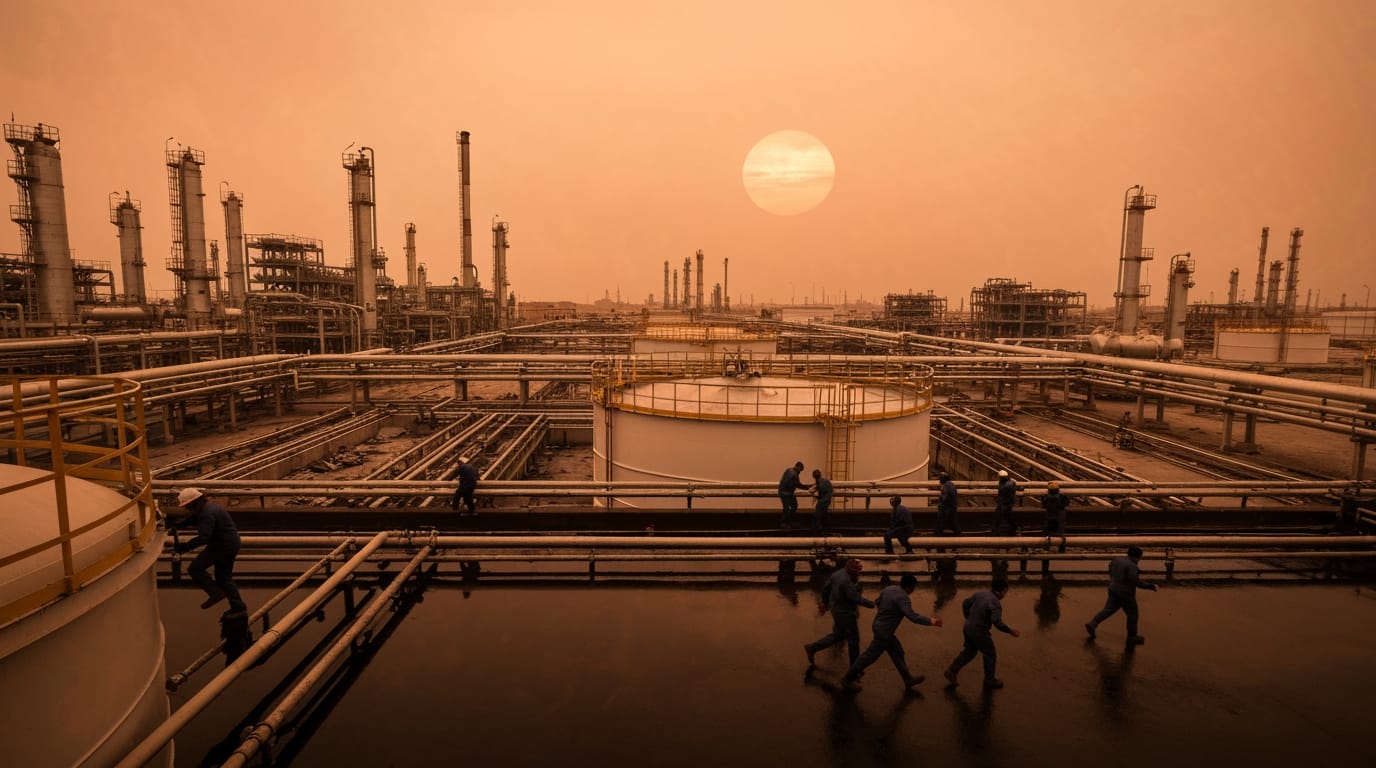
The world's energy markets are facing an unprecedented crisis, with global oil inventories plummeting at a record pace due to escalating conflict in the Middle East, the International Energy Agency (IEA) has warned. The rapid depletion of strategic and commercial reserves, coupled with significant supply disruptions, signals a potential for further sharp price spikes and severe economic repercussions across the globe.
The IEA's latest monthly report, released this Wednesday, paints a grim picture, revealing that global oil stocks declined by 129 million barrels in March and a further 117 million barrels in April. This equates to nearly 4 million barrels per day (bpd) being drawn from reserves during these two months, a volume comparable to the combined daily consumption of the United Kingdom and Germany. The agency emphasized that these rapidly shrinking buffers could foreshadow future price volatility, underscoring the severe strain on global energy security.
The Alarming Pace of Depletion
The scale of the current inventory drawdown is unlike any seen in recent history, driven primarily by a substantial disruption to oil flows from the Middle East. The IEA highlighted that the world is now drawing down its oil reserves at an "unprecedented" rate, a direct consequence of the ongoing geopolitical instability. These drawdowns are occurring from both commercial inventories held by the industry and strategic petroleum reserves maintained by governments, which are designed to cushion against supply shocks. The rapid rate at which these reserves are being tapped underscores the severity and urgency of the supply shortage gripping the market.
For months, the global energy system has been navigating a complex landscape of supply chain vulnerabilities and increasing demand. However, the current crisis, emanating from renewed hostilities in a critical oil-producing region, has pushed the system to its breaking point. The IEA's data serves as a stark indicator that the buffer capacity against future supply shocks is diminishing, leaving consumers and economies highly exposed.
Middle East Conflict Cripples Supply Arteries
The epicenter of this supply shock is the Middle East, where a conflict referred to by the IEA and various news outlets as the "Iran war" began on February 28, 2026. This conflict was triggered by joint air strikes on Iran by the United States and Israel, leading to a swift and severe response from Tehran: the effective closure of the Strait of Hormuz.
The Strait of Hormuz is a narrow, yet immensely critical, maritime chokepoint through which approximately 21 million bpd of oil typically passes, accounting for 21-22% of the world's total seaborne crude trade. Its closure has resulted in what the IEA describes as "unprecedented supply disruptions" and "the largest supply interruption due to Middle Eastern conflict." Gulf producers have seen their oil production shut in by more than 14 million bpd, contributing to a total global supply loss of 12.8 million bpd since February due to the Hormuz closure and attacks on regional energy infrastructure. The IEA now projects global oil supply to decline by an average of 3.9 million bpd in 2026, a dramatic revision from earlier forecasts.
Refinery operations have also been severely impacted, with crude throughputs forecast to plunge as operators grapple with infrastructure damage, export restrictions, and reduced feedstock availability. This cascading effect means that not only is less crude oil available, but the capacity to process it into usable products like gasoline, diesel, and jet fuel is also compromised.
Global Demand Adjusts Amid Economic Headwinds
The supply-side shocks have been so profound that they have begun to significantly alter the demand outlook for oil. The IEA has revised its forecast for global oil demand, now predicting a contraction of 420,000 bpd in 2026. This represents a stark reversal from previous projections of demand growth and reflects the dual impact of soaring prices and a deteriorating global economic environment.
High oil prices are acting as a brake on consumption, leading to demand destruction as industries and consumers scale back usage. The petrochemical sector, heavily reliant on oil as a feedstock, is experiencing significant constraints, and aviation activity is running well below normal levels. These sectors are among the first to feel the pinch of reduced availability and increased costs, but the IEA warns that "higher prices, a weaker economic environment and demand-saving measures will increasingly impact fuel use" across the board.
The economic implications are far-reaching. Brent crude futures, the international benchmark, finished April more than 55% above their pre-conflict levels, while benchmark prices for critical products like diesel and jet fuel have more than doubled. This surge in energy costs fuels inflation, erodes purchasing power, and dampens economic growth prospects worldwide. The burden is not evenly distributed; oil-importing nations with limited fiscal capacity are particularly vulnerable to the shocks, risking deeper economic instability.
Strategic Reserves: A Temporary Respite, Not a Solution
In response to the escalating crisis, IEA member countries agreed in March to undertake their largest-ever coordinated release of emergency oil stocks, totaling 400 million barrels. This measure aimed to inject much-needed supply into the market and stabilize prices. As of April, approximately 164 million barrels of these strategic reserves have already been drawn down and released. Major holders of strategic petroleum reserves, such as China (with an estimated 1.4 billion barrels as of December 2025) and the United States (holding 413 million barrels in its Strategic Petroleum Reserve as of December 2025), play a critical role in this global effort.
However, the IEA acknowledges that while these releases provide temporary relief, they are not a long-term solution to the fundamental supply deficit. Even with these emergency measures, the agency predicts that the market will remain "severely undersupplied" at least until October. The 400 million barrels, though substantial, offer merely a temporary respite, "buying time, not solutions" in the face of continuous 12.8 million bpd supply losses. The long-term outlook implies a significant supply deficit for 2026, with the IEA forecasting supply to fall 1.78 million bpd below total demand, a stark contrast to a projected surplus just months ago.
The reliance on strategic reserves highlights the fragile state of global energy security. While these stockpiles are crucial during crises, their finite nature means they cannot indefinitely compensate for structural supply shortages caused by major geopolitical disruptions.
A Critical Juncture for Global Energy
The current situation represents a critical juncture for global energy markets and policymakers worldwide. The "Iran war" has exposed the profound vulnerability of the world's energy supply chains, particularly the reliance on critical chokepoints like the Strait of Hormuz. The IEA's urgent warning of record oil inventory depletion underscores the gravity of the challenge. Without a resolution to the conflict and a restoration of stable supply flows, the global economy faces a prolonged period of elevated energy prices, heightened inflation, and potentially constrained economic growth.
The crisis calls for a re-evaluation of energy security strategies, emphasizing diversification of supply, accelerated transition to alternative energy sources, and enhanced resilience within existing distribution networks. While emergency reserves offer a vital short-term safety net, the underlying systemic vulnerabilities demand comprehensive and sustained international efforts to ensure a more stable and secure energy future. The world is now navigating a period of unprecedented energy uncertainty, with the implications likely to reshape global economic and political landscapes for years to come.


